Merz Called It a Mistake. Then He Called It Irreversible.
Germany's nuclear phase-out is costing factories, workers, and the climate. The man who said it was wrong now says nothing can be done.
Germany's nuclear reversal, AI cracking 20-year math problems, and a retinal chip restoring sight to 81% of blind patients are among the stories defining a pivotal moment for techno-optimists. The pace of progress—from Karpathy's self-running AI research lab to brain-computer interfaces hitting clinical milestones—is making the gap between skeptics and reality increasingly hard to ignore.
Germany's nuclear phase-out is costing factories, workers, and the climate. The man who said it was wrong now says nothing can be done.
A Polish mathematician spent two decades building a research-level problem no AI could touch. Run 11 proved him wrong.
The human writes a Markdown file. The AI runs 100 experiments overnight. The bottleneck isn't compute, it's your program.md.
A 2mm chip restored sight more than 80% of blind trial patients, built by a former cofounder of Neuralink.
A 2011 article about male birth control became a Founders Fund investment. That's what great journalism does. Wired forgot.
Paying $200/month and getting banned for using what you paid for isn't "abuse." It's a business model failure.
Most people use AI like a fancier search engine. Here's the technique that compounds with every version.
Housing NIMBYs already took 36% of GDP. Now the same playbook is blocking the AI economy. The states that figure out how to share the upside will win the future.
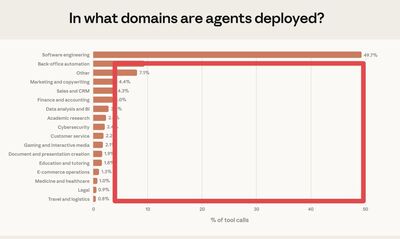
Anthropic's new data shows software engineering dominates agentic AI. For founders, that's not a warning. It's a treasure map.
This restaurant chain's 96% stock collapse is a warning for every company facing the AI age