Red Robin Died by Spreadsheet. Don’t Make the Same Mistake.
This restaurant chain’s 96% stock collapse is a warning for every company facing the AI age

Source: garryslist.org
Source: garryslist.org
TL;DR
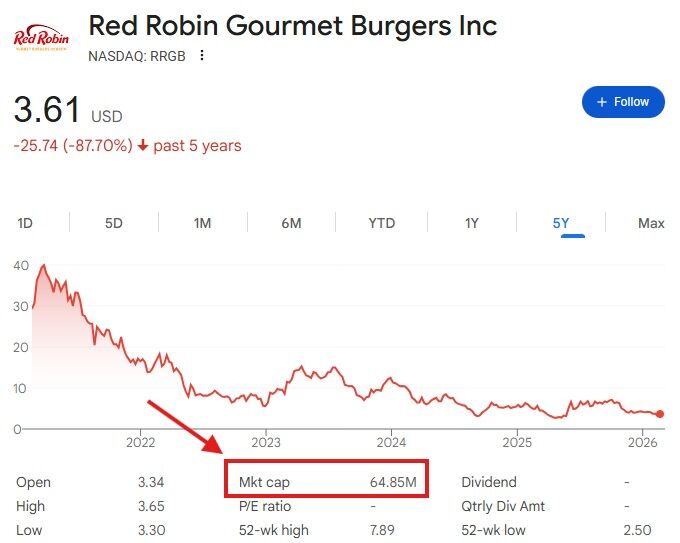
Red Robin’s stock collapsed from $92 to $3.61 after management fired all bussers to save on labor costs. Meanwhile Chili’s invested in customer experience and posted 31% growth. The lesson for the AI age: always look to do more.
The fear of the future is directly proportional to how small your ambitions are. If your plan is to keep doing exactly what you’re doing, any change is terrifying. If your plan is dramatically bigger, change is the best news you’ve ever gotten.
Red Robin just proved it in the public markets. Their stock collapsed 96% because management chose the spreadsheet over the customer. That’s what happens when you optimize for the 1.05x present instead of the 10x future you could be building.

The race to the bottom is a real effect
Red Robin is a case study in how to kill a restaurant chain from the inside out. In 2015, the stock hit $92.90 per share. Revenue peaked in 2017 at $1.4 billion across 573 locations. Families loved the place. Bottomless fries. Birthday parties. …
The Death Spiral of Small Thinking
In January 2018, Red Robin CEO Steve Carley made a decision that looked brilliant on the quarterly earnings call. He fired all the bussers. Eliminated expeditors. Replaced kitchen managers with generic “back-of-house” roles. This was what seemed obvious at the time: Labor costs were rising, so remove labor. The savings showed up immediately.
The second and third-order effects were catastrophic.
Tables stopped getting cleared. Wait times ballooned. Walkaways increased 85% year over year. 75% of the dine-in traffic loss came during peak hours, the exact window when restaurants make money. Ticket times jumped a full minute on average. Customers who waited 20 minutes for a table and another 20 for a burger stopped coming back.
They ran through five new CEOs in 10 years. Every new CEO launched a new turnaround plan. Every plan was abandoned by the next CEO. The North Star plan. The First Choice plan. Menu rollouts. Loyalty reboots. None of it addressed the core issue: they’d trained an entire generation of customers to think of Red Robin as the place where service is terrible.
Chili’s Chose MORE
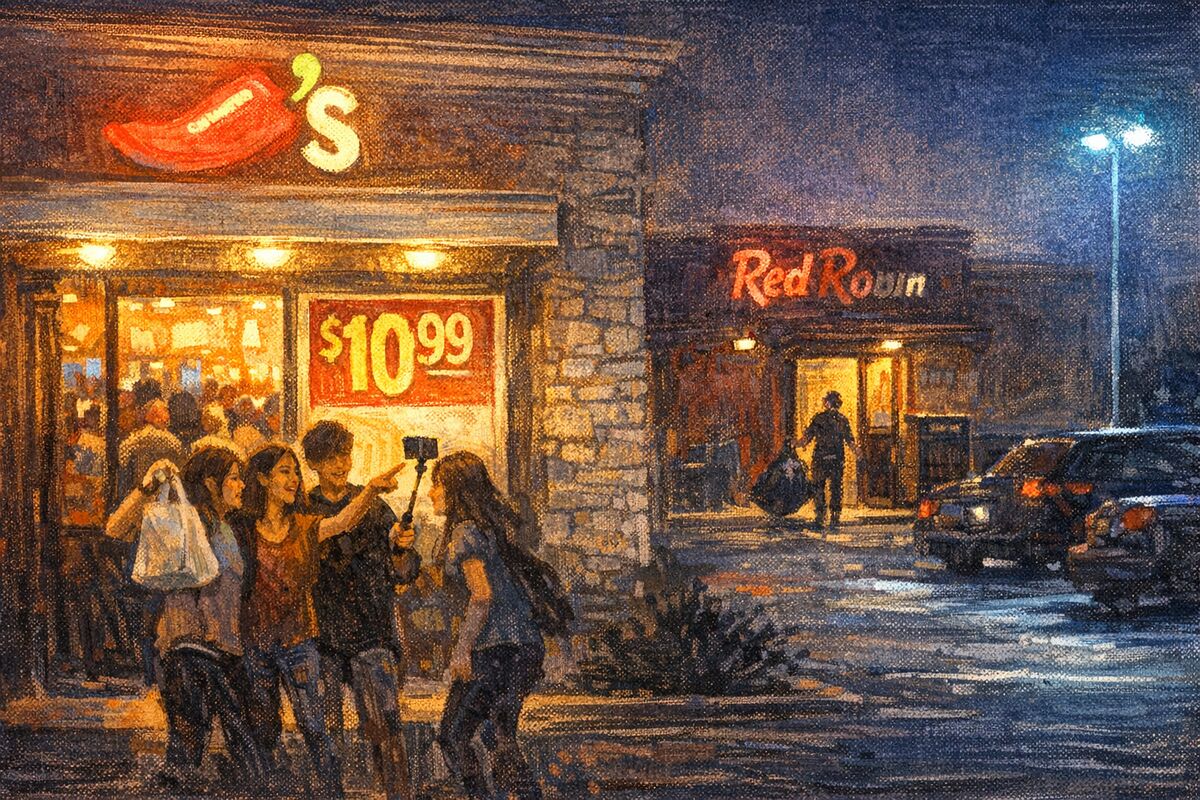
Kevin Hochman took over Chili’s in 2022 and did the opposite of what Red Robin did. He simplified the menu. Invested in operations. Launched a $10.99 deal that went viral on TikTok. Let the food speak for itself.
Chili’s just posted 31% same-store sales growth. Red Robin’s comparable revenue was down 1.2% for all of 2024.
Both chains were in roughly the same position three years ago. One chain invested in the customer experience. The other spent a decade cutting it. Red Robin’s $65M market cap versus Chili’s $3.3B tells you which approach works. 50x difference from the same starting point.
This Is the Choice of the AI Age
I wrote about this in Boil the Oceans. We’re at an inflection point where the old playbook, eking out 5% efficiency gains, increasing profit margins 2% by lowering cost and firing people, isn’t just insufficient. It’s suicide.
The new question is: what would it look like to build a product or service so good that people would happily pay 10x what they pay now?
If your plan is to keep doing exactly what you’re doing, AI is terrifying. If your plan is to do something dramatically bigger, it’s the best news you’ve ever gotten.
Jevons Paradox Doesn’t Activate Itself
When you make a resource dramatically more efficient, you don’t use less of it. You use vastly more. Steam engines didn’t reduce coal consumption. They made coal so useful that demand exploded.
The same thing is about to happen with intelligence, with labor, with every service and product we can imagine. But Jevons Paradox doesn’t activate on its own. It requires capital and management to actually raise their ambitions.
Red Robin chose to drown in committee. Chili’s chose to boil the lakes.
The lesson for the AI age: at this moment we could work to do MORE, do it better, or we can cut costs. Cutting costs is a race to the bottom. Red Robin proved it.
We have to choose MORE. Boil the oceans. For pointy haired manager-mode CEOs, this is a real fork in the road. For founder-mode builders, it’s pretty obvious what you should do. It’s not even a question.
Related Links
-
Boil the Oceans - Garry's List (Garry's List)
-
Aakash Gupta's Red Robin Analysis (@aakashgupta)
-
Red Robin Stock Collapse (@TripleNetInvest)
Comments (0)
Sign in to join the conversation.