Trae Stephens Wants to Buy Wired. He’s Right.
A 2011 article about male birth control became a Founders Fund investment. That’s what great journalism does. Wired forgot.
Source: x.com
Source: x.com
TL;DR
Anduril co-founder Trae Stephens just called out Wired’s editorial collapse in a viral thread, ending with a proposal to buy it. The building still has good people. The question is who owns the building.
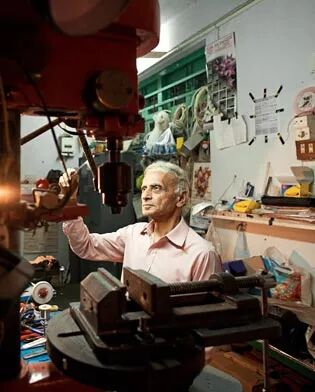
In 2011, a reporter at Wired found a maverick Indian scientist named Sujoy Guha who had spent 30 years fighting bureaucrats to develop a reversible male contraceptive. The procedure, called RISUG, had near-100% efficacy in clinical trials — 99.02% for pregnancy prevention in Phase III results, with no serious adverse reactions among hundreds of men. Guha was working out of a converted mining department building at IIT Kharagpur, mixing batches of polymer by hand, raising goats for experimental heart surgeries on the side.
That article sat in Trae Stephens’ memory for nearly a decade. When the moment came, Founders Fund invested in Contraline, the company developing a similar non-hormonal male contraceptive inspired by that research, which went on to raise a $10.7M Series A in 2021 and an $18M round in 2025. One piece of journalism, filed for a magazine, directly caused a venture investment that could change how billions of people think about contraception.
That’s what great tech journalism does. It doesn’t just cover technology. It creates the intellectual conditions for investment and progress. It puts a story in someone’s head that sits there for nine years and then fires when the moment is right.
I remember being excited to get a Wired magazine as a kid. It meant the fringe and cutting edge. It meant someone had gone looking for the strangest, most important things happening at the edge of the possible and brought them back for the rest of us.

Wired once upon a time meant the fringe and cutting edge and now it’s sadly mostly mid, often knee jerk anti-tech takes. Tragedy really. I remember being excited to get a Wired magazine as a kid @techreview and @mat is better Better yet watch @cleoabram on YouTube
the state of technology journalism today: chatgpt is bad actually because it isn't equally competent in all languages yet. why does anybody pay attention to these people any more?

Trae Stephens felt the same way. He absorbed it cover-to-cover on his commute. So what happened?

1/ During college and early in my career, I would absorb @Wired cover-to-cover on my commute. It is such a bummer that in just a decade, a once-great newsroom has deteriorated into publishing speciously-sourced gossip columns that feel like Gawker 2.0. Why is the tech community still interacting with these people?
What Wired Became
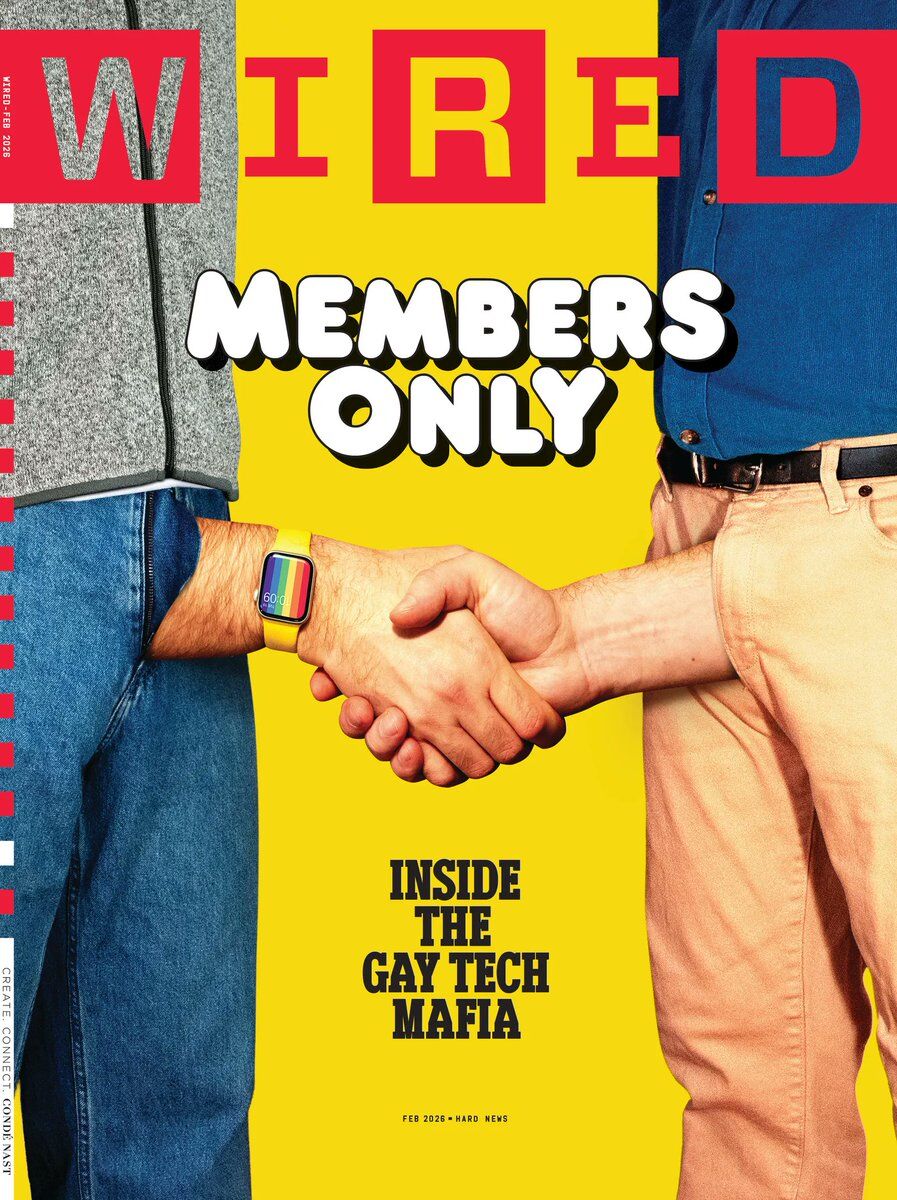
The Feb 2026 cover reads: “Members Only: Inside the Gay Tech Mafia.” That’s the cover of a magazine that bills itself as “obsessed with what comes next.”
It gets more specific from there. Trae’s thread documents the content strategy: Elon Musk and Lord of the Rings. An opinion piece arguing that preferring biological children is immoral. A piece about an app where, and I’ll let the screenshot speak for itself, “queer gooners run free.”
None of this is illegal. None of it is even necessarily wrong. But it’s a long way from RISUG.
The tell that really lands is the Most Dangerous People on the Internet list for 2025. Go read it. Wired included Alex Karp, Elon Musk, and the President of the United States. Not Xi Jinping. Not Vladimir Putin. Salt Typhoon, China’s state-sponsored hacking group that penetrated at least nine major US telecoms and accessed Americans’ call records and communications, is buried in the list behind the Palantir CEO.
Wired’s “Most Dangerous People” list: Alex Karp. Elon Musk. The President of the United States. Not Xi Jinping. Not Vladimir Putin.
To be fair, the list does include Salt Typhoon and Chen Zhi, the alleged kingpin behind Southeast Asian crypto scam compounds that now represent the most lucrative form of cybercrime on earth. The list isn’t entirely a culture war document. But the editorial gravity tells you everything you need to know about what the magazine is for.
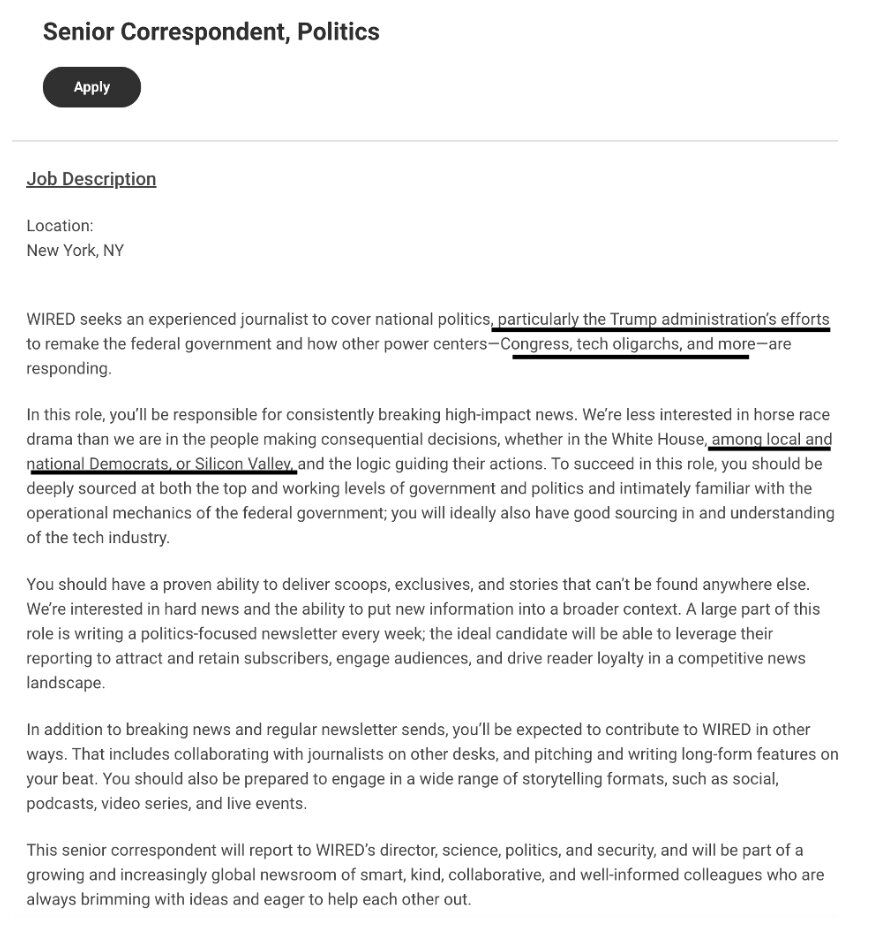
So does the job posting for a Senior Correspondent, Politics. In the description: cover “the Trump administration’s efforts to remake the federal government and how other power centers, Congress, tech oligarchs, and more, are responding.” They used the word “oligarchs” in their own job listing. Not “founders.” Not “tech leaders.” Oligarchs. That’s the frame baked into the hire before the person even starts.
There’s also the case of Margaux Blanchard, an AI-generated fake freelancer whose articles Wired published and then quietly removed after they were exposed as machine-written. A technology magazine, caught using AI-generated content under a fabricated name. The credibility collapse is entirely self-inflicted.
The Irony Hiding in Plain Sight
In September 2024, Wired ran a major profile of Trae Stephens. Steven Levy wrote it. The headline: “Trae Stephens Has Built AI Weapons and Worked for Donald Trump. As He Sees It, Jesus Would Approve.” Long, reported, fair in the way that good journalism is fair even when it’s uncomfortable for the subject.
Trae specifically calls out Levy and Will Knight as the good guys still inside the building. His critique isn’t that Wired has no talent. It’s that talent doesn’t set the agenda.
4/ There are no doubt still good guys there. I’ve had great experiences with Wired OG’s like Steven Levy and Will Knight. But a handful of solid reporters cannot make up for an editorial team that thinks the most “dangerous” people of the last year include Karp, Elon, the President (and *not* Xi Jinping or Vladimir Putin)! wired.com/story/most-dangerous-people-on-the-internet-2025
The building still has good people in it. The question is who owns the building.
This is actually the argument for acquisition rather than abandonment. If the problem were the reporters, you’d walk away. But if the problem is editorial direction captured by a worldview that treats Silicon Valley as a power center to be policed rather than a frontier to be understood, that’s fixable. You don’t fire Steven Levy. You change who Steven Levy reports to.
The Acquisition Moment
Two days before Trae posted his thread, on March 1, 2026, I wrote: the 4th estate needs a reboot.
We need better journalism The 4th estate needs a reboot

@garrytan Everything is down stream of freedom of press AND good journalism. The average voter lacks the time/ability to unpack the intricacies of deceptive policies, thus those who control the (legacy) media wield the power to decide the votes. It’s time to replace the legacy media.
That timing isn’t a coincidence. It’s a conversation that’s been building for a while. The pattern of tech-adjacent owners buying and reforming legacy media is already established. Jeff Bezos bought the Washington Post in 2013. Laurene Powell Jobs owns The Atlantic. Patrick Soon-Shiong owns the LA Times, where he just announced a technology-based bias meter on opinion and editorial content, calling his own paper “an echo chamber and not a trusted source.” One of his columnists resigned in protest. I said journalism can heal this way.
The people who work at these institutions sometimes forget a basic fact: the owner is the boss. That’s not a power grab, that’s how institutions work, and it’s how they’ve always worked. It’s only in recent times that newsrooms ceded all editorial authority to the loudest voices on staff rather than the people responsible for keeping the lights on.
We don’t want activism disguised as journalism. But we also don’t want journalism that has drifted so far from its stated mission that it can’t tell the difference between a Founders Fund-backed contraceptive breakthrough and a gossip column. A new owner of Wired wouldn’t need to fire the good reporters. They’d just need to stop rewarding the outrage cycle and start rewarding the thing Wired actually used to be good at: finding the important, strange, true thing before anyone else thought to look.
The Proposal
Trae ends his thread with something direct.
Archived tweet7/ We've reached an inflection point: @Wired is irreparably broken in its current form. But it doesn’t need to be. It’s time for someone who believes in a role for tech in building a better tomorrow to buy it. Maybe that someone needs to be me. /end
Trae Stephens @traestephens March 03, 2026
No price. No timeline. No mechanism yet. Just the logic: someone who believes in a role for tech in building a better tomorrow should own this publication. And if that person doesn’t step up, the drift continues.
There’s something fitting about this moment. Wired profiled the very person now raising his hand to buy it. The reporter who wrote that profile, Steven Levy, is one of the two journalists Trae specifically says are still doing the work. The magazine is fighting against itself, talent pulling one direction, editorial gravity pulling another.
The RISUG story is a useful frame here. Guha spent more than 30 years fighting bureaucratic capture, having his trials shut down, watching politics override results, refusing to give up because the underlying thing worked. He told a reporter visiting his lab about the four stages of reaction to any new scientific idea: rejection, anger, mellowing, and finally acceptance.
Wired itself is in that second or third stage. The rejection of what it used to be is obvious. The anger from builders who remember what it was is what you’re seeing in Trae’s thread. Mellowing might look like a serious acquisition conversation.
Acceptance would be Wired finding a 2026 version of Sujoy Guha, some maverick working in a converted building on something that sounds absurd and turns out to matter. Writing about it before anyone else thought to look. Putting it in someone’s head where it sits for nine years and then fires.
That’s not a pipe dream. That’s just what the magazine used to be. Someone just has to own it who remembers.
Related Links
-
Trae Stephens' full thread on Wired (@traestephens)
-
Garry Tan: 'The 4th estate needs a reboot' (@garrytan)
-
Garry Tan on LA Times bias meter (@garrytan)
Comments (0)
Sign in to join the conversation.