Merz Called It a Mistake. Then He Called It Irreversible.
Germany’s nuclear phase-out is costing factories, workers, and the climate. The man who said it was wrong now says nothing can be done.
Source: garryslist.org
Source: garryslist.org
TL;DR
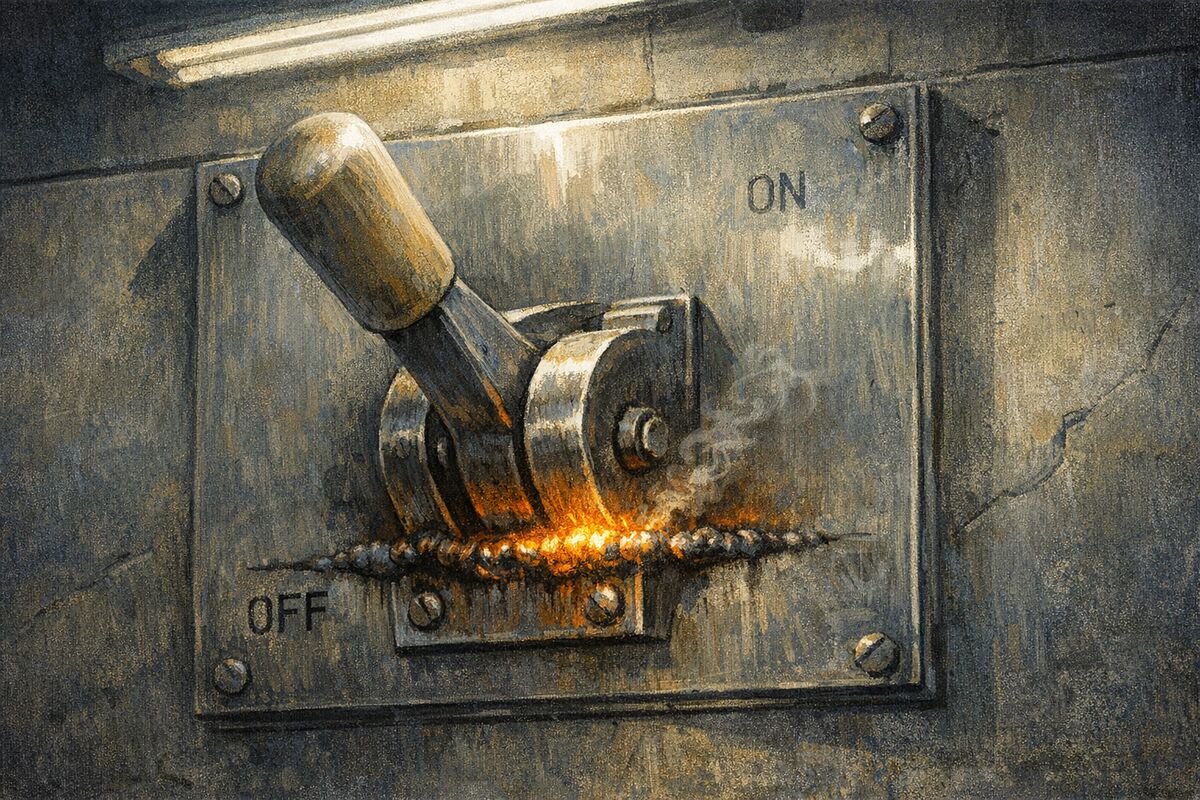
German Chancellor Merz called his country’s nuclear phase-out “a serious strategic mistake” in January 2026, then declared it “irreversible” two months later. His own coalition is openly contradicting him. Much of the rest of the world is building or planning new nuclear. Germany is burning coal.
Friedrich Merz, Chancellor of Germany, said the following in January 2026: the nuclear phase-out was “a serious strategic mistake” and Germany “simply doesn’t have enough energy generation capacity.” Brussels Signal reported this at the time.
Two months later, on March 10, 2026, he said: “The decision is irreversible. I regret that, but that’s how it is.” Disclose.tv captured it on video.
Same man. Same mistake. Two completely different postures.
Archived tweetThese luddites pretend that bad policy is some immutable law of physics. https://t.co/Zhu89ZxooE
Kane 謝凱堯 @kane March 15, 2026
Seed investor Kane put it precisely: these luddites pretend that bad policy is some immutable law of physics. That’s exactly what “irreversible” is doing here. It’s not a technical finding. It’s a political choice disguised as a natural law. Germany didn’t run out of nuclear. It voted to stop. That’s not physics. That’s politics.
What “Irreversible” Actually Cost
Germany operated 37 reactors from 1961, supplying roughly 30% of the country’s electricity at peak. Brussels Signal reports the last three, Isar 2, Emsland, and Neckarwestheim 2, were shut down in April 2023.
What filled the gap? Largely fossil fuels. And that trade-off has a significant estimated death toll attached to it. Nuclear causes 0.03 deaths per terawatt-hour. Brown coal causes 32.72. Coal causes 24.62. Germany chose to keep burning the stuff that kills many more people to shut down the stuff that kills far fewer.
The economic damage is landing in real places on real people. The New York Times profiled Max Jankowsky on March 13, a third-generation foundry owner in eastern Germany making parts for Volkswagen and BMW. He fears the family business, which predates Germany’s entire nuclear era, will end with him. Energy costs are crippling it.
This isn’t an isolated story. Research from the Leibniz Center for Economic Research found that Germany’s competitive gap versus North America is “primarily due to high energy prices.” Since the Iran war, European natural gas prices rose more than 50% and Brent crude hit approximately $100 per barrel. Merz himself acknowledged the bind: “To have acceptable market prices for energy again, we would have to permanently subsidize energy prices from the federal budget. We can’t do this in the long run.”
Fukishima is how Germany got here. Germany has no Pacific coast, no tectonic fault lines, no tsunami risk worth modeling. The 2011 decision to phase out nuclear was driven by the Angela Merkel government’s response to a disaster in Japan caused by a once-in-a-century seismic event in conditions that have zero analog in central Europe. The risk calculus was always political theater. Ursula von der Leyen, who now calls the phase-out “a strategic mistake” as President of the European Commission, enthusiastically supported that shutdown as Merkel’s minister. Brussels Signal documented the reversal. She was right then for the wrong reasons, and she’s right now, but that doesn’t make the 2011 decision look any better.
Culture mattered too. The Simpsons gave us Mr. Burns, the bumbling nuclear villain, while carbon-burning energy sources, the kind that kill around 7 million people a year, got a pass. Anti-nuclear fear was amplified through pop culture for decades. Germany’s phase-out didn’t happen in a political vacuum, it happened in a culture that had been encouraged to fear the wrong thing.
His Own Coalition Disagrees
The “irreversible” framing isn’t just wrong on the merits. It’s being openly contradicted by Merz’s own people.
Sepp Muller, CDU deputy chairman in the Bundestag, which is Merz’s own parliamentary group, stated publicly that nuclear “has a future via small modular reactors.” Brussels Signal and Bild reported the contradiction. Markus Soeder, Minister-President of Bavaria and leader of the CDU’s coalition partner CSU, went further and offered Bavaria as a pilot site for a “Nuclear 2.0” SMR project in the same week Merz made his “irreversible” statement. CSU Secretary General Martin Huber provided the legal framing: per Saechsische Zeitung, “The phase-out decision was about big old reactors, not new technologies.”
These are people who actually run his coalition. Muller is the deputy leader of Merz’s own parliamentary group. Soeder runs Bavaria, Germany’s second-most populous state, and is a central figure in the governing coalition. When your own deputy and your key coalition partner directly contradict you the same week you make a statement, “irreversible” isn’t describing engineering reality. It’s describing Merz’s political position, and that position is already cracking from the inside.
SMRs are the tell: The Atomgesetz, Germany’s nuclear phase-out law, effectively targeted the large Generation II reactors of the 1960s and 70s. Whether it legally covers small modular reactors, compact next-generation designs that look nothing like Isar 2, is genuinely contested. Martin Huber’s claim has not been formally litigated, and the legal picture deserves scrutiny. But the political point stands: “irreversible” was always doing more work than the law requires.
The Rest of the World Read the Memo
In June 2025, the World Bank ended its long-standing ban on funding nuclear energy projects. The New York Times reported it. At a recent U.N. climate conference, more than 20 countries pledged to work toward tripling nuclear capacity by midcentury. In January 2026, Illinois Governor JB Pritzker, a Democrat, abandoned his state’s ban on new nuclear plants. The Washington Post covered the reversal. California and several other states with nuclear restrictions are being pushed to revisit them.
Nuclear is a litmus test for whether a government will back technology over the political movements that have embedded themselves around it. Noah Smith put it clearly: building more nuclear “will help convince engineers that America cares about progress more than about political whim.” The same dynamic applies in Europe. When Germany says nuclear is irreversible and the World Bank, Democratic governors, and more than 20 nations are moving the opposite direction, Germany isn’t being principled. Germany is the outlier.
The pattern Kane names is, in my view, real. Anti-technology politics, whether it’s blocking nuclear in Germany, blocking data centers in US suburbs, or blocking housing in American cities, keeps borrowing the language of inevitability to protect decisions that were always reversible. We’ve covered how 25 data center projects were canceled in the US in 2025 at a cost of $98 billion in investment in Q2 alone, driven by the same political reflex. Jason Crawford at the Roots of Progress Institute traces this to a specific historical rupture: he argues the left stopped being pro-technology and pro-growth and became the opposite. Germany’s phase-out is what that rupture looks like at industrial scale.
“Irreversible” is the word politicians use when the political cost of being right is higher than the economic cost of being wrong. Max Jankowsky’s foundry is paying that economic cost. The workers in eastern Germany are paying it. The climate is paying it, because Germany chose coal over nuclear and still helps heat Europe with fossil fuels while calling itself a climate leader.
The rest of the world is figuring this out. The question for Germany is whether one man’s political pride outlasts the Mittelstand’s ability to pay for it.
Related Links
-
Germany's shut-down of nuclear plants a 'huge mistake', says Merz (Brussels Signal)
-
Iran energy costs threaten Germany's factories (New York Times)
-
CSU contradicts the Chancellor on nuclear phase-out (Saechsische Zeitung)
-
World Bank ends ban on nuclear power funding (New York Times)
-
Illinois reverses nuclear energy moratorium (Washington Post)