
Tech
Public Safety & Policing
From AI Doomerism to Molotov Cocktail
The billion-dollar ideology behind the violence finally produced what it always promised.
Read more →
AI is collapsing the cost of building software—a quarter of YC startups now have 95% of their code written by AI, and some teams are hitting $10M in revenue with fewer than 10 people—which is shifting the scarce resource from engineering to judgment, taste, and knowing what to build. The energy grid is struggling to keep up, with data centers projected to consume 10% of US electricity by 2028, making power infrastructure the next binding constraint on the AI boom. Meanwhile, YC's Summer 2026 application window just closed, with a live side door still open through a Product Hunt launch this Friday.
The billion-dollar ideology behind the violence finally produced what it always promised.
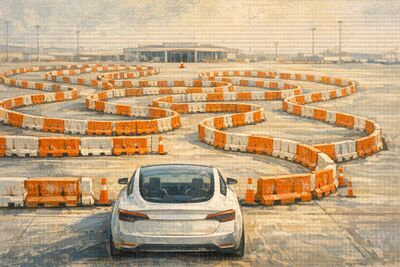
Waymo cleared every safety bar and got exiled to the Rental Car Center. Meanwhile, Uber and Lyft keep 800,000 monthly trips.
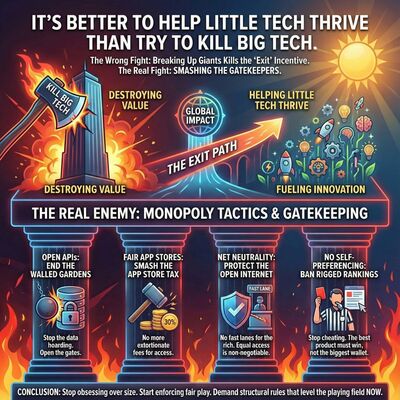
SB 1074 bans Amazon, Apple, Google, and Meta from rigging their platforms against startups. The fight DC couldn't win lands in Big Tech's backyard.
Germany's nuclear phase-out is costing factories, workers, and the climate. The man who said it was wrong now says nothing can be done.

A Polish mathematician spent two decades building a research-level problem no AI could touch. Run 11 proved him wrong.

S7263 would ban AI from answering medical and legal questions, protecting billable hours while the people who can't afford doctors lose their only option.

The human writes a Markdown file. The AI runs 100 experiments overnight. The bottleneck isn't compute, it's your program.md.

A 2mm chip restored sight more than 80% of blind trial patients, built by a former cofounder of Neuralink.

A 2011 article about male birth control became a Founders Fund investment. That's what great journalism does. Wired forgot.
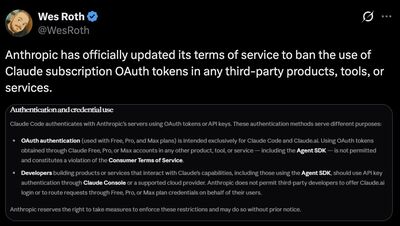
Paying $200/month and getting banned for using what you paid for isn't "abuse." It's a business model failure.