The BASED Act Comes for Big Tech
SB 1074 bans Amazon, Apple, Google, and Meta from rigging their platforms against startups. The fight DC couldn’t win lands in Big Tech’s backyard.
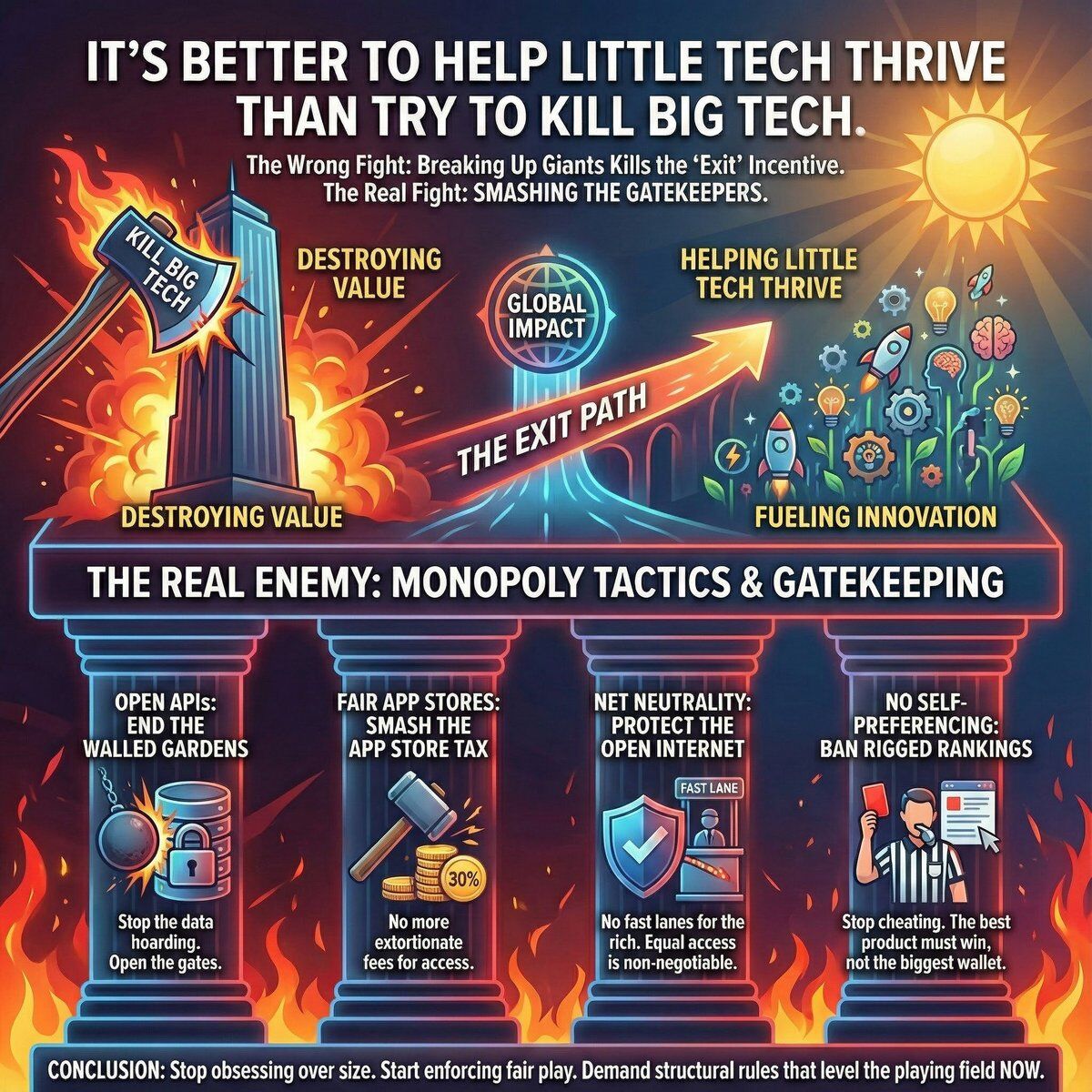
Source: x.com
Source: x.com
TL;DR
The Banning Anticompetitive Self-preferencing by Entrenched Dominant platforms (BASED Act - SB 1074) targets Amazon, Apple, Google, and Meta for self-preferencing, data theft from competitors, and app store gatekeeping. California takes the fight DC couldn’t win.
When a startup builds an app and tries to reach users, it goes through Apple’s App Store. When it sells a product online, Amazon can mine its data and clone what works. When it wants to show up in search, Google puts itself first.
Last week, we announced a bill to make all of that illegal in California, with State Senator Scott Wiener at YC headquarters in San Francisco.
Archived tweetNow announcing the BASED Act at YC with State Senator Scott Wiener We need open platforms and open markets. We need markets that are fair for all founders. We are not asking for a leg up. We are asking for a fair playing field. Watch live here https://t.co/zj405mxix5
Garry Tan @garrytan March 18, 2026
What SB 1074 Does
The Banning Anticompetitive Self-preferencing by Entrenched Dominant platforms (BASED) Act, formally SB 1074, targets companies with more than $1 trillion in market capitalization and 100 million or more monthly US users. Today, that means it would apply to Apple, Amazon, Google, Meta, and Microsoft. The bill bans three categories of conduct: promoting your own products ahead of competitors in search results, using non-public data from third-party sellers to build competing products, and conditioning marketplace access on purchasing other services.
Enforcement has real teeth. Consumers, businesses, and the state attorney general can all independently sue for violations.
Let’s call this what it is. It’s corruption. Our work here is simply anti-corruption work.
The Wall Every Founder Hits
We’re living through the most extraordinary moment in the history of building software. Unfortunately, founders often hit a wall after building something incredible. If they want to reach users on a phone, they go through Apple’s App Store tollbooth. In January 2026, Apple blocked Replit — the leading vibe coding app — from pushing updates; Replit dropped from #1 to #3 on Apple’s free developer tools chart. Meanwhile, Apple told another vibe coding app, Vibecode, it would approve updates only if Vibecode removed the ability to generate apps for Apple devices. As competition lawyer Gene Burrus put it: “These vibe coding apps might open the door to competition that Apple doesn’t want on their platform.” If they sell on Amazon, Amazon can use non-public seller data to clone their best products. If they want to show up in search, Google promotes itself first.
We’ve seen this up close. Garry’s List covered how Anthropic silently blocked OAuth tokens from third-party developer tools, killing OpenCode, a project with 109,000 GitHub stars. Platform owners weaponize control against their own ecosystem.
The EU already proved this at scale. In 2025, the EU imposed €3.77 billion in fines on Big Tech under the Digital Markets Act. Google alone got hit with €2.95 billion for self-preferencing in adtech. The conduct is documented. The price tag is billions.
From SB 1047 to SB 1074
Scott Wiener and I were on opposite sides of California’s biggest tech fight in 2024. His AI safety bill, SB 1047, would have chilled AI development across the state. I said so publicly. Newsom vetoed it.
Now we’re standing together at YC to announce the BASED Act. Bloomberg called it “unlikely alliances.” The logic is consistent. On SB 1047, the threat to startups came from overzealous regulation. But if I can paraphrase FTC Commissioner Mark Meador, concentrated economic power can also function like regulation, because private power can shape markets through coercion and exclusion just as public power can. On SB 1074, the threat comes from trillion-dollar incumbents rigging the market. Both fights protect founders from structural disadvantage. The difference is who’s creating it.

Monopolies in tech that interfere with free and open markets are bad, in the same way hamfisted regulation is bad. Both are anti-market forces that benefit powerful incumbents, whether they’re NIMBY homeowners blocking housing or big tech giants blocking startups. The BASED Act attacks the tech version of NIMBYism.
I’ve been building toward this for a year. In April 2025, I testified before the Senate Judiciary subcommittee on antitrust, representing startups whose voices are rarely heard in Washington. YC hosted a Little Tech Competition Summit in DC with FTC Chair Andrew Ferguson, EU Executive Vice President Teresa Ribera, and (sadly now-former) DOJ Assistant Attorney General Abigail Slater. We made the case at the federal level. The American Innovation and Choice Online Act had bipartisan support from Klobuchar and Grassley. Big Tech lobbying killed it at the eleventh hour.
The coalition behind SB 1074 extends beyond startups. Teri Olle, vice president of Economic Security California Action, told Politico: “The federal government has completely failed to safeguard this most crucial part of our economy. California must lead because, right now, it’s really unclear who else will.”
SB 1074 gets a Senate hearing in the coming weeks. Contact your state senator and tell them to support the BASED Act. The enforcement mechanism is already written: consumers, businesses, and the attorney general can all sue. DC couldn’t get this done. California can. We are not asking for a leg up. We are asking for a fair playing field.
Related Links
-
California Antitrust Bill Targets Big Tech's Grip on Apps, Data (Bloomberg Government)
-
BASED Act Press Conference at YC (YouTube)
-
Why YC Went to DC (Y Combinator)
Comments (0)
Sign in to join the conversation.