Yes, You Can Earn a Billion Dollars
AOC says you can't earn a billion dollars. Paul Graham, who spent 20 years predicting which founders become billionaires, has the data to prove her wrong.
Paul Graham is pushing back on AOC's claim that billionaires can't legitimately earn their wealth, drawing on two decades of data from evaluating thousands of founders at Y Combinator. Meanwhile, Sacramento is moving to gut Prop 209's K-12 protections through ACA-7, which would allow race-based preferences in gifted programs — a direct challenge to a voter mandate that was reaffirmed as recently as 2020. Together, these fights reflect a deepening battle over whether merit and individual achievement still have a place in California's public institutions.
AOC says you can't earn a billion dollars. Paul Graham, who spent 20 years predicting which founders become billionaires, has the data to prove her wrong.
The board voted 6-1 to commit to a curriculum validated by a rigged process. But litigation is incoming.
Federal data projects a 15.7% enrollment collapse by 2031, the worst of any major state. Meanwhile, Idaho and Florida are growing. This isn't inevitable—it's what happens when the cost of housing skyrockets and the quality of education declines.
Thomas Sowell explained why intellectuals never pay for being wrong. The Epstein files just proved him right again.
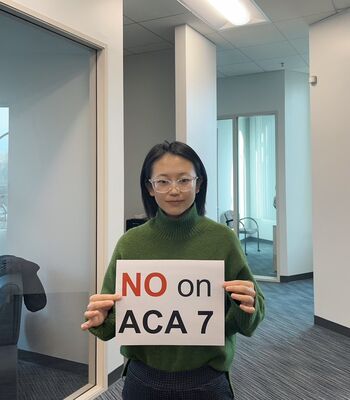
ACA-7 would gut Prop 209's K-12 protections, letting race determine who gets into gifted programs. Voters said no twice. Sacramento doesn't care.
A Princeton professor called the Ayatollah's circle 'moderate' and 'progressive.' Within months, hundreds were executed. He never apologized.
She's suing the district that failed to teach her. Virtue signal destroyed teaching. How do we restore real education in schools?
Jelani Nelson drove to Sacramento for months, recruited allies, and won: Academic standards at UCs matter
Forbes celebrates her as history's greatest giver. But without stewardship, the outcomes are spotty at best.
A new study of 1,452 students at Northwestern and the University of Michigan finds that 88% hide their real views on politics and social issues, faking progressive beliefs to get by.