Steyer's $20 Billion "Trump Tax Loophole" Is a Lie
Tom Steyer renamed a 1978 Democratic law after Donald Trump and called it a plan. The loophole is real. The history, and the math, are not.
Tom Steyer is pushing a 2026 ballot measure to close what he's calling the "Trump Tax Loophole"—but critics say he's rebranding a 1978 Democratic law and inflating potential revenue by up to 150% over official state estimates. Meanwhile, a separate SEIU-UHW "billionaire tax" initiative has already triggered a real-time wealth exodus, with tracking data showing 48 billionaires—including Google's Larry Page and Sergey Brin—have left the state, taking an estimated $1.1 trillion in wealth with them. Even Governor Newsom is warning his own party that these tax measures will backfire, as California simultaneously faces an $18 billion deficit despite record revenues and new data showing cities are taxing affordable housing projects out of existence.
Tom Steyer renamed a 1978 Democratic law after Donald Trump and called it a plan. The loophole is real. The history, and the math, are not.
SEIU-UHW's asset seizure tax has already cost the state $16.4 billion per year in lost revenue—and it hasn't even passed yet.
Cities skim $300 million a year in fees from affordable housing projects, then wonder why we can't house families.
The Robinhood CEO says he loves this state. That's why his warning should terrify Sacramento.
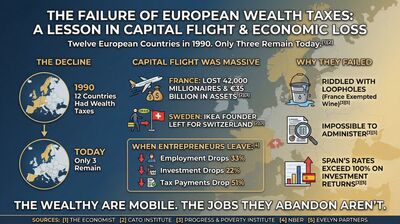
Even Gavin Newsom admits taxing billionaires will backfire. Europe already proved it. Why won't Sacramento listen?
Inherited wealth wants to destroy builders while protecting their own loopholes. The data exposes the fraud.
Private polls show 80-90% of billionaires already gone or leaving. This isn't about the rich—it's about California's survival.
A quiet amendment to the "Billionaire Tax" would force founders to go bankrupt or surrender control of their companies.
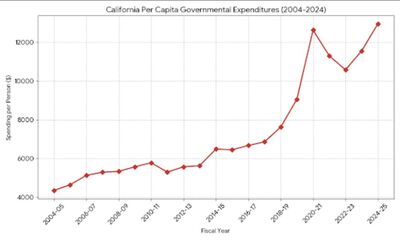
Per capita spending jumped from $4,350 to $12,940 while population grew just 11%. Where did all that money go?
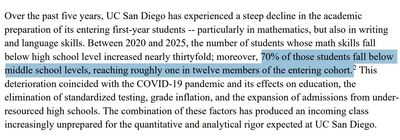
One in 12 UCSD freshmen can't do middle school math—and 25% of them had perfect 4.0 GPAs in high school.