
Skip to content
Demis Hassabis: We are entering a golden age of discovery
← Top Stories

America's Choice: Build for 10x or Optimize for 1.05x and Die

From the Panama Canal to AI drug discovery, the pattern is the same: societies that choose to build more achieve radical abundance, while those that cut costs and say no — whether it's Congress adding veto points or Red Robin firing bussers — enter death spirals. Startup exits doubling every five years and Demis Hassabis's golden-age roadmap show the upside is real, but only if we stop optimizing for the quarterly call.

Read Top Post →

Red Robin’s stock collapsed 96%—from $92 to $3.61—after management fired all bussers to save on labor costs. Walkaways jumped 85% year over year. Meanwhile Chili’s invested in customer experience and posted 31% same-store growth. Same industry, opposite bets. The spreadsheet-first mentality is exactly the small thinking Hassabis and Crawford warned about: if your only move is doing less with less, you’re already dying.

Feb 20, 2026 · 4 min
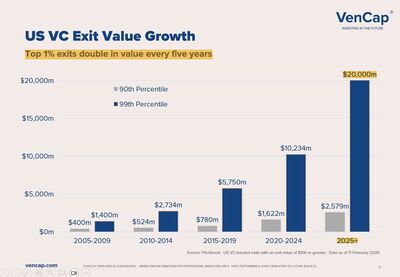
Top 1% venture-backed exits grew from $1.4B (2005-2009) to a projected $20B for 2025+. That’s not a one-time spike—it’s a consistent doubling every five years across two decades of Pitchbook data. About 80% of YC’s current batch is AI-focused and hitting commercial traction faster than any prior cohort. Small teams of ten people are building $100M businesses. The abundance thesis isn’t theoretical—it’s showing up in the cap tables.

Feb 11, 2026 · 2 min

America built the Panama Canal, electrified the Tennessee Valley, and landed on the Moon—then became a country of no. Jason Crawford traces the turn: after 1969, the New Left went from anti-pollution to anti-technology wholesale. NEPA environmental impact statements ballooned from dozens of pages to an average of 1,703. The Niskanen Center calls it ‘vetocracy'—so many veto points that nothing gets built. Every post in this story is downstream of that choice.

Feb 04, 2026 · 8 min