SF's 'CEO Tax' Would Hike Business Taxes 800% While Grocers and Startups Flee

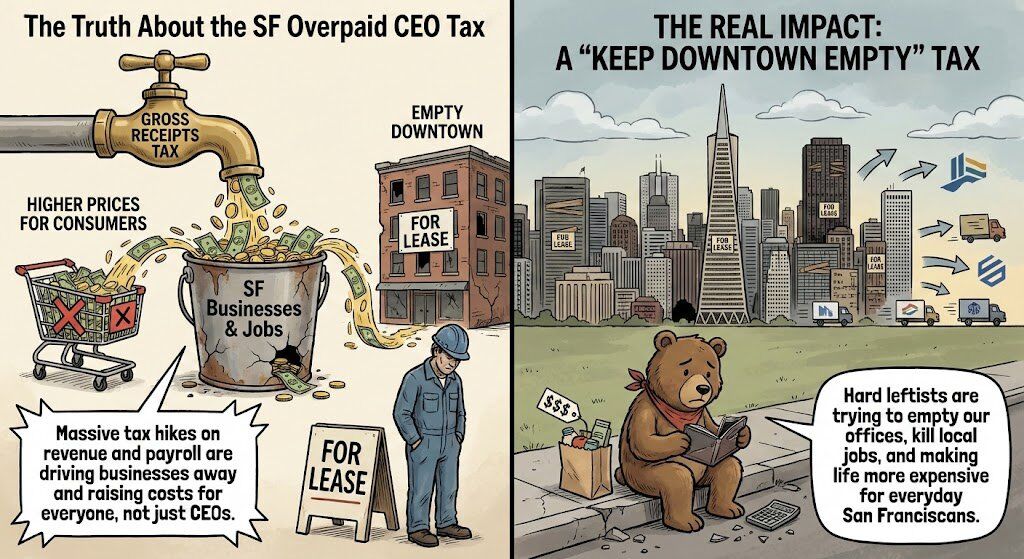
San Francisco unions are pushing a June 2026 ballot measure they call a 'CEO tax' — but it doesn't tax CEOs. It's an 800% gross receipts tax increase that would crush grocery stores, pharmacies, and startups while breaking the business-labor deal voters approved with Prop M.

Business Taxes & Prop M SF Ballot Measures San Francisco SF Prop M (2024) Techno-Optimism & Innovation Pro-Technology & Innovation

Grocery stores and pharmacies get hit hardest. Safeway, where the CEO makes far more than cashiers, faces the full 800% increase — and economists widely agree gross receipts taxes pass directly to consumers. The June 2026 ballot measure also breaks the business-labor compromise voters just approved with Prop M, which was supposed to settle this fight.

January 24, 2026 · 4 min read
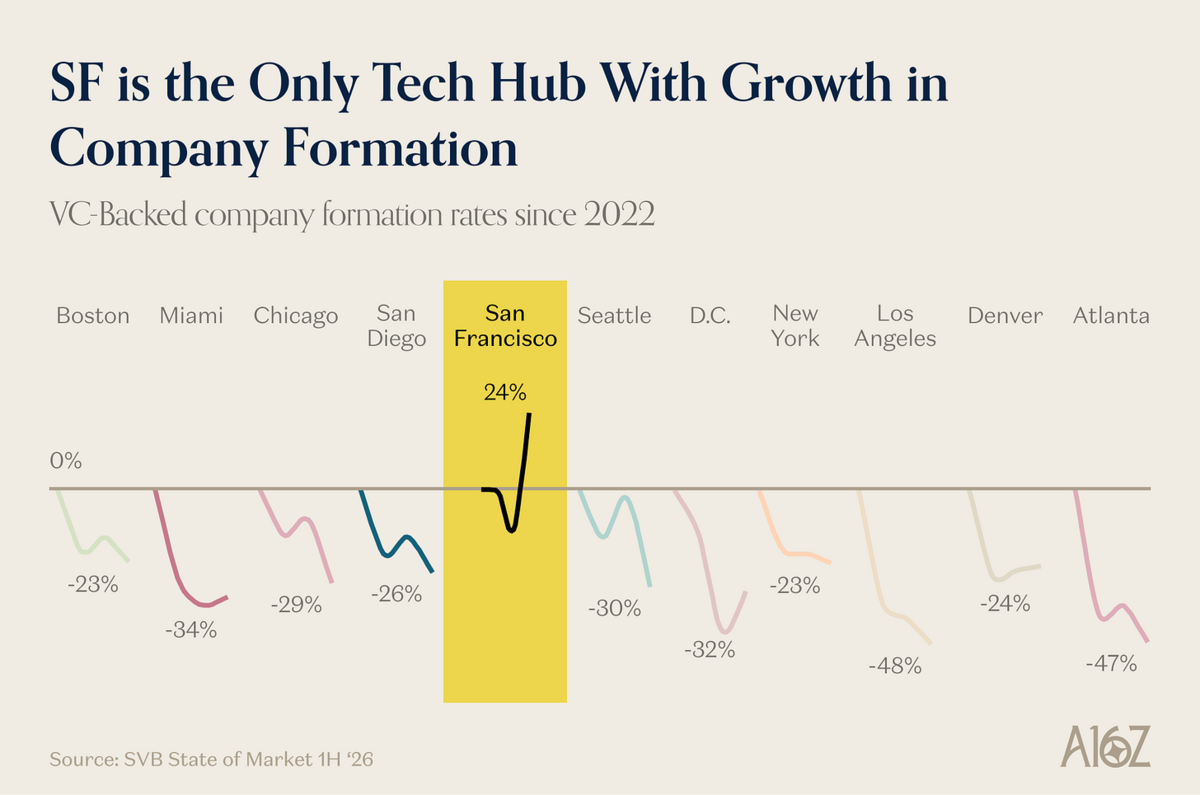

SF is the only major VC hub with positive company formation — up 24% since 2022 while Boston, NYC, LA, and Austin collapsed 30-48%. The Bay Area captures 40% of all early-stage venture dollars and leads in 6 of 7 verticals. The CEO tax threatens to destroy this advantage just as Big Tech capex hits $650B and AI jobs concentrate here.

Feb 14, 2026 · 4 min

While the Chronicle pitched art installations to revive empty Embarcadero Center, the CEO tax threatens to keep it empty forever. Marc Joffe of the Contra Costa Taxpayers Association called out the absurdity: you can’t beautify your way out of an economic crisis. One-third of downtown is vacant because businesses can’t afford SF’s taxes, not because they lack sculptures.

Jan 26, 2026 · 3 min

One day after the initial analysis dropped, the math got worse. The Administrative Office Tax — based on payroll — also jumps 800%. That hits any company with SF employees regardless of where they’re headquartered. Downtown vacancy sits at 33%, and this tax would make SF’s already crushing business tax burden roughly 200x higher than San Jose’s.

Jan 21, 2026 · 4 min

The ‘Overpaid CEO Tax’ was named because it polls well — not because it taxes CEOs. The actual mechanism is an 800% gross receipts tax hike on companies with 1,000+ employees and $1B+ revenue. A 250-employee startup pays $10.4M annually in SF vs. $17,000 in San Jose. Companies worth $400 billion — Schwab, Stripe, Square, McKesson — have already fled.

Jan 20, 2026 · 4 min