While SF stopped Prosecuting Drug Dealers, 3,700 People Overdosed
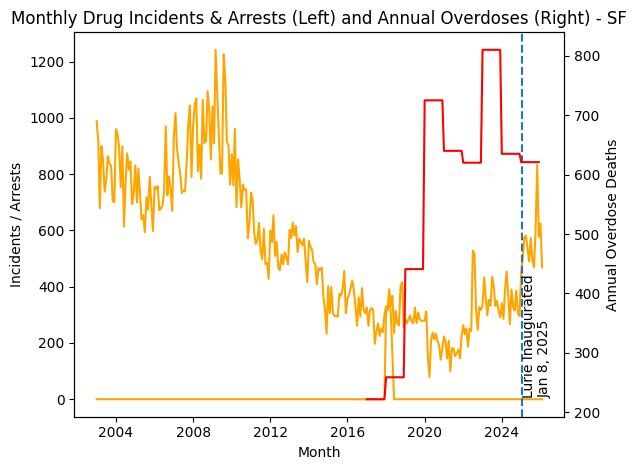
Drug arrests collapsed to zero. Overdose deaths tripled to 810 per year. The data is in, and so is the body count.
Source: x.com
Source: x.com
TL;DR
Peter Kazanjy’s data shows SF drug arrests collapsed to near-zero while overdose deaths tripled. The city’s own analysts confirmed what works, and SF still hasn’t built it.
If a hospital stopped treating patients and thousands of them died, we’d call it criminal negligence. Prosecutors would be involved. Licenses would be revoked. But when San Francisco stopped enforcing drug laws and thousands of people died of overdoses since 2020, we called it “progressive policy.”
Peter Kazanjy just pulled the receipts. He overlaid monthly drug arrests and annual overdose deaths on a single chart. One line collapses to near-zero around 2018. The other triples, peaking at 810 deaths in 2023. He’s a tech founder doing the government’s accountability work because nobody in City Hall would.
Archived tweetSan Francisco’s progressive board of supervisors’ decision to stop enforcing drug laws directly lead to hundreds and hundreds of unnecessary overdose deaths. Shameful. https://t.co/w4Bjd9koMi
Peter Kazanjy @Kazanjy February 23, 2026
The pre-2018 and post-2018 arrest data come from different SFPD reporting systems, as Kazanjy notes, but the directional story is unmistakable. Other cities got fentanyl. SF got fentanyl and a policy vacuum. The chart shows which factor the city controlled and chose to abandon.
Zero Convictions, 500+ Dead
Then-DA Chesa Boudin did not convict a single person of fentanyl dealing in 2021. That year, more than 500 San Franciscans died of overdoses.
That was the policy working as designed.
His predecessor George Gascón oversaw 90+ drug dealing convictions in 2018, when deaths were 259. The dealers noticed. By 2019, roughly 300 organized dealers worked SF’s streets. By 2022, that number hit 1,000. The dealers understood the policy change faster than the public did.
Take Angel Reyes, a 22-year-old Honduran dealer arrested seven times in SF and twice more in Oakland. Every time, judges released him. Every time, he went right back to slinging fentanyl. The system wasn’t failing to enforce. It was recycling dealers into the supply chain.
This wasn’t just SF. Keith Humphreys, the Stanford psychiatry professor who documented the West Coast’s non-enforcement experiment for Brookings, found drug possession arrests dropped 90% in Washington and 68% in Oregon during the same period. He holds an OBE from Queen Elizabeth. When he calls this a catastrophic policy failure, the “law-and-order framing” defense collapses.
The People It Killed
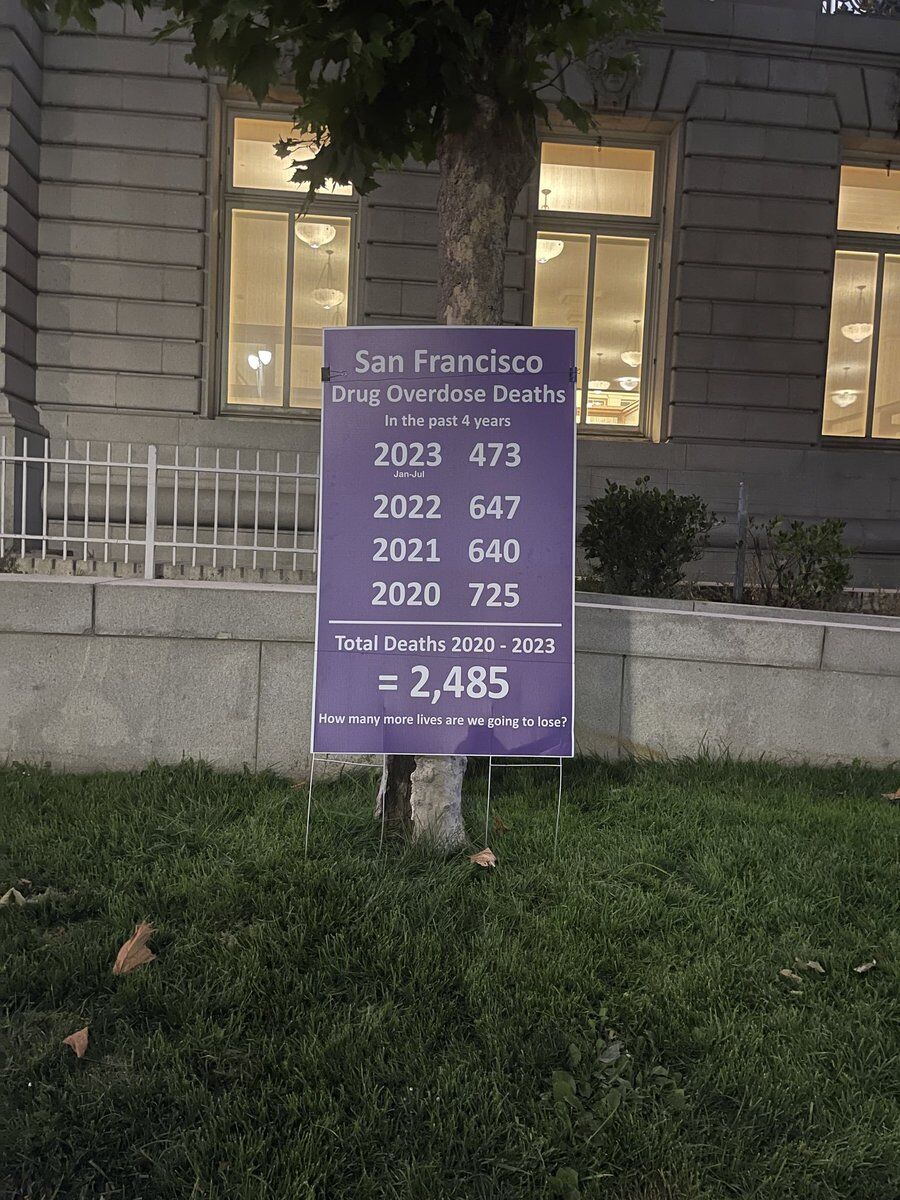
The numbers trace the arc of abandonment. Before 2018, SF overdose deaths stayed under 300 per year going back to at least 2013. Then enforcement collapsed: 441 deaths in 2019. 725 in 2020. 810 in 2023, the all-time record. SF’s overdose rate hit nearly 80 per 100,000 residents, almost three times New York’s, according to the CDC. In August 2023, nine people died in a single 24-hour span. Eighty-eight died that month.
Non-enforcement didn’t protect vulnerable communities. It abandoned them. Black San Franciscans face an overdose death rate 5x higher than the citywide average. They make up roughly 5% of the population but accounted for 33% of the city’s overdose deaths in the first half of 2023.
Tom Wolf, once homeless and addicted on these same streets, puts it in personal terms. SRO residents are 19 times more likely to die of an overdose than other San Franciscans, according to a UCSF/DPH study: 278.7 per 100,000 versus 21.3. Wolf says if the city had given him an SRO during his addiction, he’d be dead. Isolation is what addiction wants.
California’s own law seals the trap. Housing Code Section 8255 bans sobriety requirements in state-funded housing. The city couldn’t arrest people for using on the street. The nonprofits couldn’t require them to stop using indoors. And the money kept flowing regardless of how many residents died. No enforcement outside. No accountability inside. No consequences anywhere. Twenty-seven other states fund recovery housing with sobriety requirements. California made it illegal.
The Zurich Report Dean Preston Didn’t Read
SF’s Board doesn’t need to guess what works. Their own Budget and Legislative Analyst published a report comparing SF to Zurich’s Four Pillars model: Prevention, Harm Reduction, Treatment, and Law Enforcement, all four equally important.
That report was prepared at the request of then-Supervisor Dean Preston. The same Dean Preston who pushed to defund the police department whose enforcement his own report identifies as essential.
Dean Preston commissioned the report that proves his own ideology killed people. The Zurich model requires aggressive law enforcement. Preston spent years trying to gut it.
The results: zero fatal overdoses at Zurich’s three safe consumption sites. Across Canada, 2.6 million visits to 47 sites, 41,472 non-fatal overdoses, zero deaths. The BLA’s own model estimates a single SF site would prevent 15 to 24 fatal overdoses per year. The Board voted unanimously in 2023 to allow nonprofits to open supervised consumption sites. DPH had funding approved. Then redirected it.
In Zurich, 75% of opioid-addicted residents receive Medication for Opioid Use Disorder. In San Francisco, just 25%. The city has 4,198 methadone treatment slots and served only 2,408 patients in FY 2022-23. The treatment capacity exists. Without enforcement connecting people to it, they don’t walk through the door.
New York City is the control group. Same fentanyl crisis, maintained enforcement, two safe consumption sites open. Result: overdose deaths dropped 28% in 2024, the first substantial decrease in a decade.
The System Still Leaks
Enforcement without follow-through is theater. Drug use cases charged surged in 2024: 400 total versus an average of 43.2 in the prior five years. But 55% resulted in bench warrants because defendants didn’t show up to court. That’s 220 out of 400 who are not on any pathway to treatment.
Felony drug convictions are rising under DA Brooke Jenkins: 128 by mid-July 2024 versus 52 in 2023 and 40 in 2022. The DA is doing her job. The police are doing theirs. The judiciary is where the chain snaps.
The Experiment Is Over
San Francisco is finally building what should have existed years ago. Mayor Lurie signed Matt Dorsey’s Recovery First legislation on May 23, 2025, establishing long-term remission as the city’s primary substance use disorder policy goal. Co-sponsored by Mandelman, Mahmood, Sherrill, Melgar, Engardio, and Sauter.
The Drug Policy Alliance, Coalition on Homelessness, and Harvey Milk Club opposed it. 810 people died in 2023 under their preferred framework.
The RESET Center was signed into law February 18, 2026. Police arrest public drug users and take them to a treatment center, not jail. Dorsey: “Get sober, get arrested, or get out.” Even in 2026, Connie Chan and Jackie Fielder voted against it, the only two no votes on a 9-2 tally.
Prop 36 passed with 68% of the vote. Every county in California. Even San Francisco. Even Santa Cruz. The public is done.
Deaths dropped from 810 to 633 after enforcement partly resumed. But fentanyl deaths rose again in 2025. The four pillars work, but only when you build all four. Zurich proved it. NYC proved it. SF’s own data proved it in reverse.
Read the BLA’s Zurich report. Demand that San Francisco fund enforcement against public drug use. Fix the bench warrant crisis so courts connect people to treatment instead of cycling them back to the street. The thousands of dead can’t hold their supervisors accountable. You can.
Related Links
-
SF Budget and Legislative Analyst: Zurich Four Pillars Comparison (SF Board of Supervisors)
-
Ten Years of Fentanyl in San Francisco (SF Standard)
-
RESET Center Signed Into Law (ABC7 News)
Comments (0)
Sign in to join the conversation.