‘Housing First’ is a big lie. ‘Recovery First’ is the fix.
A Seattle frontline worker exposes what we all see in the encampments—and why California banned the cure.
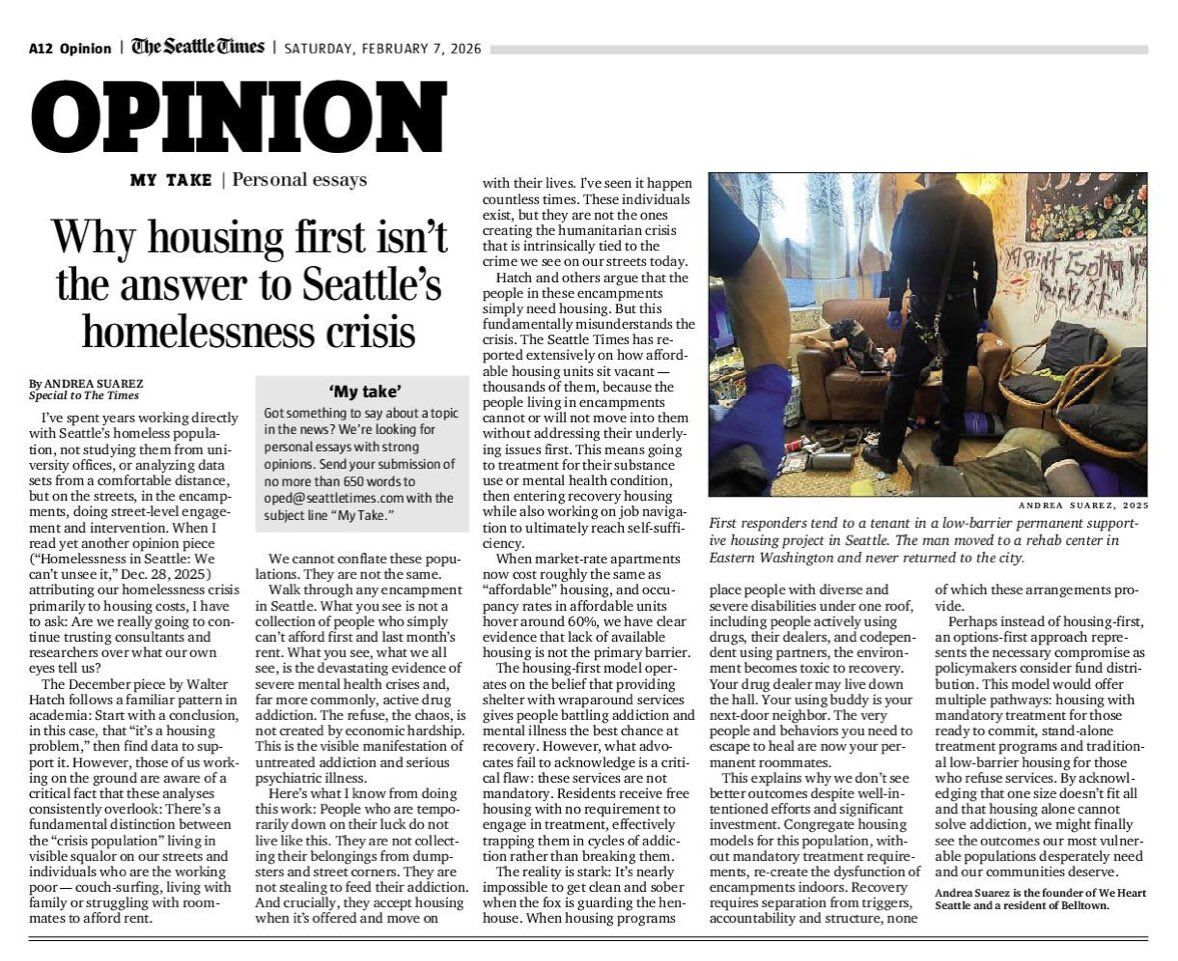
Source: x.com
Source: x.com
TL;DR
West Coast cities keep conflating the working poor with the crisis population on our streets. It’s not a housing problem—it’s addiction and mental illness. And California has literally banned funding for recovery housing.
Andrea Suarez has spent years working directly with Seattle’s homeless population—not analyzing data from university offices, but in the encampments doing street-level intervention. Her distinction is crucial: there’s a “crisis population” living in visible squalor on our streets, and there are the working poor who are couch-surfing, living with family, or struggling with roommates to afford rent. These are not the same populations. Walk through any encampment. What you see is not people who can’t afford first and last month’s rent. What you see is the devastating evidence of severe mental health crises and, far more commonly, active drug addiction.
The Lie That Launched a Thousand Encampments
This conflation isn’t accidental. It’s policy. Academics start with a conclusion—"it’s a housing problem"—then find data to support it. But those working on the ground know the truth that these analyses consistently overlook. The refuse, the chaos, is not created by economic hardship. This is the visible manifestation of untreated addiction and serious psychiatric illness. Yet we keep funding “housing” programs that don’t address the actual crisis because it lets politicians claim they’re doing something while the bodies pile up.
California Banned the Cure
Here’s what makes California’s approach uniquely insane: California Housing Code 8255 prohibits state-funded homeless housing from requiring sobriety. Read that again. In California, publicly funded homeless housing is required to allow unlimited drug use. We’ve spent over $24 billion on homelessness programs since 2019—and zero on recovery housing. Meanwhile, 27 other states have embraced recovery and drug-free housing. California actively bans it.
Housing First, Morgue Second
The data is damning. Up to 50% of people using drugs on San Francisco streets already have housing—they’re in SROs. They lack purpose and recovery support, not apartments. In Seattle, a woman named Rosa hasn’t slept in her DESC apartment in over a year, preferring the streets. DESC is a $100 million nonprofit that keeps building housing projects without investing in supportive services. Housing without treatment isn’t compassion—it’s warehousing people until they die.
The frontline workers know it. The data proves it. 27 other states figured it out. California needs to repeal the ban on sober housing and start treating addiction like the medical crisis it is—not a real estate problem. End housing first, morgue second. Remove Jennifer Friedenbach and disband the Coalition on Homelessness. It’s time for recovery first.
Take Action
Share this with someone who still thinks homelessness is just about housing costs
Related Links
-
Garry Tan on harm reduction policy failure (@garrytan)
-
Savage Citizens shares Seattle Times op-ed (@savagecitizens)
-
California's ban on sober housing funding (@kunalmodi)
-
Garry on harm acceleration policy (@garrytan)
Comments (0)
Sign in to join the conversation.