This Is the Judge Who Let Grandpa Vicha’s Killer Walk Free
SF Superior Court Judge Linda Colfax has a proven track record of giving violent criminals light sentences.
Source: garryslist.org
Source: garryslist.org
TL;DR
Antoine Watson killed 84-year-old Vicha Ratanapakdee and walked out of a SF courtroom a free man on sentencing day. Judge Linda Colfax’s term runs to January 2029. California law allows a recall. The window is open.
The name of the judge who let Vicha Ratanapakdee’s killer walk free the same afternoon as his sentencing is Linda Colfax. She serves on the San Francisco Superior Court. If you need the full story of what happened to Vicha, we covered it here. This article is a look at who Judge Colfax is.
Colfax is a Harvard graduate, a University of Michigan–trained lawyer, and a former San Francisco public defender who spent 13 years representing criminal defendants before winning her seat on the bench in 2010. Throughout her career, she’s shown herself to be judge with a consistent philosophy — rehabilitation over incarceration, defendant welfare foregrounded — and that philosophy just produced a sentence of zero additional days for a man who body-slammed an 84-year-old to death on camera.

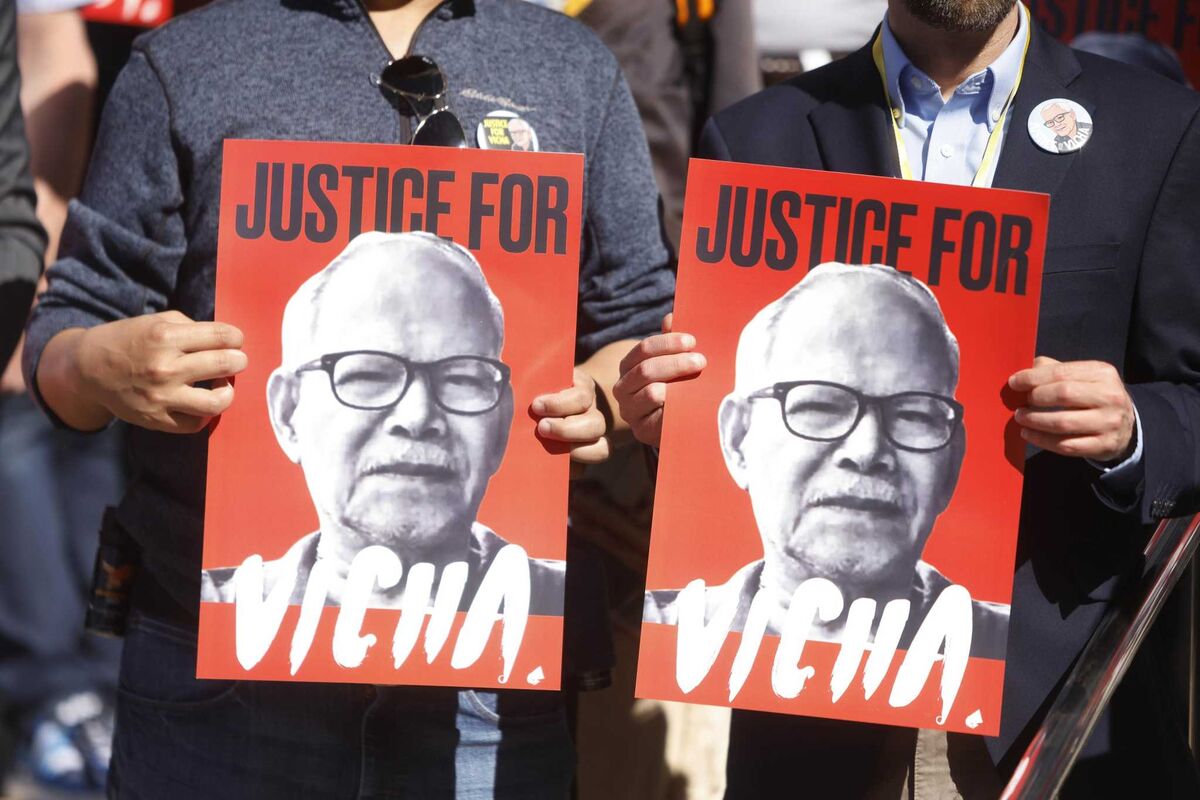
Justice for Vicha means Recall San Francisco Superior Court Judge Linda Colfax

@finbarr @garrytan San Francisco Superior Court Judge Linda Colfax’s current term ends on January 8, 2029. California allows voter-initiated recall of state and local officials, including judges, though successful judicial recalls are extremely rare. trellis.law/judge/linda.colfax
What Judge Colfax Decided for Vicha’s Killer
Judge Linda Colfax sentenced Watson to eight years in state prison, but with credit for approximately five years already served, he was released immediately on probation. With credit for time already served, he walked free immediately. Her stated rationale: she believed “public safety would be best served” by Watson being on probation, with conditions including living with his mother in Hayward.
Vicha’s daughter, Monthanus Ratanapakdee, who has been the family’s public voice through five years of waiting, had a different read.
The family is right. And the judge had a choice in how she framed it.
The Math Was Never a Surprise
The math was never a mystery. California’s 2-for-1 pretrial credit rule converted Watson’s five years of detention into approximately seven and a half years of credit against a four-year maximum sentence for involuntary manslaughter. Once a San Francisco jury acquitted Watson of first- and second-degree murder and elder abuse in January 2026 — six hours of deliberation after five years of waiting — the outcome was mathematically fixed. (Frank Noto of Stop Crime Action called the prolonged delay what it looks like: a deliberate strategy to let witness memories dim while pretrial credits accumulated.)
But Judge Colfax still had a choice in what she said. She could have acknowledged the family’s loss, the weight of the outcome, the message it sends to Asian elders across the city. She chose to frame it around Watson’s welfare.
A Philosophy, Not an Accident
That sentencing rationale — centering Watson’s future over the Ratanapakdee family’s five years of loss — is consistent with everything in Colfax’s career. About 38% of SF Superior Court judges now have public defender backgrounds, up significantly in recent years. Colfax is not an outlier. She’s a trend. The question for SF voters isn’t whether any individual judge is a bad person. The question is whether this pipeline is producing a court calibrated for the people who were victimized, or primarily for the people who did the victimizing.
Watson’s public defender used the “teenage brain” defense at trial, calling the killing “an impulsive act during an emotional storm.” Public Defender Mano Raju said Watson is “fully remorseful for his mistake” and has shown “significant personal growth.” A mistake. That is what they called the killing of an 84-year-old man on his morning walk.
A Pattern, Not a One-Off
One lenient sentence is a judgment call. Two is a pattern worth noting. Three — including one where the judge went below what the DA’s office itself requested — is a judicial philosophy in action. Liz Le broke down Colfax’s record of lenience last year in The Voice of San Francisco:
Kimberly Cherry was one of the defendants in the 2021 Union Square smash-and-grab that became a symbol of retail crime spiraling out of control in San Francisco. Judge Colfax granted Cherry Primary Caregiver Diversion. Post-conviction time served: zero. A smash-and-grab defendant walked away with a diversion program.
Tomiko Miller, another Union Square smash-and-grab defendant, drew a harder line from prosecutors. The DA’s office pushed for five years in state prison. Colfax accepted the five-year sentence on paper — then suspended it entirely and gave Miller probation. Zero post-conviction jail time. DA Brooke Jenkins publicly opposed the outcome. When the elected DA is objecting to your leniency, the sentence is doing something other than reflecting community standards.
Antoine Watson killed an 84-year-old man on camera. Three years in state prison on paper. Zero additional days served. He walked out the same afternoon.
Three violent or high-profile cases. Three defendants. Zero cumulative days of post-conviction incarceration. The question isn’t whether these individuals deserved a chance at rehabilitation — reasonable people can disagree on that. The question is what signal these outcomes send, taken together, to victims and to the public about what accountability means in Judge Colfax’s courtroom.
Judicial Recalls Are Rare. That’s the Point.
Judge Colfax’s current term ends January 8, 2029. She cannot be voted out in a standard election until then. California law allows voter-initiated recall of state and local officials, including judges, but successful judicial recalls are almost nonexistent.
The last two successful California judicial recalls: 1932, when Los Angeles voters removed three judges accused of corruption. And 2018, when Santa Clara County voters recalled Judge Aaron Persky for sentencing Brock Turner to six months for sexual assault. That’s it. Two successful recalls in nearly a century.
In March 2024, San Francisco voters rejected the removal of two Superior Court judges, Begert and Thompson, who had been targeted by Stop Crime Action as soft on crime. The appetite for judicial accountability exists in this city. It hasn’t found the right vehicle yet.
The Persky parallel is direct. Persky gave Brock Turner six months for sexual assault. Colfax gave Watson zero additional days for killing an 84-year-old on camera. The structural parallel is the same: a sentence that shocked the community, a judge whose stated rationale felt detached from the victim’s harm, and a term that doesn’t expire for years. The Persky recall succeeded. It was the first in 86 years, and it happened because enough people decided that rarity is not a moral argument against accountability in egregious cases.
Recall is rare. So is watching a killer walk free the same afternoon as his sentencing while the victim’s daughter sits crying in the courtroom.
Justice for Vicha Starts Here
This is the third chapter in a five-year failure. The hate crime was never charged, despite the family’s belief that Watson targeted Vicha because he was Asian, at the documented peak of anti-Asian violence in San Francisco. The murder conviction failed after six hours of jury deliberation. And now the sentence is probation.
Watson told police he was angry after a bad day. He didn’t call 911. He walked away. And the city’s justice system, at every turn, found a way to make that survivable for him and devastating for the family that has been fighting for accountability since January 2021.
Vicha’s family released a statement calling the outcome “deeply disappointing” and said it “sends the wrong message about protecting our seniors and public safety.” They are carrying this alone. They shouldn’t have to.
Justice for Vicha means serious consideration of recalling San Francisco Superior Court Judge Linda Colfax. Her term runs to January 2029. California law allows it. The Persky recall proved it can happen. The Ratanapakdee family has already waited five years. They shouldn’t have to wait three more while the judge who called Watson’s probation a matter of public safety continues to preside over violent crime cases in Department 23.
Related Links
-
SF Jury: Killing an Asian Elder Isn't Murder (Garry's List)
-
He Killed Grandpa Vicha. Tomorrow, He Walks Free (Garry's List)
-
Grandpa Vicha's Killer Was Just Released on Probation (Garry's List)
-
Judge Linda Colfax - Professional Background (Trellis.Law)
-
Sentencing of 'Grandpa' Vicha's Killer Set for March 26 (The Voice of San Francisco)
Comments (0)
Sign in to join the conversation.