SF Jury: Killing an Asian Elder Isn’t Murder
After five years, Vicha Ratanapakdee’s family learns their father’s life was “negotiable.” Six hours of deliberation was all it took.
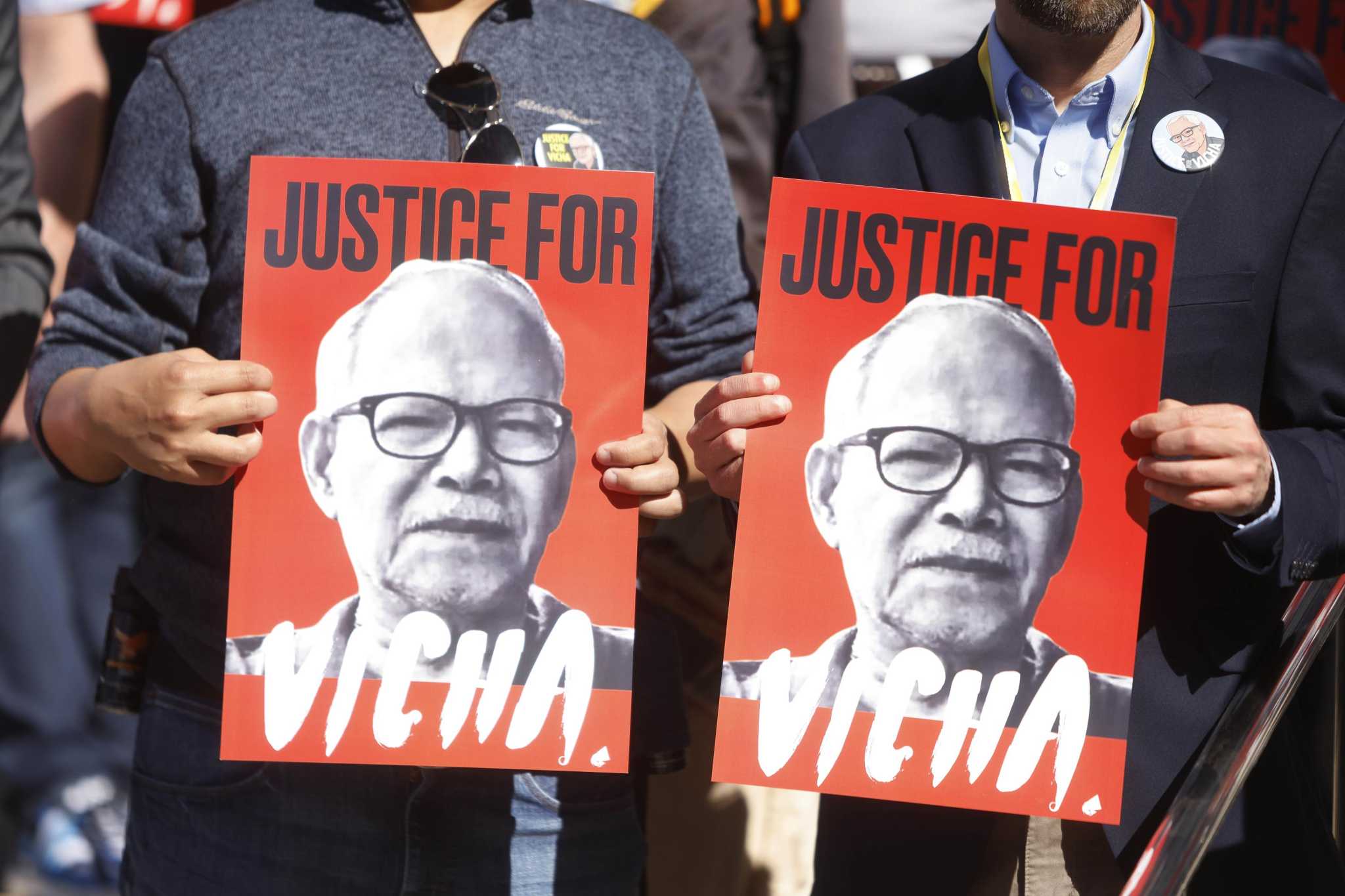
Source: sfchronicle.com
Source: sfchronicle.com
TL;DR
Antoine Watson was acquitted of murder for killing 84-year-old Vicha Ratanapakdee in an unprovoked attack that sparked the Stop Asian Hate movement. The jury deliberated just six hours after the family waited five years for justice.
Five years after Vicha Ratanapakdee’s brutal death sparked a national movement against anti-Asian hate, a San Francisco jury needed just six hours to acquit his killer of murder. The message to Asian elders: your life is negotiable.
Archived tweetMonthanus said she was “deeply disappointed” that the jury did not convict Watson of murder or elder abuse. She sat crying next to her mother, Jintana, after the verdict was read. https://t.co/mjiaM5M0id
💥Susan Dyer Reynolds🗞️ @SusanDReynolds January 16, 2026
Monthanus, Ratanapakdee’s daughter, sat crying next to her mother as the verdict was read. After half a decade of waiting, the family got their answer: an 84-year-old man can be killed in broad daylight in an unprovoked attack, and it’s not murder in San Francisco.
A Death That Changed Everything—And a Verdict That Changed Nothing
On January 28, 2021, Vicha Ratanapakdee was taking his morning walk in the Anza Vista neighborhood when Antoine Watson, then 19, tackled him to the ground. Ratanapakdee died two days later from traumatic brain injury. The attack, captured on surveillance video, went viral and became a catalyst for the Stop Asian Hate movement nationwide.
Now, after a 3½-week trial, a jury acquitted Watson of murder and elder abuse, convicting him only of involuntary manslaughter and assault. The deliberation? About six hours. The family’s wait for this outcome? Five years.
“The system just told every Asian elder in America: Your life is negotiable,” activist Forrest Liu told the Chronicle after the verdict.
The Hate Crime That Wasn’t Charged
Despite the family’s belief that Watson targeted Ratanapakdee because he was Asian, the district attorney never filed hate crime charges. During the trial, no evidence was presented to show the attack could have been racially motivated.
Watson testified he didn’t know the race of the victim or that he was elderly before tackling him—a claim the prosecution contested, arguing Watson was close enough to see Ratanapakdee was old. A witness reported hearing “Why you looking at me? Why you looking at me?” followed by “a crushing sound.”
Archived tweetThe progressive jury and judges of @SFSuperiorCourt are about to release a black man for killing an Asian senior citizen in broad daylight as a joke after less than five years. https://t.co/pAN06bEhSP https://t.co/Rn7ejZ3bSH
Kane 謝凱堯 @kane January 16, 2026
Critics argue the prosecution failed to set the context of what was happening at the height of anti-Asian violence during COVID. As one commentator put it, Jenkins’ office didn’t want to push the Asian hate narrative because it was “inconvenient” given the racial dynamics of the case.
“Elderly Asians won’t speak up because of the language barrier,” Monthanus said. “They won’t go to the police station to report crime.” And when they are victimized, apparently San Francisco’s justice system won’t deliver accountability either.
The ‘Teenage Brain’ Defense That Worked
Watson’s defense team from the San Francisco Public Defender’s Office framed the killing as “an impulsive act during an emotional storm.” His attorney Anita Nabha told the jury the prosecution wanted “to take a moment of panic from a teenager and turn it into murder.”
Public Defender Mano Raju said Watson is “fully remorseful for his mistake” and has shown “significant personal growth.” A mistake. That’s what they’re calling killing an 84-year-old man.
This verdict comes in a city where about half of Superior Court judges up for reelection in June 2026 have backgrounds as public defenders. The system that produced this outcome is about to ask voters for their jobs.
What Comes Next
Watson faces up to four years for assault, four for manslaughter, plus a consecutive five years for sentencing enhancements—the jury found that Ratanapakdee was rendered comatose and was over 70 years old. Additional aggravating factors could add more time. But given what we just witnessed, nobody should count on maximum sentences.
Supervisor Alan Wong, representing the majority-Asian District 4, said he had “no words” for his disappointment. “The murder of Grandpa Vicha was malicious, evil and the perpetrator should be dealt an adequate punishment for his crimes,” he said in a statement. “Justice was not served.”
The Ratanapakdee family’s five-year fight for justice ends not with closure but with a stark warning: in San Francisco, the bar for murder when the victim is an elderly Asian person may be impossibly high. The June 2026 judicial elections offer voters a rare chance to weigh in on the judges and system that delivered this outcome.
Follow @garrytan for more.
Related Links
-
Kane's tweet on the verdict (@kane)
Comments (0)
Sign in to join the conversation.