The Deficit California Can’t Tax Away
The state’s own nonpartisan analyst says spending outpaced revenue by 10 points. More taxation won’t solve the problem.
TL;DR
California’s LAO finds spending grew 70% since 2019 while revenue grew only 60%. The constitution blocks a revenue-only fix, and cutting every new program since 2019 only closes half the gap.
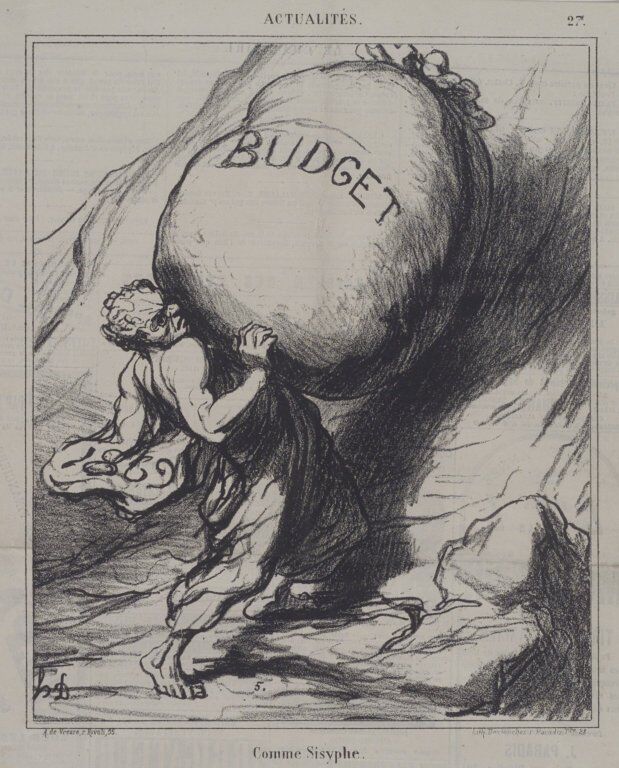
Revenue grew 60%. Spending grew 70%. That 10-point gap is the entire story of California’s fiscal crisis.
California’s nonpartisan Legislative Analyst’s Office just released a 22-page autopsy of state spending growth since the pandemic. The findings are brutal. General Fund spending grew $102 billion, from $146 billion in 2019-20 to $248 billion under the Governor’s proposed 2026-27 budget. That’s 70% growth. Revenue grew only 60% over the same period. The state faces structural deficits of $20 billion to $30 billion every single year.
This is not a one-time shortfall. It’s chronic. Under Newsom, cumulative spending totaled $3.7 trillion. Nearly 6,000 new laws were signed. The state workforce ballooned 28%, from about 377,000 to nearly 482,000 employees. And the celebrated $97.5 billion surplus, once touted as “the largest in American history,” was built on revenue projections later found to be $165 billion too high over four years.
Where the Money Went
About 70% of the $102 billion in spending growth went to sustaining services that already existed in 2019-20. The remaining 30% funded expansions and new programs. A handful of budget items account for the vast majority: schools and community colleges ($37 billion), Medi-Cal ($25 billion), Developmental Services ($8.4 billion), In-Home Supportive Services ($8 billion), child care ($3.7 billion), and universities ($3.2 billion).
State operations grew $9 billion. Employee compensation alone drove $6 billion of that. Authorized state positions grew by approximately 18,000, a 17% increase. Major discretionary expansions included comprehensive Medi-Cal coverage for undocumented immigrants, child care slot expansions, enhanced firefighting capacity, and expanded university enrollment.
K-14 education was the outlier. Roughly half of its spending growth sustained existing services. The other half funded expansions: universal transitional kindergarten for all four-year-olds, new after-school programs, and the Proposition 28 arts education mandate voters approved in 2022.
This is a glide path to insolvency.
The Tax Trap
Proposition 98, passed by voters in 1988, requires roughly 40 to 50 cents of every new dollar of General Fund revenue to flow automatically to K-14 education. It’s a hidden multiplier baked into the constitution. Closing a $30 billion deficit through tax increases alone doesn’t cost $30 billion in new revenue. It could cost up to $60 billion, because half of every new dollar raised gets routed to schools before it can touch the deficit. Most Californians have never heard of this mechanism, but it changes the calculus.
Then there’s the State Appropriations Limit, or SAL, established by Proposition 4 in 1979. It caps how much the state can spend from tax revenue. The LAO’s conclusion is direct: the magnitude of revenue increases needed to close the projected deficits “very likely exceeds the state’s available room” under that limit.
California’s own constitution blocks the state from taxing its way out of a deficit it spent its way into. A revenue-only fix is unlikely without voters amending the constitution. The LAO’s illustrative tax package shows the scale of what would be needed alongside spending cuts: extend the expiring Proposition 30 and 55 income tax rates just to prevent the deficit from growing, then raise personal income taxes across the board by 6%, increase the corporate tax by 6 percentage points, AND raise the sales tax by one cent. All of that in a state that already has the highest income tax rate, highest state sales tax, and highest gas tax in America, while ranking 49th in taxpayer return on investment.
Cutting Every Expansion Only Gets You Halfway
If you reversed every single discretionary expansion enacted since 2019-20, full-scope Medi-Cal for undocumented immigrants, child care slot expansions, university funding above inflation, enhanced fire crews, all of it, you’d save approximately $15 billion. That’s roughly half the structural deficit.
This is the LAO’s own illustration. It exists to show the brutal math: there is no clean surgical fix. When 70% of spending growth went to sustaining existing commitments, you can’t balance the budget by reversing the new stuff. The baseline itself outgrew the state’s income.
The Billionaire Tax Gamble
The LAO report makes clear why the state is so dependent on high earners: over 40% of personal income taxes come from people making $1 million or more. This progressive tax structure was built deliberately through Propositions 30 and 55. It was a policy choice to concentrate revenue on the wealthy. The consequence is that the state’s fiscal health is hostage to whether those taxpayers stay.
Against that backdrop, a proposed ballot measure backed by SEIU-UHW would impose a one-time 5% tax on billionaire wealth. According to tracking by the California Wealth Exodus project, approximately 48 billionaires have already departed California, taking roughly $1.1 trillion in wealth with them. Even the New York Times covered why some Democrats oppose the proposal.
The progressive tax structure is destroying itself. Props 30 and 55 made the state dependent on high earners staying. The wealth tax accelerates their departure. Every billionaire who leaves takes their capital gains, their income taxes, their foundation spending, and their company’s headquarters with them. You can’t squeeze more revenue out of a base that’s actively fleeing.
A Political Machine
So why does the spending machine keep growing? Public sector unions collect approximately $921 million per year in revenue, drawn from an estimated $240 billion in annual state employee compensation. Nine of the top ten political donors in California are public sector unions. They don’t endorse candidates who fix outcomes. They endorse candidates who protect spending.
The governor candidates are already lining up to audition: As an earlier post outlined, “Katie Porter locked down ATU, SMART, NUHW, and UAW. Eric Swalwell grabbed CMA and the firefighters. Tom Steyer snagged CNA and CSEA.” The incentive structure is: spend more, get endorsed, win. David Crane’s analysis calls these unions “the principal beneficiaries of more than $500 billion of annual state spending.” The $102 billion in growth the LAO documented isn’t accidental.
Gabriel Petek, just the sixth Legislative Analyst in the LAO’s 85-year history, has adopted an unusually emphatic tone in warning legislators that these deficits require “sustained and consequential action.” When the most restrained, nonpartisan office in Sacramento sounds the alarm this loudly, it’s worth paying attention.
The diagnosis is in. California built a spending structure it cannot sustain, and its own constitution blocks the easy exit. Spending cuts are coming whether Sacramento likes it or not. The only question is whether the next governor makes those cuts strategically, protecting programs that actually deliver, or keeps punting until the math forces a crisis on the people these programs exist to serve.