Richmond Cut Its Crime Cameras. Car Thefts Jumped 33%.
The city disabled its license plate readers to virtue signal national issues. Immigrant shopkeepers are paying the price.
Source: x.com
Source: x.com
TL;DR
Richmond disabled Flock cameras over a phantom ICE threat. Vehicle thefts jumped 33%, and now immigrant shopkeepers are begging the council to turn them back on.
Richmond had Flock Safety cameras for years. Last October, the city’s police chief shut off the license plate readers after discovering a “national lookup” feature that could theoretically allow ICE to access the data. Vehicle thefts jumped 33% in the months that followed. Every neighboring city kept its cameras running, turning Richmond into a soft target of the East Bay.
The cameras were shut off over a threat that had already been resolved seven months earlier. The crime spike was not hypothetical.

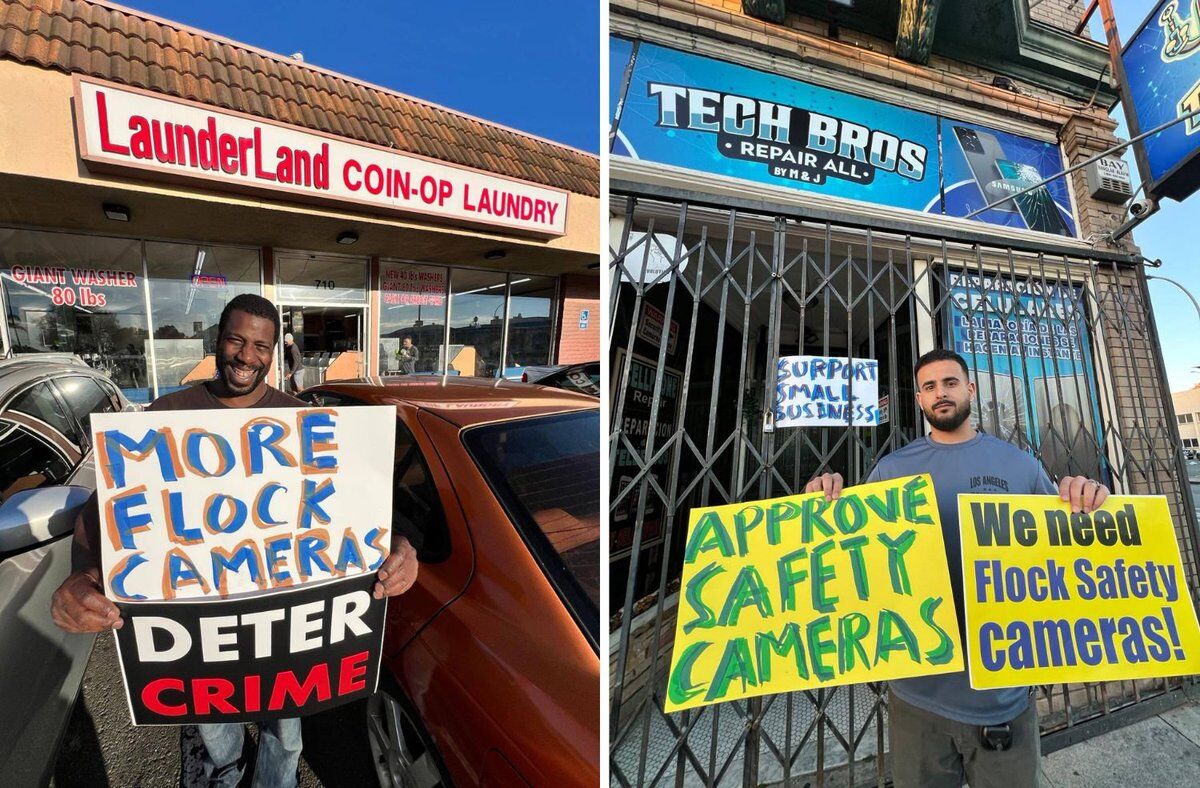
Richmond parents and small businesses are literally begging council to turn the crime cameras back on after car thefts jumped 33% when they were shut off. Craven bureaucrats are ignoring immigrant shopkeepers holding “We need safety cameras” signs richmondstandard.com/community/2026/03/03/richmond-residents-businesses-urge-city-to-restore-public-…
The People It Was Supposed to Protect
The cameras were disabled to shield immigrant communities from ICE. The people showing up to city hall begging for them back are immigrant shopkeepers.
Oscar Garcia, president of the 23rd St Merchants Association, led a coalition rally alongside community advocates Ahmad Anderson and Brandon Evans. Small business owners held handmade signs: “We need Flock Safety cameras!” and “More Flock cameras deter crime.” Fremont councilman Yang Shao came out in support.

These are the laundromat owner tired of break-ins and the repair shop owner whose customers won’t park outside. Safety isn’t a luxury good. Immigrant shopkeepers on 23rd Street deserve the same protection as Palo Alto.
50 Cities Got Scared
Richmond isn’t alone. At least 50 cities nationwide have ended or paused Flock contracts over immigration fears. Mountain View voted unanimously to dump its cameras. Santa Clara County cut ties.
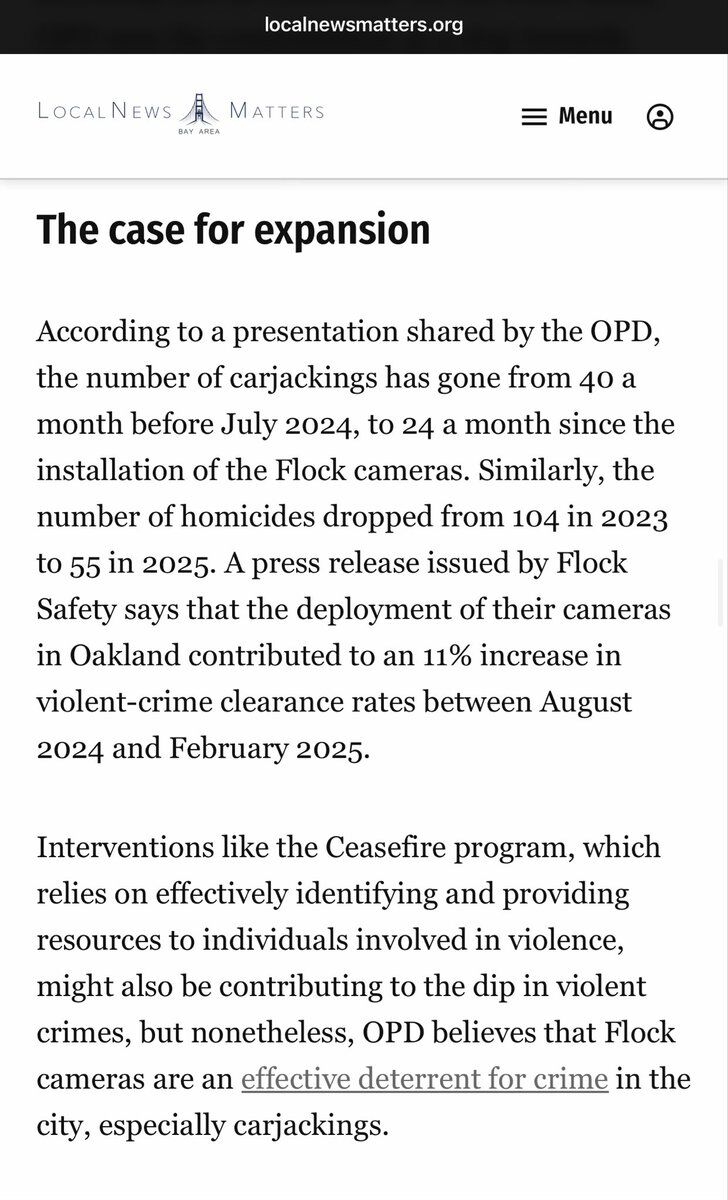
The cities that kept their cameras tell a completely different story. Oakland saw a 66% decrease in carjackings and 53% decrease in homicides after deploying Flock. The council voted 7-1 to expand the program. In Atlanta, one detective solved 35 homicides in a single year using Flock, 7x what an elite detective normally clears. Flock reports it now helps solve about 10% of all reported crime in America.
Removing cameras doesn’t shield anyone from ICE. California law already forbids sharing plate data with federal immigration enforcement, and Flock disabled the national lookup statewide over a year ago. All it does is leave more crimes unsolved. We saw this dynamic when SF reduced prosecution under Boudin: crime didn’t vanish. It tends to concentrate wherever consequences were lowest. Richmond without cameras, surrounded by cities that have them, is an open invitation.
Certainty, Not Severity
Daniel Nagin at Carnegie Mellon spent decades studying what actually deters crime. Decades of studies confirm the same finding: it’s the certainty of being caught, not the severity of punishment. America spends $270 billion a year on criminal justice and gets a system where nearly half of violent crimes go unsolved. Flock is the infrastructure of certainty. Every camera makes every other camera more effective. Remove one city’s cameras while every neighbor keeps theirs, and you don’t reduce surveillance. You just punch a hole in the fence.
I funded Flock Safety’s seed round in 2017. In December of last year, Flock cameras found the drunk driver who hit my wife in a hit-and-run. Without those cameras, that drunk driver driver walks free, never to face accountability. The next step could have been someone died. This isn’t abstract for me, and it isn’t abstract for the shopkeepers standing outside Richmond City Hall.
The council has two options on the table. Option A extends the Flock contract and turns the plate readers back on. Option B keeps them dark. City staff recommended Option A. The 33% spike in car thefts is the case for Option A in one number.
Fifty cities got scared. The people holding “We need safety cameras” signs outside Richmond city hall are the ones paying for it.
Take Action
If you live in Richmond, sign the petition and tell your council you demand public safety.
SignRelated Links
-
Rally over Flock cameras contract vote in Richmond (NBC Bay Area / KTVU)
-
Oakland's crime crisis by the numbers (Garry's List)
-
Atlanta solved 35 homicides with Flock (Garry's List)