America’s Dirty Secret: Safety Is a Luxury Good
If safety is something you purchase—guards, gates, cameras—you’ve already conceded that public order has failed.
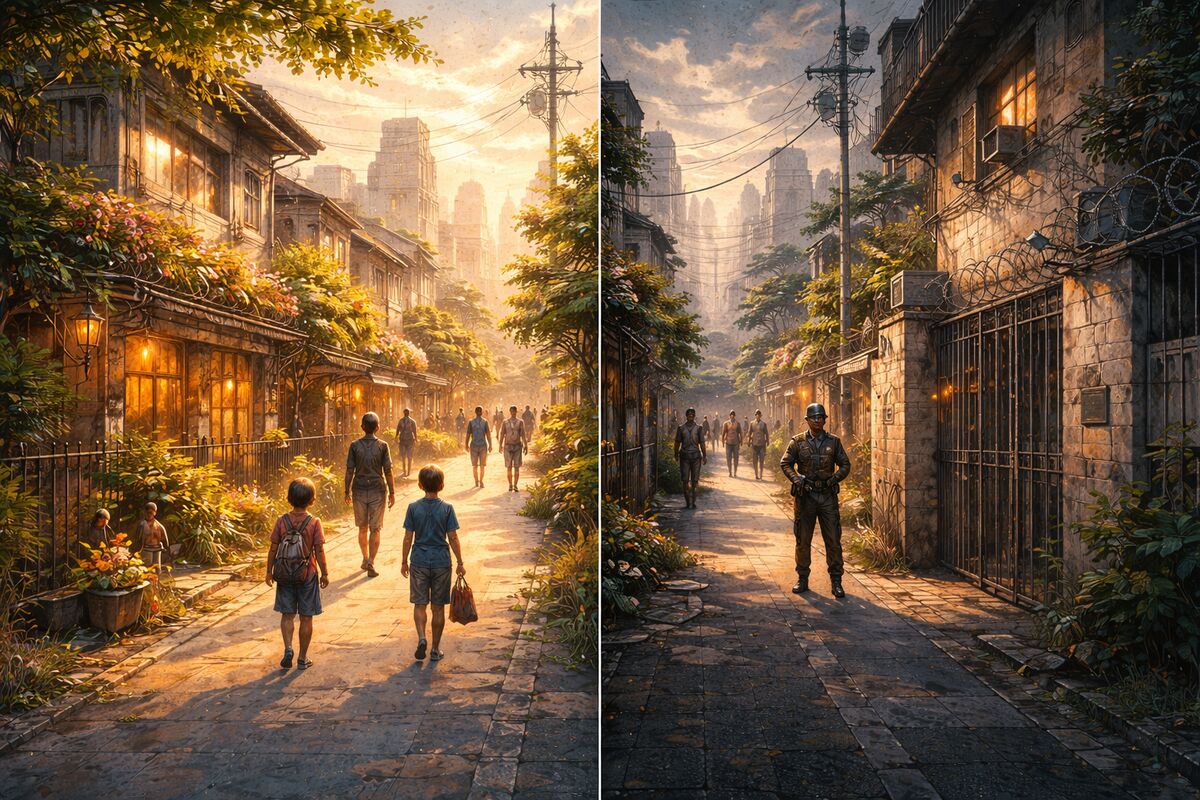
TL;DR
America is becoming South Africa lite, where the wealthy buy protection behind gates and cameras while the poor are left to fend for themselves. Public safety must be public — that’s not a surveillance state, that’s civilization.
If safety is something you purchase—guards, gates, cameras—you’ve already conceded that public order has failed.
That’s the uncomfortable truth most American cities don’t want to face. We’ve created a two-tiered system where some neighborhoods get abundant police, private security patrols, and Ring camera networks, while others get fentanyl dealers, broken windows, and 911 calls that go unanswered. That’s South Africa lite.
That’s the view of Flock Safety CEO Garrett Langley who I have known since they were just in the garage starting out. He is one of the most principled founders I’ve ever met in my entire career as an investor at Initialized Capital (where we led the seed) and today in my role as CEO and President of Y Combinator.
There are two ways for a society to think about safety. In the first one, safety is a public good. It belongs to everyone, rich or poor, regardless of what neighborhood you’re born into. This is the model that you see in countries like Japan. In the second vision, safety is a private good. It’s something that you can purchase. If you can afford private security guards or membership in a gated community, you’ll be fine. Everyone else is on their own. This is the model you see in countries like South Africa. Let’s think about Japan for a moment. Tokyo is a city of 37 million people that sees a few dozen murders per year. If you walk through Shibuya at 2 am, you’ll see drunk salarymen stumbling home alone and women cutting through dark alleys without a second thought. When people lose wallets, they expect them back. You can watch Netflix’s Old Enough to see Japanese toddlers sent alone to the grocery store. For American parents, that’s an alternate universe. Japan has made safety a universal good. It’s not safety-for-those-who can afford it. In Japan, safety is civic infrastructure—like clean water or good roads. Compare that to South Africa. South Africa has over 600,000 private security guards—more than twice the number of police and soldiers combined. The wealthy live behind nine-foot walls, electric fences, panic buttons. If you can pay, it works. But if you can’t? Then no one is there to protect you. South Africa’s murder rate is one of the highest in the world. Cities like Johannesburg, Durban, and Cape Town are some of the most dangerous in the world. But South Africa muddles through, because the rich can afford to protect themselves. Where’s America in this? The U.S. is somewhere in between Japan and South Africa. We have hundreds of thousands of fantastic law enforcement officers who are dedicated to keeping our people safe. But everyone knows that the rich are safer than the poor. People in poor neighborhoods suffer from rates of crime that rich people can’t imagine. You can see it in a single metro area. Drive across any major American city and the gap is staggering. In some neighborhoods, you can’t walk outside at night, leave anything in your car, or expect the police to show up in time if something happens. In others, home values stretch well into the millions, police are abundant, and residents can rely on cameras, gates, and private security to keep them safe. That’s South Africa lite. If you’re poor, you make do with spotty public order. But if you’re rich, you protect yourself with walls, gates, cameras, and guards. Flock Safety exists to make America’s public safety more like Japan’s and less like South Africa’s. Our vision is simple—every American, no matter where they live or how much money they have, should have access to the same sense of security that the richest Americans have today. There’s no reason that only people in the richest neighborhoods should enjoy freedom from crime. Everyone deserves to be safe.
The Japan Model vs. The South Africa Model
Think about Tokyo: 37 million people, a few dozen murders per year. You can watch Japanese toddlers sent alone to the grocery store on Netflix’s Old Enough. Drunk salarymen stumble home safely at 2am. Women cut through dark alleys without a second thought. When people lose wallets, they expect them back. For American parents, that’s an alternate universe.
Japan treats safety as civic infrastructure—universal, like clean water or roads. It’s not “safety for those who can afford it.” It’s safety, period.
Now compare that to South Africa: over 600,000 private security guards—more than twice the number of police and soldiers combined. The wealthy live behind nine-foot walls, electric fences, panic buttons. If you can pay, it works. But if you can’t? No one is there to protect you. The murder rate is among the highest in the world. South Africa muddles through because the rich can afford to protect themselves.
America’s Dirty Secret: South Africa Lite
Drive across any major American city and the gap is staggering. In some neighborhoods, you can’t walk outside at night, leave anything in your car, or expect the police to show up in time. In others, home values stretch into the millions, police are abundant, and residents can rely on cameras, gates, and private security.
San Francisco is becoming “two cities, separated by an unequal acceptance of basic standards for public safety and human dignity,” according to The Voice of SF. The Marina, Upper Fillmore, North Beach, and Nob Hill are getting even better. But in other neighborhoods, parents pull small children through filth and squalor on their way to school.
Wealthy neighborhoods already have Ring networks, private security patrols, and gated access. The poor make do with spotty public order. That’s not a crime problem—it’s a class problem.
The Privacy Argument Is a Trojan Horse for Inequality
Here’s the spicy take no one wants to hear: the alternative to state surveillance isn’t privacy. It’s private surveillance.
Opposing public safety tools like Flock while tolerating privatized equivalents creates a two-tiered system where safety becomes a luxury good. When progressives block public cameras in the name of “privacy,” wealthy residents keep their Ring networks and private patrols. The poor get nothing.
This is the real class war: blocking tools that would democratize safety. Oakland’s Public Safety Committee deadlocked 2-2 on Flock cameras while wealthy Oakland Hills neighborhoods already have private security. Who exactly is that protecting?
Flock Safety: Making Public Safety Actually Public
Flock currently solves about 10% of reported crime in America. The outcome is actually a material reduction in crime. They helped return over 450 missing children in 2025. They were instrumental in finding the suspect in the Brown and MIT murders.
And this is personal for me. My wife was hit in a hit-and-run last month. She was injured and is still recovering. Flock cameras found the drunk driver who hit her. Without Flock, that drunk driver would never be found, and they might have killed someone next.
Without these tools available to everyone, wealthy neighborhoods get protection and everyone else rolls the dice. That’s not acceptable.
Everyone deserves to be safe—not just people who can afford walls, gates, and guards. Public safety must be PUBLIC. That’s not a surveillance state. That’s civilization.
Take Action
Share this to demand public safety for all neighborhoods
Related Links
-
Flock Safety Secures $275 Million Funding (Flock Safety)
-
San Francisco's Two Cities: Unequal Safety (The Voice of SF)
-
Oakland deadlocks on Flock cameras (Local News Matters)
-
Flock Safety raises $275M (Reuters) (Reuters)
Comments (0)
Sign in to join the conversation.