Oakland Has a Gang Problem Disguised as a Gun Problem
Less than 2,000 Oakland residents drive most of its gun violence. Oakland Ceasefire shows just how important it is to target the right people.
Source: garryslist.org
Source: garryslist.org
TL;DR
Less than 0.5% of Oakland’s population drives the majority of its gun violence. Oakland Ceasefire cut violent gun crimes by half when the city finally targeted the right people. The question is political will.
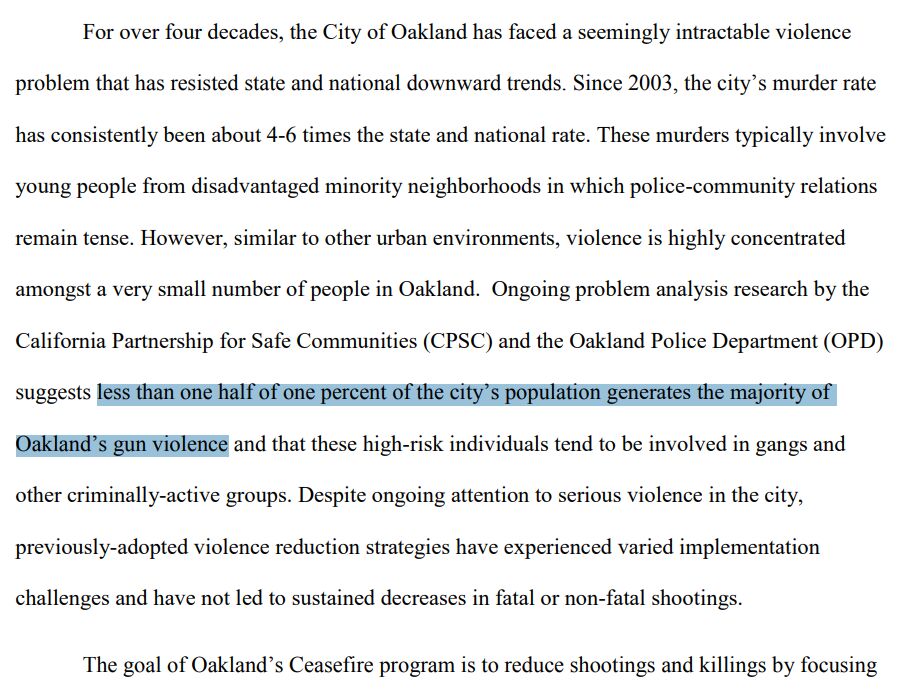
In 2013, researchers from Northeastern, Northwestern, and Yale began running the numbers on Oakland’s gun violence. In 2019, they released their finalized report: between 0.3% and 0.5% of the city’s population was responsible for the majority of its homicides. That’s less than 2,000 people.
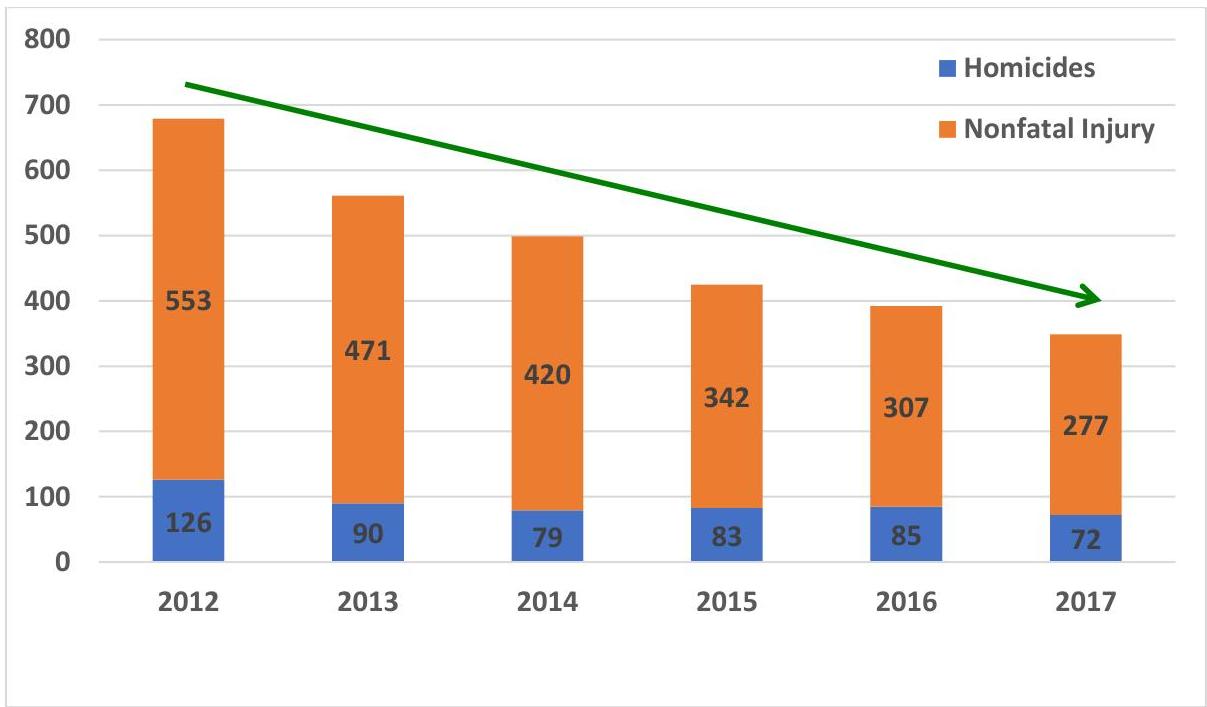
The same report found that between 2012 and 2017, shooting victimizations fell by 50%. How? Not by targeting guns — by targeting high-risk individuals.
Less Than One-Half of One Percent
Less than 0.5% of Oakland’s population. More than half its gun violence. Those are not gun-control numbers.

When the city of Oakland implemented a program intended to curb its gun violence, they also exposed this interesting tidbit: <0.5% of the population of the city does more than half of the gun violence. They later revealed this was ~0.3%, or a little under 1,300 people.
This concentration isn’t unique to Oakland. In Atlanta in 2022, the mayor revealed that 0.2% of the population was responsible for 40% of the city’s crime. In one week, Atlanta’s police arrested 20 super-repeaters who had 553 prior arrests and 114 felony convictions between them. The pattern holds everywhere someone has bothered to look.
Archived tweet@adamscochran Actually jailing super predators and multi time offenders works https://t.co/KRSFxhVZRf [Quoting @cremieuxrecueil]: In 2022, the mayor of Atlanta revealed that 0.2% of the population was responsible for 40% of the city's crime. In one week, Atlanta's police force arrested 20 super-repeaters who had 553 prior arrests and 114 felony convictions between them.
Garry Tan @garrytan January 31, 2025
According to the peer-reviewed Ceasefire evaluation, gang and group members were less than 1% of Oakland’s population but involved in nearly two-thirds of gun homicides between January 2012 and June 2013. Oakland’s homicide rate of 31.8 per 100,000 was 6.8 times the national average in 2012. The violence was catastrophically concentrated in specific people, specific networks, specific blocks.

America has a gang violence problem disguised as a gun problem The problem could be completely crushed if there was a will
The $80 Million Lesson
At first, Oakland tried to solve the problem a different way.
Measure Y ran for 10 years. The city invested more than $80 million in violence prevention and reduction. The result: homicides rose more than 25% between 2005 and 2012, compared to the eight years before. Not because Oakland didn’t care. Because the programs were targeting the wrong people.
Youth curfews. Gang injunctions. Services capped at age 24. It all made intuitive sense until someone actually analyzed who was doing the killing.
The average Oakland homicide suspect or victim was 30 years old with 12 prior arrests. Not a juvenile. Not someone caught up in a drug market for the first time. An adult male embedded in gang networks, fighting over personal disputes and ongoing conflicts. Youth curfews won’t stop someone who is 30. Services capped at 24 missed more than half the highest-risk population entirely.
This is the classic product-market fit failure. Great execution, wrong user. Oakland had resources, intention, and political will. It just had the wrong mental model of who the customer was. The moment they ran the actual problem analysis, everything changed.
$80 million spent. Homicides rose 25%. Then they targeted the right people. Homicides fell by half. The money was never the problem.
It’s Not About Guns or Drugs
The actual data on what drives the violence is even more uncomfortable.
Oakland’s homicide problem was not primarily drug-related. The 2013 problem analysis found that drugs played only a minor role. A CDC report found drug involvement was a factor in only 0 to 25% of urban gang homicides. The violence was being driven by personal disputes, status contests, and the logic of retaliation.
Card games. Social media posts. Someone feeling disrespected. Not territory. Not product. The evaluation documented the new mindset among the highest-risk individuals: win or lose a fight, somebody has to die. This wasn’t about guns. It was about people.
This matters for policy. If violence is driven by impulsive status disputes rather than economic calculation, you can’t solve it by disrupting drug markets. And if the shooters are adults averaging 30 years old with 12 prior arrests, prevention programs aimed at teenagers are reaching the wrong stage of the pipeline entirely. The entire framing of “gun violence” as a diffuse social problem obscures the fact that it is a concentrated network problem, operated by specific adults, for reasons that have almost nothing to do with guns.
What Actually Worked: Naming Names, Then Offering a Hand
Ceasefire didn’t come from City Hall. It was championed by a group of Oakland faith-based groups alarmed by the deaths of young men on their streets. They pushed the city to import a strategy from Boston with documented results. The Oakland Ceasefire Partnership was formally established in October 2012 between the City of Oakland and the OPD.
The core mechanism is deceptively simple. Bring the highest-risk individuals into a room. Not to arrest them. Community members, faith leaders, trauma surgeons, formerly incarcerated people, and law enforcement all deliver the same message: your life has value, here are services and support, and if the violence continues, here is exactly what will happen to you. Surgical enforcement followed when groups kept shooting: targeted actions focused on 10 or fewer people, designed to interrupt specific conflicts, not sweep neighborhoods.
In the three years studied, 80% or more of call-in participants signed up for the services offered. Not because they were coerced. Because someone finally showed up with real help and treated them like people with a future worth protecting.
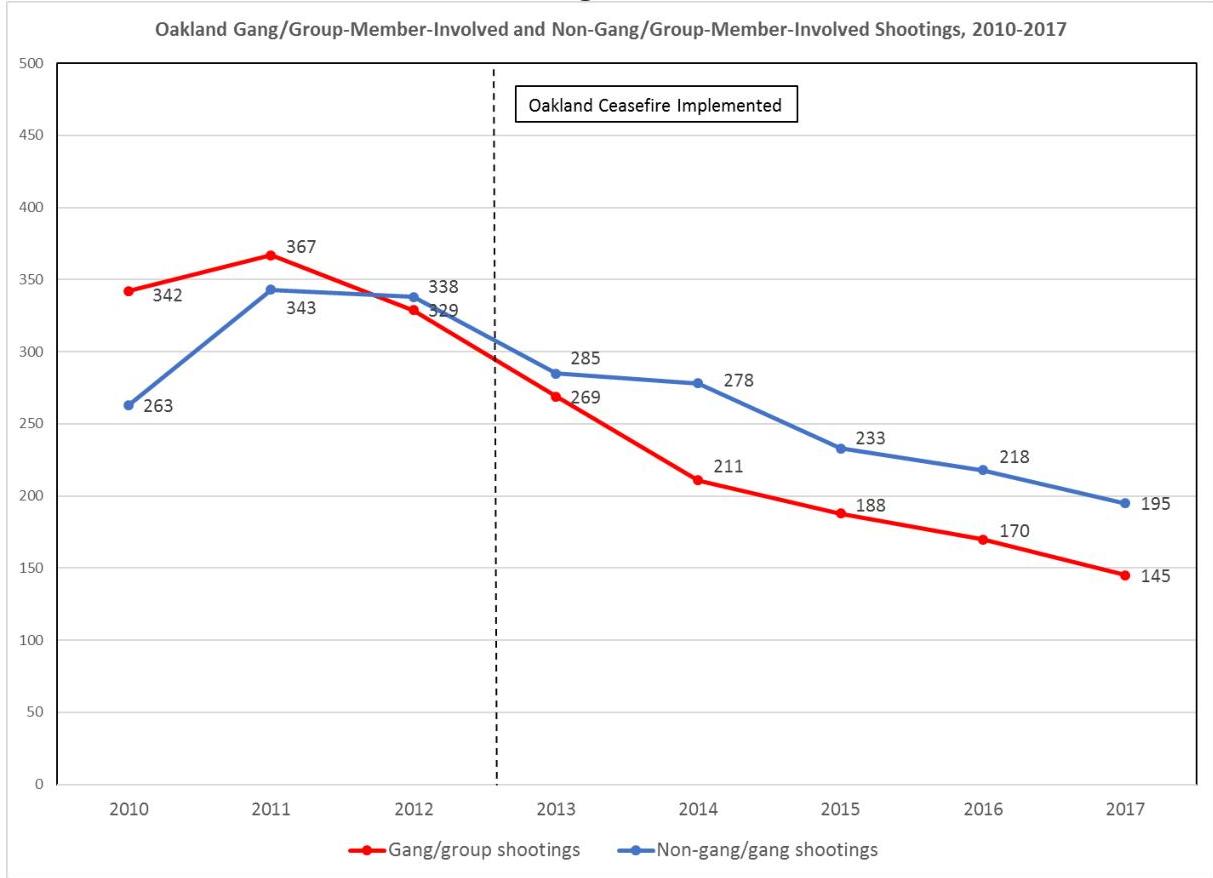
One more finding worth sitting with: even gangs that never attended a call-in but were socially connected to gangs that did showed a statistically significant 26% reduction in shootings. Deterrence traveled through social networks. You didn’t have to reach every person. You had to reach the right people, and the signal propagated outward through the same networks that were spreading the violence.
The Results: Dramatic Reduction in Violent Crime
From 2012 to 2017, Oakland experienced a 43% reduction in homicides and a 50% reduction in non-fatal shootings. Total shooting victimizations peaked at 710 in 2011 and fell to 340 in 2017. The Ceasefire intervention was associated with a statistically significant 31.5% decrease in the monthly count of gun homicides (p=.047), distinct from trends in 10 of 12 California comparison cities. This wasn’t a statewide trend. This was Oakland specifically doing something that worked.
And then there’s the natural experiment nobody planned.
In 2016, a sex scandal engulfed the Oakland Police Department. Officers were charged, suspended, and resigned. OPD was left without a chief. Ceasefire operations essentially halted for months. Shooting reviews, direct communications, enforcement actions, performance management. All of it stopped.
According to the report, during the second half of 2016, immediately following the scandal, the monthly rate of shootings and homicides in Oakland increased dramatically.
If this were a drug trial, the FDA would approve it immediately. The intervention stopped. The outcome worsened. The intervention resumed. The outcome improved. That’s as close to a controlled experiment as public policy gets.
By January 2026, Oakland had cut its homicide rate by 52% in just two years, following the revival of Ceasefire under new leadership. The program lapsed. It was revived. The homicides fell again. The model replicates because it already has been replicated, in the same city, twice.
The Will Problem
The fact that the violence is so constrained (in both location and in who it affects) is the reason that America tolerates homicide rates in its most dangerous cities which are absurdly high: on a par with the worst of Central/Latin America, where the violence is much more normie-directed
The contained nature of this violence is exactly why America tolerates homicide rates at levels that would constitute political emergencies anywhere else. The violence is on par with the worst of Central America in its absolute numbers, but because it’s concentrated in specific neighborhoods and specific networks, most of the city and most of the country doesn’t feel it. So the political urgency never arrives.
The gun control debate generates fundraising, moral clarity, and national attention. Targeted enforcement of 1,500 specific people in specific gang networks is unglamorous. It requires sustained data analysis, ongoing management, and the political courage to say: this individual, specifically, is driving the violence. Then holding the line when the program becomes inconvenient.
Oakland itself let Ceasefire lapse before reviving it. The Chronicle documented the revival push in January 2024, meaning there was a period when the city simply stopped doing the thing that demonstrably worked. A program that cut homicides by half still needed political protection to survive a change in administration.
The mechanism exists. The data is clear. 0.3% of a city’s population driving half its violence is a solvable problem if you’re willing to identify those people, treat them as human beings with a future, offer them a real way out, and enforce consequences when they won’t take it. Oakland proved this. Atlanta proved this. San Francisco just posted its lowest homicide count since 1954.
The cities not doing this aren’t facing an unsolvable crisis. They’re choosing their results. Stop debating guns. Start identifying people.
Related Links
-
Oakland Ceasefire Evaluation Final Report (2019) (Northeastern/Northwestern/Yale)
-
Oakland Ceasefire Strategy | City of Oakland (oaklandca.gov)
-
SF Chronicle: Oakland's homicide rate cut 52% in two years (SF Chronicle)
-
SF Chronicle: Oakland mayor to revive Ceasefire (Jan 2024) (SF Chronicle)
-
Good cities can't exist without public order (Noah Smith / Noahpinion)
1 comment
Discussion is for vetted members. Apply to join or log in.
We should chat about this.