You’re Paying $51 Billion for State Services. California Won’t Tell You What You Got for It.
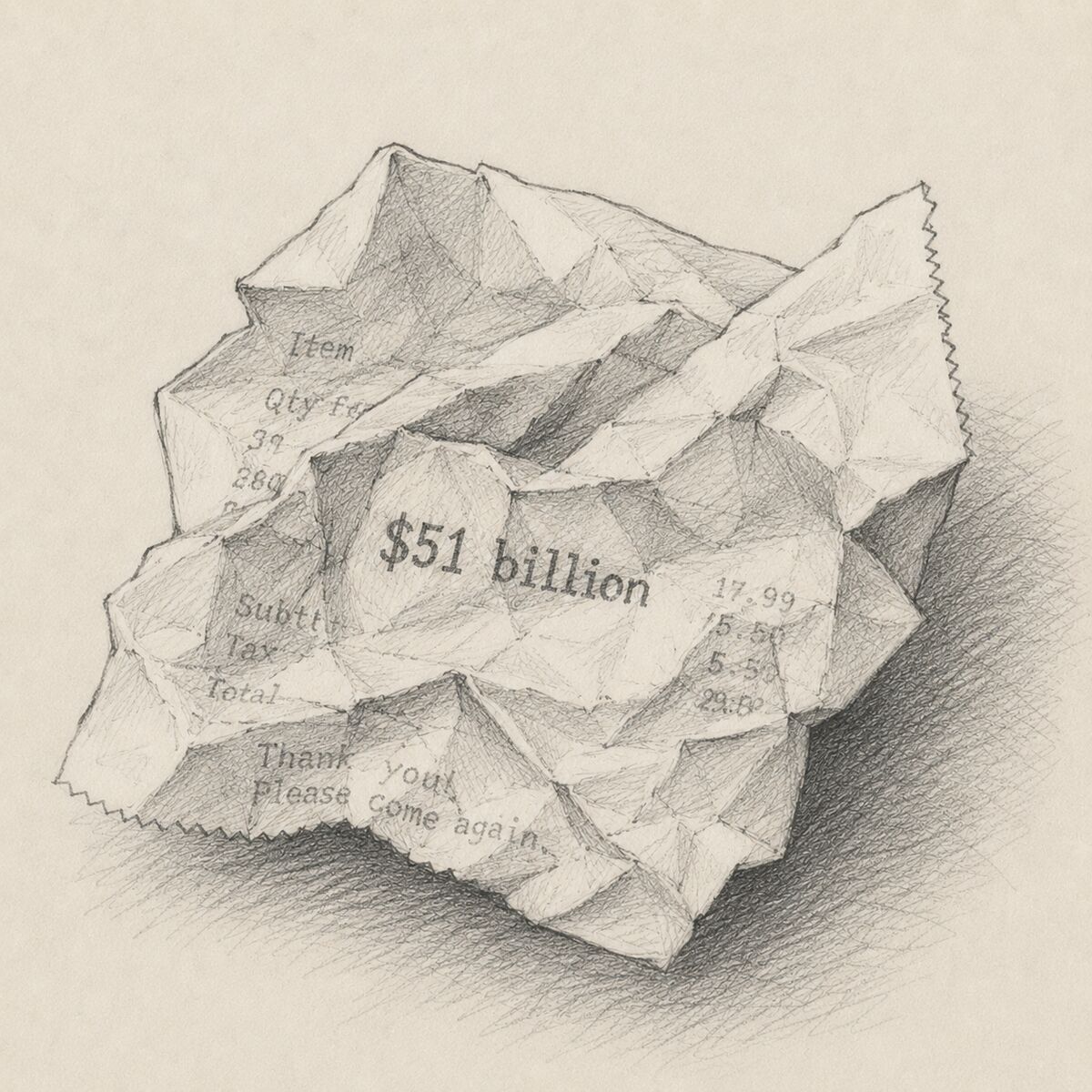
The state spends $51.2 billion a year on employee compensation and has never been required to measure whether any of it is working. A review of State Auditor reports shows what that looks like in practice.
TL;DR
California raised state worker pay 47% in seven years. In the same period: child abuse investigations ran 18 times over the legal deadline, wage theft claims took workers years to resolve, and $10.4 billion in unemployment payments went out the door without verified identities. The state has never measured whether any of it is improving — because the unions representing state employees fund the officials who control their contracts, and nobody in that arrangement benefits from accountability.
Last week, policy analyst David Crane of Govern for California published a review of California’s state budget, noting that the state now spends $51.2 billion per year on employee salaries and benefits—47 percent more than under the previous administration, or $5.9 billion per year above inflation. After an exhaustive search for any data showing what that spending produces, Crane wrote: “I have scoured the web and made inquiries of Gemini and Claude but I cannot find measures of employee productivity in California’s government.”
He wasn’t describing a missing spreadsheet. He was identifying a policy choice. California has never required its agencies to publish performance data. And Crane’s analysis points to why: the governor who controls state employee compensation is the same official those employees’ unions are legally allowed to fund. All 10 public sector unions whose pay is set by the governor have donated millions to the governor’s political committees. When the official who sets your pay is also the official you fund, there is no incentive to measure results — and every incentive to raise them.
Garry’s List reviewed every recent State Auditor performance report to find the closest available proxy for what $51.2 billion a year actually buys. The pattern across all ten agencies is the same: vacancy rates between 30 and 50 percent, legal service deadlines missed by multiples of years, programs spending billions with no way to measure whether they work, and no mechanism requiring the executive branch to act on any of it.
Here is what the state’s own auditors found.
Agency by Agency: What $51 Billion Buys
Alameda County: Children and Family Services
When a child abuse report is filed as a non-emergency, state workers are legally required to begin investigating within 10 days. According to a September 2025 State Auditor report, nearly half of those referrals — 48 percent — were initiated late. The average delay when they were late was 187 days. Investigations are legally required to close within 30 days; the actual average was 105. The root cause identified by auditors was high vacancy rates leaving caseworkers with unmanageable caseloads. Documentation gaps were so severe that the department could not verify whether required services had been provided at all.
Employment Development Department (EDD)
The State Auditor’s January 2021 review of EDD’s pandemic response found that the department waited four months to automate a core anti-fraud measure after COVID-19 hit. By the time auditors reviewed the books, $10.4 billion in unemployment insurance payments had been flagged as potentially fraudulent, with identities that could not be verified. Another $810 million went to incarcerated individuals because EDD had no data-matching with the state corrections system. The agency had no centralized fraud prevention unit and no way to measure which fraud tools were working.
Labor Commissioner’s Office
State law requires wage theft decisions within 135 days. A May 2024 State Auditor report found the median actual time was 854 days — six times the legal limit. The backlog grew from 22,000 claims in fiscal year 2017-18 to 47,000 by 2022-23. More than 2,800 claims had been open for at least five years, representing $63.9 million in unpaid wages that workers were legally owed. When cases did close, the office collected the full judgment amount in only 12 percent of them. Thirteen of 17 field offices had vacancy rates of 30 percent or higher. The unit’s budget is $124 million with 286 authorized positions — most of them unfilled.
California Homelessness Programs
California’s homeless population reached 180,000 in 2023, up 53 percent from 2013. An April 2024 State Auditor review found that nine state agencies run more than 30 homelessness programs — and the state’s coordinating body could assess cost-effectiveness for only 2 of the 5 programs reviewed. The other three lacked outcome data entirely. The coordinating body’s most recent financial tracking report covered fiscal years 2018 to 2021. Despite billions more spent since then, it had never been updated.
State Hospitals and Corrections Healthcare
A December 2025 audit found vacancy rates of 30 percent at Atascadero State Hospital, 36 percent at Porterville Developmental Center, and more than 50 percent at Salinas Valley State Prison. Since 2019, contract worker use has surged 79 percent at Atascadero, 172 percent at Porterville, and 46 percent at Salinas Valley — and contract workers cost more per hour than civil service employees in identical classifications. Each facility recorded paper savings from unfilled positions ($247 million, $188 million, and $157 million respectively), but none of them tracked whether minimum staffing levels were actually being met on any given shift.
Medi-Cal Perinatal Services
This program exists specifically to reduce low-birthweight births. According to a February 2024 State Auditor report, the low-birthweight rate has risen since the program was in place: from 6.7 percent in 2014 to 7.3 percent in 2021, affecting approximately 30,000 infants per year. The state can assess whether the program is even being used for only 14 percent of Medi-Cal members — the other 86 percent are invisible to program oversight. In 2022, only 45 of approximately 2,600 providers received any perinatal assessment at all.
Department of Housing and Community Development
HCD is the state agency responsible for approving local housing plans. A January 2026 State Auditor report found the median time for HCD to approve a jurisdiction’s housing element had grown to more than one year — a 126 percent increase from the prior planning cycle. HCD cited staff turnover and overlapping deadlines as the main causes, but the auditor found the agency had never conducted a workforce analysis to understand or address its own capacity gaps. These delays directly slow housing production across the state.
Department of Cannabis Control
The Department of Cannabis Control’s stated goal is to inspect all licensees annually. An August 2025 audit found it has inspected fewer than half of licensees in every year since legalization. Of 40 sampled products, 23 were found likely attractive to children. Cannabis ingestion calls for children under five have increased 469 percent since legalization — from 148 calls in 2016 to 842 in 2023. The department does not review packaging before products enter the market, and it has no escalating penalty system to deter repeat offenders.
FI$Cal: Statewide Financial IT System
California’s unified statewide financial IT system has been under development since 2006. A December 2025 audit found the State Controller’s Office was at risk of missing a July 2026 deadline to migrate its core accounting book of record to the new system. Eight agencies remain not fully onboarded, including CalSTRS, which argues it is constitutionally exempt from participating. The project is now approaching its twentieth year with core accounting functions still running on legacy systems.
High-Speed Rail Authority
The original 2008 voter-approved budget for high-speed rail was $33 billion. The current estimate is $128 billion and rising, with no section of the system operational. The most recent State Auditor performance audit was issued in November 2018 — eight years ago — and found “flawed decision making and poor contract management” had contributed to billions in cost overruns “of the State’s own making.” No updated performance audit has been issued since, despite costs nearly quadrupling.
Why This Keeps Happening: The Union-Budget Connection
To understand why California’s agencies keep failing in the same ways year after year, it helps to understand how state employee pay actually gets set — and who benefits from the arrangement Crane identified.
The governor controls the employment contracts of roughly 220,000 state workers. Those contracts determine pay, benefits, and working conditions. California law allows the unions representing those workers to donate to the governor’s campaigns. All 10 of them do. Crane put it plainly: imagine a company where the CEO negotiates pay with employee groups funded entirely by shareholders, while those same groups can give the CEO millions in political donations. No corporate board would allow it. California taxpayers have no equivalent protection.
Unions exist to protect workers and vulnerable people. That is the whole idea. But look at who is actually being hurt by the system these unions are protecting. The wage theft victims waiting 854 days for a decision are workers. The children whose abuse reports sat uninvestigated for six months are California’s most vulnerable residents. The homeless population grew 53 percent while billions went to programs nobody tracked. The “little guy” unions claim to protect is being failed by the very system those unions are working to keep intact. The unions are not protecting workers or the little guy. They are protecting a funding arrangement that benefits union leadership and elected officials at the direct expense of the residents those workers are supposed to serve.
This arrangement was created by laws passed in 1968, 1975, and 1977 and expanded again in 2023. It produces four specific incentives that work against accountability:
1. Unions grow stronger when government grows, regardless of results. Public sector unions are funded by member dues. More state employees means more dues, which means more political money and influence. Unions therefore have a direct financial incentive to push for larger government headcounts, independent of whether those hires improve services. The audits show the result: agencies carrying 30 to 50 percent vacancies while filling gaps with contract workers at higher cost, with no statewide evaluation of whether any approach is working.
2. Raising pay earns political rewards. Measuring performance does not. When the governor raises compensation, the unions that funded the campaign get a direct return on their investment. When the state publishes data showing agencies are missing legal deadlines or running programs with no measurable outcomes, it creates political pressure to cut, restructure, or hold people accountable. There is no political benefit to releasing bad data. So none gets released.
3. When jobs go unfilled, taxpayers pay more and accountability gets worse. Agencies fill vacancies with contractors who cost more per hour than regular civil service employees doing identical work — and who do not pay union dues. Unions then have a financial incentive to push to convert those contractor positions back to civil service, growing the dues base, regardless of whether the permanent hires are actually needed. The audits document contract worker surges of 79 to 172 percent above 2019 levels, with no evaluation of whether the overall approach is working.
4. Residents have no way to see any of this. Pay negotiations between the governor’s office and the unions happen outside public view. Budget hearings focus on spending totals, not service delivery rates. The State Auditor publishes performance reports, but no law requires anyone in the executive branch to respond to them, publish a corrective action plan, or set measurable targets for improvement. The reports come out. The pattern continues.
The Big Picture
Read all of these audits together and one picture emerges: positions stay empty, the staff who remain are stretched past the breaking point, legal deadlines get missed by months and years, and programs that cost billions cannot tell you whether they are working.
The productivity data Crane searched for does not exist because nobody in the system benefits from creating it. Unions gain when the workforce grows. Officials who control pay gain when compensation goes up. And when nobody is required to measure results, nobody is held responsible for them.
California taxpayers spend $51.2 billion a year on state government operations. The only public accounting of what they are getting for that money is a collection of State Auditor reports that nobody in the executive branch is legally required to act on. Those reports document missed deadlines, rising failure rates, and programs that have been running for years without ever being required to show they work.
The state has the receipts. It just doesn’t want you to add them up.