Yes, Fare Gates Actually Reduce Crime
BART’s 2025 crime collapse confirms what NYC learned in 1990: fare enforcement isn’t about the fare. It’s about who’s riding your system.
Source: x.com
Source: x.com
TL;DR
After installing fare gates at 48 stations, BART saw violent crime drop 36% and overall crime drop 41% in 2025 — the same result NYC got in 1990 when Bratton first went after fare evaders. Thirty-five years of “root causes” theory, same answer both times.
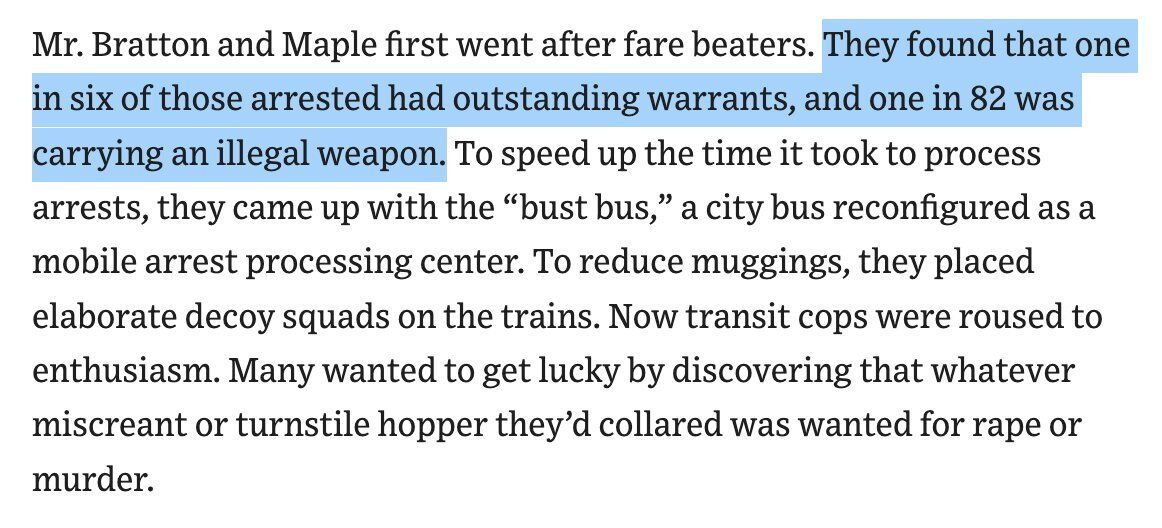
When New York City Transit Police started arresting fare evaders in 1990, they discovered that 1 in 6 people arrested for jumping the fare had an outstanding warrant. One in 82 was carrying an illegal weapon.
They weren’t dodging a $3 fare. They were hiding from the law.
Archived tweetWhen New York City’s Transit Police started going after fare evaders in 1990 they found that 1 in 6 had an outstanding warrant. Violent crime on SF’s BART dropped 30% after they installed ticket barriers in 2025. Enforcement works. https://t.co/R6QmAkDQek
Garrett Langley @glangley March 13, 2026
The Warrant in the Pocket
Bill Bratton took over a demoralized NYC Transit Police in 1990 and inherited a subway system that one officer described, without exaggeration, as “the longest horizontal urinal in New York City.” His key intellectual partner was Jack Maple, a lieutenant who had barely finished high school but became one of the most consequential policing minds of his era, dying at 48 in 2001. Maple’s insight was simple: go after fare evaders. Not because the $1.15 fare mattered (note: fare rose to $1.25 in 1992). Because the turnstile was a filter.
The results were so good they had to build a “bust bus” to handle the volume, a city bus reconfigured as a mobile arrest processing center just to speed up booking. Transit cops went from a demoralized force sleepwalking through shifts to officers who understood that every fare evader was a potential collar on a violent warrant.
What followed was, as John Jay College professor Peter Moskos documents in his new oral history Back From the Brink (Oxford University Press, 312 pages), “New York’s greatest drop in violent crime the city ever recorded.” Not a statistical blip. The greatest ever.
What the Academics Said
The dominant progressive academic view is that policing cannot meaningfully reduce crime until poverty, inequality, and racism are addressed first. A senior NYPD official, Louis Anemone, described the pre-Bratton culture this way: “We were not a crime-fighting organization.” Not his words as an accusation. His words as a confession. That was the institutional default, and crime soared for decades under it.
The poverty-causes-crime thesis runs into a concrete problem. A City Journal analysis using Columbia University data found that 23% of New York City’s Asian population lived in poverty, a higher rate than the Black population at 19%, yet Asian New Yorkers had exceptionally low violent crime rates. Asian murder arrest rates were nearly one-ninth of Black rates. Poverty alone does not predict crime. Something else is doing the work.
Barry Latzer, emeritus professor of Criminal Justice at John Jay, frames it plainly:
The policy implication of that framing is uncomfortable for the root-causes crowd. If poverty doesn’t drive violence directly, then waiting to fix poverty before enforcing the law isn’t progressive. It’s an abdication.
BART Ran the Same Experiment
Thirty-five years after NYC’s discovery, BART ran the same test and got the same answer.
According to GrowSF, after BART installed reinforced fare gates at 48 of its 50 stations in 2025, violent crime dropped 36%, from 203 incidents in the first seven months of 2024 to 130 in the same period of 2025. Robberies fell 71%. Car burglaries fell 64%. Overall crime dropped 41%. Fare evasion itself dropped significantly.
Pirate Wires reported that 80% of those arrested for crimes on BART had not paid their fare. The exact same pattern NYC found in 1990. The turnstile was the first line of defense. For years, BART’s board dismantled it.
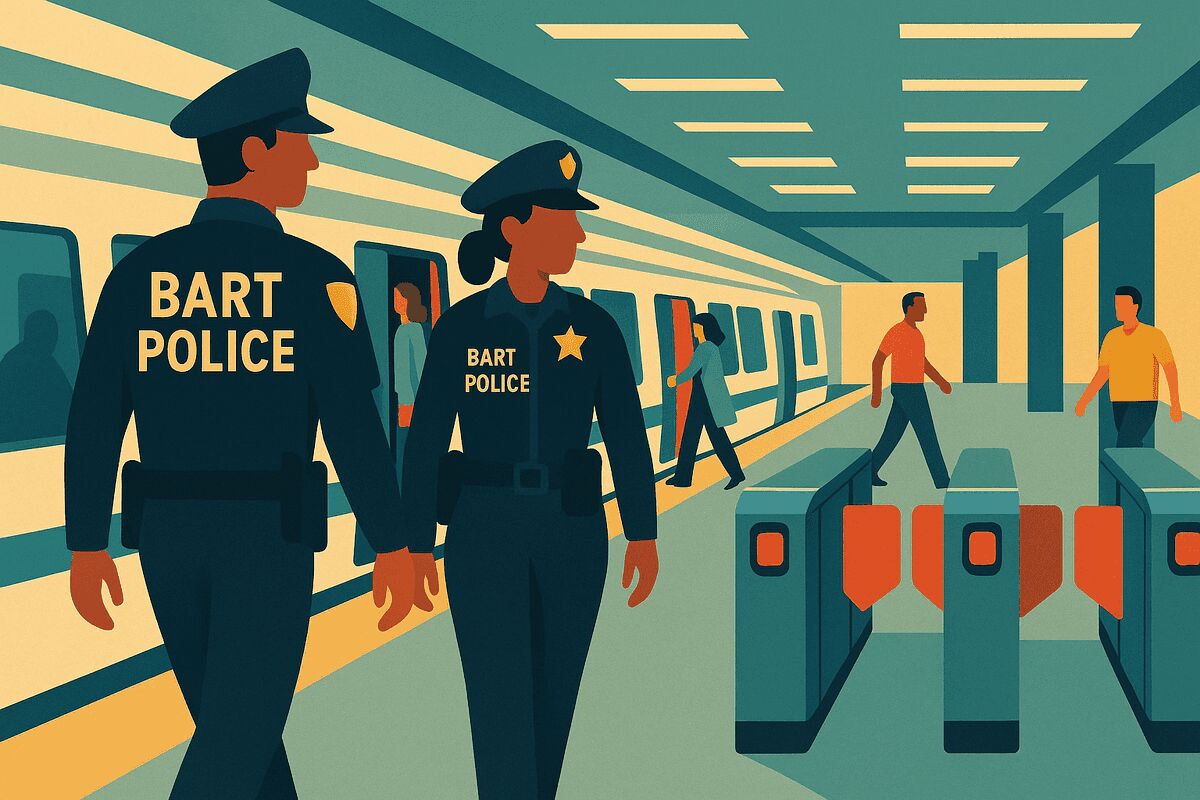
The gates also pay for themselves. The SF Chronicle reported that the new plexiglass fare gates generate $10 million annually and have already saved 961 hours of maintenance work. And BART achieved this with 21 officer vacancies still on the books. The infrastructure did what political will refused to do.
The Cost of Not Enforcing
The abstract policy debate has a name: Corazon Dandan.
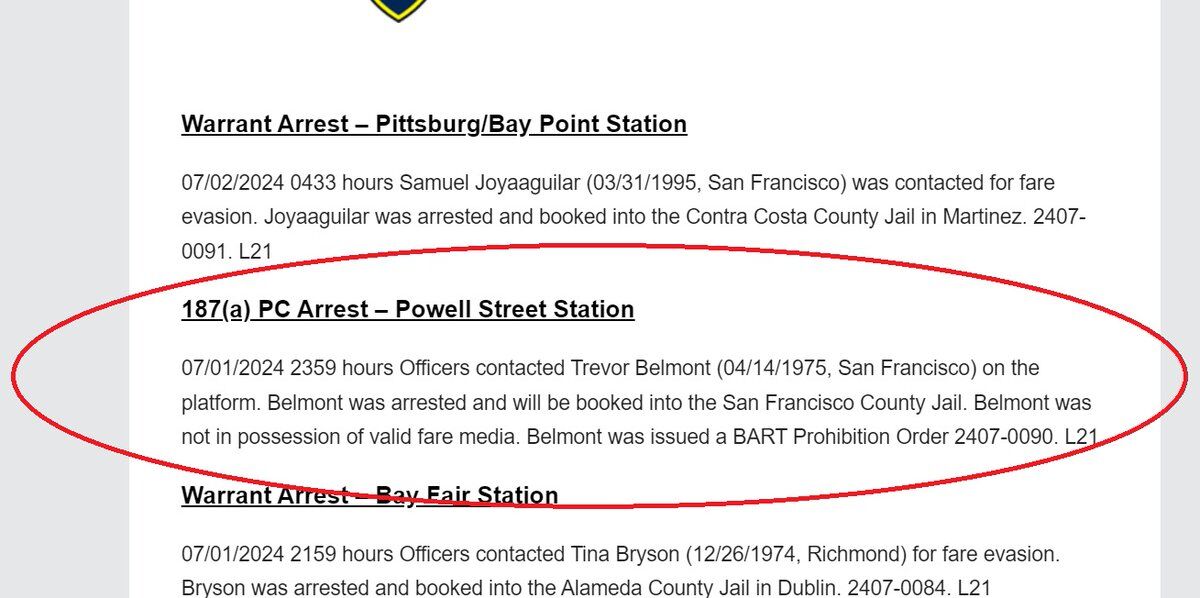
She was 74 years old, a hotel telephone operator. She was pushed to her death at Powell Street BART station by Trevor Belmont, a fare evader. Belmont had already been officially banned from BART before the attack. The ban order was never enforced. He was on the system anyway.
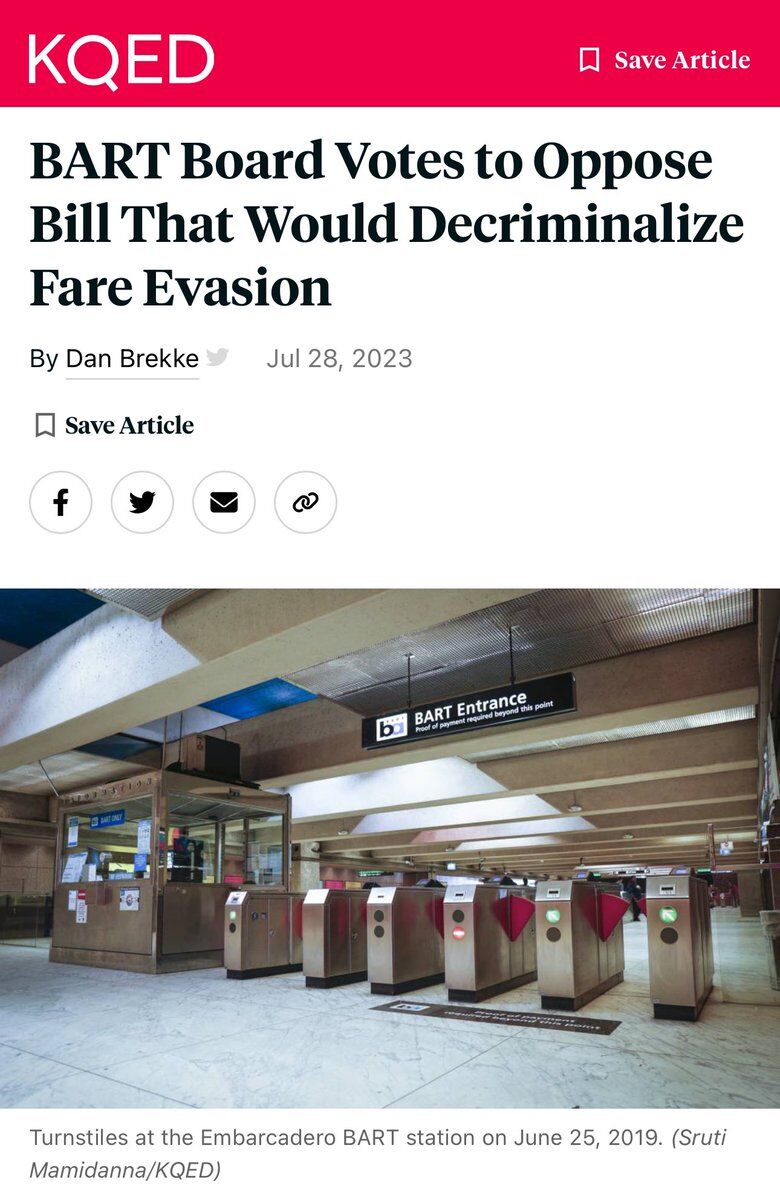
This is not a story about one bad actor slipping through. This is the predictable outcome of a board that treated fare enforcement as a racial justice issue rather than a public safety one. BART board member Debora Allen said it directly: “The high crime rate in BART is directly attributable to the policy failures of these directors.”
For years, BART board members Janice Li and Lateefah Simon treated enforcement as an afterthought. The record speaks for itself:

Public safety is an afterthought under BART Board members @JaniceForBART @lateefahsimon Fare evasion is a basic thing to enforce but the BART Board doesn’t care Can you believe Lateefah Simon is just going to stroll into the House of Representatives this year?
187(a) MurderPC Arrest – Powell Street Station 07/01/2024 11:59 PM Fare Evader Trevor Belmont, Born (04/14/1975, San Francisco) pushed a man into a train He was arrested and will be booked into the San Francisco County Jail. He was issued a BART Prohibition Order 2407-0090. L21
The Snakeman story from Peter Moskos’ book sits alongside Dandan’s for a reason. Port Authority cop Jeff Marshall recalled a legless man who dragged himself along the subway floors for nearly two decades, panhandling while the system looked away. “When I left in ‘93, he was still slithering along the floor.” Pre-Bratton New York had decided not to enforce anything. The most vulnerable people paid the price, in dignity, in safety, sometimes in their lives.
Non-enforcement is not compassion. It is the absence of governance, dressed up as tolerance.
The Flip Nobody Talks About
There is one more argument the root-causes crowd has always made: that fare enforcement is racially biased, because the riders who can’t afford fares are disproportionately poor and minority. The equity argument. Leave them alone.
But Noah Smith makes the obvious counter: 80% of BART’s crime victims were also transit-dependent riders, disproportionately minority, disproportionately elderly, disproportionately women. Corazon Dandan was Filipino-American. The people most harmed by non-enforcement were not the progressives who argued for it. They were the people those progressives claimed to protect.
Nobody who claims to be for transit can be pro-fare evasion and against public safety. That’s not a political position. It’s a contradiction.
The Playbook Already Exists
NYC learned this in 1990. BART relearned it in 2025. The “broken windows” debate that raged through three decades of academic conferences was settled by two transit systems, one in New York and one in the Bay Area, running the same natural experiment 35 years apart and getting the same result.
SF crime is now at its lowest point in 23 years. The largest property crime drop among 22 US cities measured. BART violent crime down 36%. Fare evasion down 21%. These numbers didn’t come from addressing root causes. They came from installing gates, showing up with officers, and actually enforcing the law.
Jack Maple barely finished high school. He figured out what the credentialed consensus could not. The playbook has existed since 1990. Every city that wants safer transit already has it. The only thing standing between unsafe transit and safe transit is the will to use it.
Fare dodging is evil and a breakdown of society. It is not an SF tradition. And the board members who treated it as one owe Corazon Dandan’s family an accounting they will never give.
Related Links
-
Good cities can't exist without public order (Noah Smith / Noahpinion)
-
Poverty and Violent Crime Don't Go Hand in Hand (City Journal)
-
BART woman shoved to death: family lawsuit (SF Chronicle)
-
BART Fund Fraud or Lose Your Stations (Pirate Wires)
-
SF Crime at Lowest Point in 23 Years (GrowSF)