The Easiest Way to Sell Wine in San Francisco Is Illegally
SF makes restaurant owners navigate four agencies and wait six months to serve wine legally. Two blocks away, stolen bottles trade with impunity.
Source: x.com
Source: x.com
TL;DR
San Francisco charges restaurants $945/year in state licensing fees to serve wine, plus permit fees spread across at least four city agencies and a 6-month wait. At 7th and Market, stolen wine trades openly: no permit, no fee, no wait.
To serve wine in San Francisco, a restaurant pays $945 per year in state licensing fees, waits up to six months for permits to clear, and pays additional fees to at least four separate city agencies before a single glass is poured.
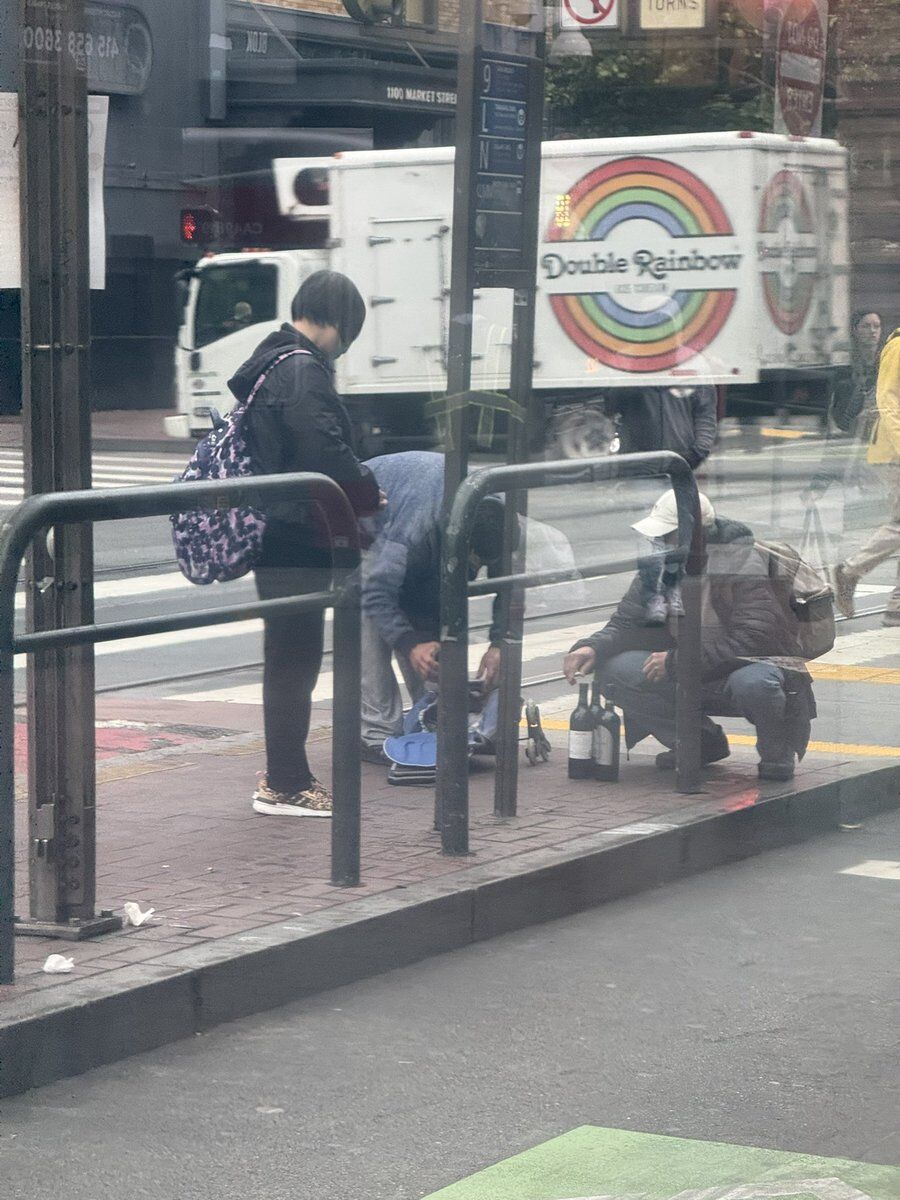
On March 31, 2026, at 7th and Market, a different wine market was open for business. No license required.

Btw @sfgov charges restaurants $945+$1,450/yr plus up to $10k in permits and 6 months of bureaucratic processing to serve wine.

Drug addicts exchange stolen wine with the group of illegal vendors that sell banned cigarettes @SFPD @SFPDTenderloin @SF311 happening now at 7th and Market
Six months of waiting to pour a legal glass of wine. Zero seconds to fence a stolen bottle two blocks away.
SF applies maximum friction to the law-abiding and minimum consequence to the criminal. That’s not a side effect. That’s the policy.
The Price of Playing by the Rules
Opening any restaurant in SF means working through 12 separate permits, with fees spread across at least four city agencies — the Department of Public Health, Planning, the Department of Building Inspection, and Fire — each with its own application, its own review timeline, and its own fee schedule. DPH alone publishes a multi-page fee table for food facility permits; no single city source adds it all up. Plan review across those departments takes three to six months. Every month you wait is a month of rent with no revenue.
The fee breakdown from @kane cites $945 in state fees plus $1,450 in local fees per year, with additional permitting costs layered on top across multiple agencies. The $945 tracks the CA ABC Type 41 annual fee schedule; the $1,450 local figure comes from Kane’s post and has not been verified against a primary SF.gov source. And notably, SF’s Prop M legislation — passed November 2024, effective 2025 — eliminated many local annual license fees for restaurants and bars, meaning the $1,450 may already be zeroed out. That doesn’t change the math on permitting. The clock starts when you file. The money starts bleeding before the doors open.
Naz Khorram opened Arcana wine bar on Mission Street and testified before the San Francisco Planning Commission in September 2023 about what this process actually looks like. Getting her wine license required the same conditional use authorization as opening a hotel, a mortuary, an adult business, or a strip club. As she wrote in her own SF Standard op-ed: “This process has been abused and it’s time for it to stop.”
SF’s PermitSF initiative under Mayor Lurie has been chipping at the edges. Voter-approved Prop M is set to eliminate about $10 million in license fees, and approximately 91% of restaurants will have their annual license bill fully wiped out — which is why the $1,450 local fee Kane cited may no longer apply. The SF Treasurer’s “First Year Free” list (April 2025) shows exactly which annual registration and license fees Prop M zeroes out — and by implication, which permit and plan-review fees across DPH, Planning, DBI, and Fire it doesn’t touch at all. That relief is real. But even minor construction changes still trigger a re-entitlement process that takes up to four months and costs at least $1,626. The six-month wait, the 12 separate approvals, the overlapping agency reviews: all of it remains. It took a decade of advocacy, a citywide ballot measure, and Naz Khorram going viral before the fees moved. The underlying permitting architecture is still standing.
Steps from City Hall
On March 31, 2026, @dbofsf documented in real time: drug addicts exchanging stolen wine with illegal vendors selling banned cigarettes at 7th and Market. The SF Standard called 7th and Market SF’s worst drug corner in 2023, flagging stolen cigarettes, open drug dealing, and black market goods operating steps from City Hall.
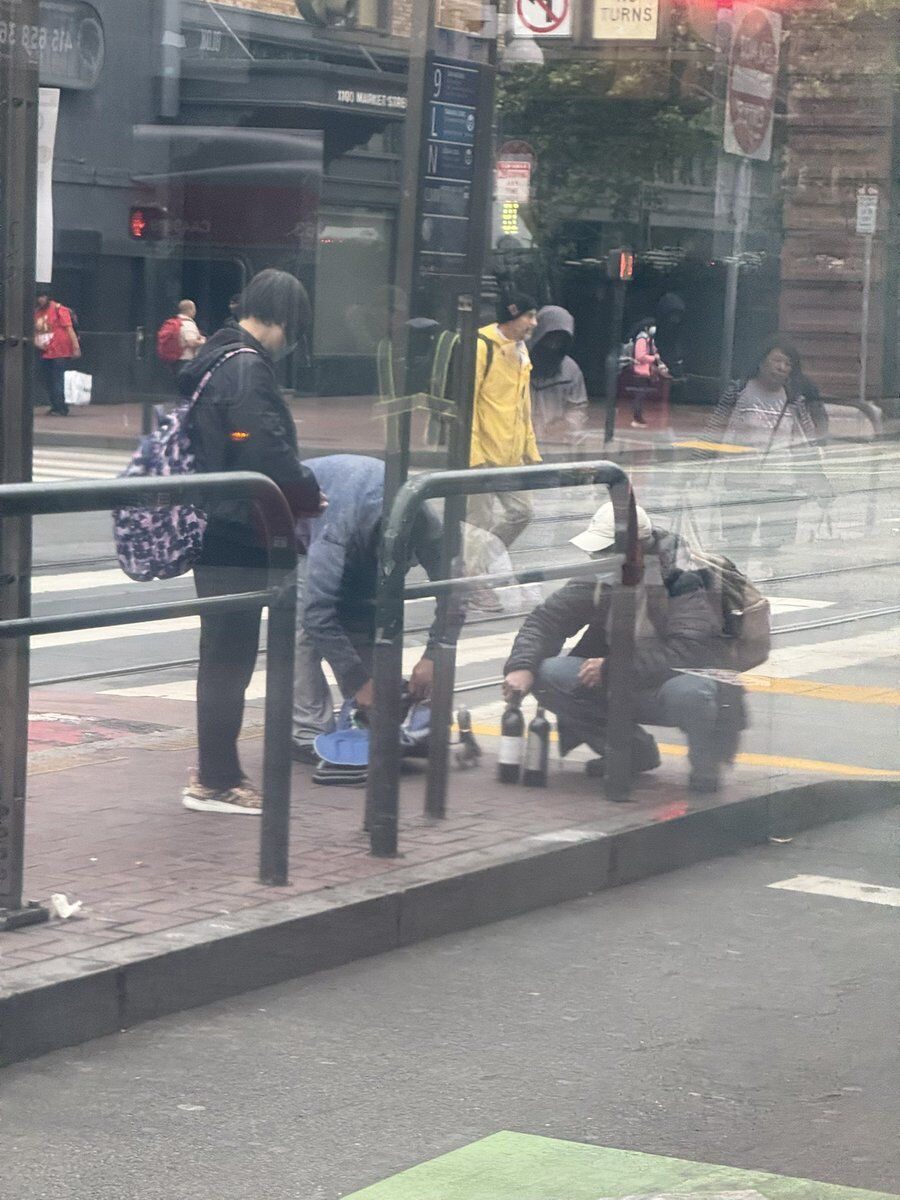
That was years ago. The market is still running.
The city has tried enforcement. The SF Standard reported more than 7,500 arrests over two years of drug market crackdowns. The markets adapted. Dealers put on ski masks and shifted to nighttime hours. When SFPD leaves, they come back. Beyond Chron’s Randy Shaw documented the gap between announcements and results back in 2023: 130 deputy sheriffs announced for drug market duty, eight actually on the streets at a time, eleven citations issued in total.
Price legal compliance high and illegal competition at zero. The black market doesn’t compete with legal restaurants. It prices them out.
Sacramento Built the Market
The fencing operation at 7th and Market is not random crime. It’s the output of two specific policy choices made in Sacramento.
GrowSF’s analysis of SB 276 lays out the sequence. Proposition 47 in 2014 downgraded theft of goods under $950 to a misdemeanor, removing prosecution risk for retail thieves. California’s 2018 Safe Sidewalk Vending Act then decriminalized street vending and barred cities from using police against vendors. In one decade, Sacramento decriminalized both the theft and the primary venue for reselling stolen goods.
Advocates for these laws had real arguments. Prop 47 was supposed to end disproportionate felony prosecution for minor property crime. The Vending Act was supposed to protect unhoused and undocumented vendors from harassment. Those were not trivial concerns. But the actual result was a legal sanctuary for organized retail crime, the displacement of legitimate sidewalk vendors the 2018 act was meant to protect, and working neighborhoods bearing costs that Sacramento lawmakers never had to.
On October 6, 2025, Governor Newsom signed SB 276, authored by State Senator Scott Wiener. The law re-enables SF to issue citations and confiscate merchandise from vendors who can’t prove their goods were legitimately purchased. Eleven years from Prop 47 to a partial correction. The March 2026 photos from 7th and Market suggest the correction has not yet reached the ground.
Legalize Small Business
The permitting burden on legitimate restaurants is not a natural phenomenon. Fees were written by people. Timelines were designed by people. The four-month, $1,626 re-entitlement process for minor construction changes was created by people. All of it can be rewritten.
One SF business owner spent nearly $20,000 to get a restraining order against a single repeat offender threatening staff. The friction runs in one direction. Compliance is expensive and slow. Illegality is free and instant. That’s what you get when you build a regulatory system that never asked what it was incentivizing.
The city that makes wine service a six-month bureaucratic gauntlet while stolen wine trades freely two blocks from City Hall is not governing. It’s cosplaying governance.
Mayor Lurie: SB 276 gives SF the authority to cite vendors and confiscate merchandise when they can’t prove they bought their goods. Use it at 7th and Market. PermitSF is on your agenda, the Prop M fee waivers just kicked in, and the next step is cutting the permit timeline that Naz Khorram put on record two years ago. The legal tools exist. Apply them with the same energy the city spent for a decade protecting markets that never paid taxes.
Legalize small business.
Take Action
Read how Sacramento built SF's open-air fencing market, and what SB 276 is supposed to do about it
Related Links
-
Inside Arcana, the wine bar caught in SF's permitting maze (SF Chronicle)
-
PermitSF — SF.gov (SF.gov)
-
SF Still Not Closing Drug Markets (Beyond Chron)
-
Proposition M (2024) Business Tax Reform (SF Treasurer)