The Data Is In: Building Homes Makes Rent Fall
Austin built apartments and rents dropped 15%. Pro-housing politicians need to stop apologizing for market-rate housing.
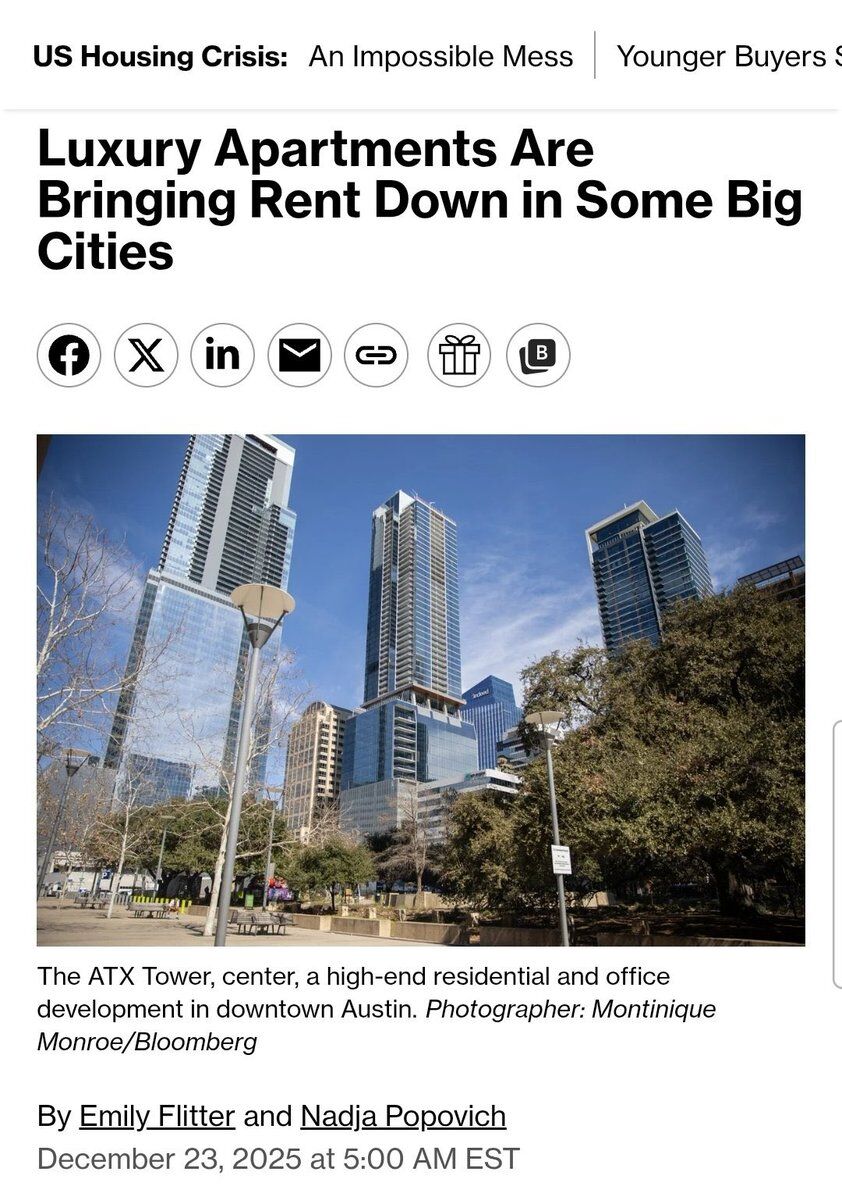
Source: x.com
Source: x.com
TL;DR
Cities that built more apartments saw rents plummet. Cities that didn’t, didn’t. Market-rate housing isn’t a necessary evil—it’s the solution.
There’s a messaging problem in the YIMBY movement that needs to die. Even politicians who claim to be pro-housing treat market-rate development like some kind of necessary evil—a bitter pill we swallow to fund affordable housing. That framing is both wrong and politically suicidal.
Archived tweeteven pro-housing politicians often frame market rate housing as this sort of necessary evil to fund affordable housing rather than explicitly defending it as something that makes existing housing more affordable by absorbing demand
Armand Domalewski @ArmandDoma January 01, 2026
This observation from Armand Domalewski, co-host of the abundance podcast Pies for Everybody, cuts to the heart of a fatal communications failure. When pro-housing advocates apologize for market-rate housing, they concede the rhetorical ground to NIMBYs who claim new development only helps the rich.
The data tells a completely different story:
Archived tweetYes in my backyard, including market rate housing https://t.co/lkNHLrcL7S https://t.co/8gelBaWYez [Quoting @ArmandDoma]: even pro-housing politicians often frame market rate housing as this sort of necessary evil to fund affordable housing rather than explicitly defending it as something that makes existing housing more affordable by absorbing demand
Garry Tan @garrytan January 01, 2026
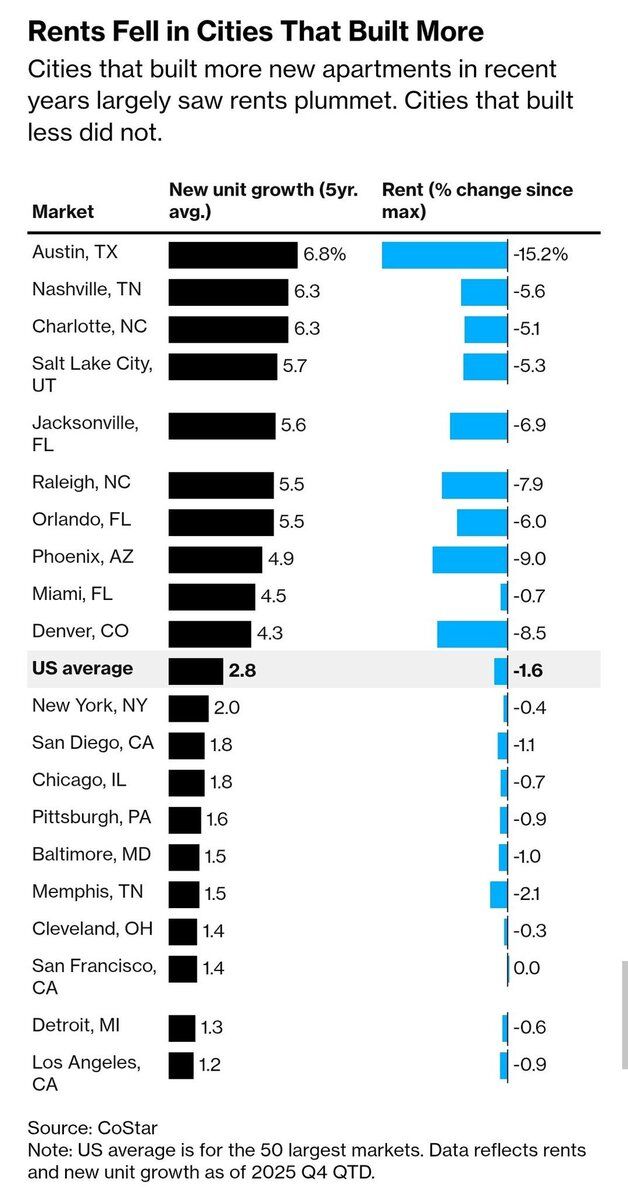
The Bloomberg research couldn’t be clearer. Austin built apartments at 6.8% annual growth and saw rents crater 15.2% from their peak. Nashville, Charlotte, and Denver all show the same pattern. Meanwhile, cities that restricted building watched rents stay stubbornly high.
This is basic economics: when you build more of something, the price goes down. When wealthy tenants move into new luxury buildings, they vacate older apartments, forcing landlords to drop prices. The filtering effect is real, measurable, and happening right now.
Austin’s rents are now back to pre-pandemic levels—down 21% from the summer 2022 peak. Some two-bedroom apartments are going for under $1,000 a month. Austin now has the cheapest rents on record relative to income.
Why can’t this happen in San Francisco? Because prolific NIMBY legislators spent 17 years passing hundreds of regulatory sludge ordinances that halted nearly all new market-rate residential development. The result is predictable: constrained supply and sky-high rents.
The lesson is simple: stop apologizing for building homes. Market-rate housing isn’t a necessary evil to fund affordable housing—it is affordable housing in the making. Every new unit absorbs demand that would otherwise bid up prices on existing stock.
Yes in my backyard. Including market-rate housing.
Follow @garrytan for more.
Related Links
-
Austin rents back to pre-pandemic levels (@nickgerli1)
-
Armand Domalewski on market-rate housing framing (@ArmandDoma)
Comments (0)
Sign in to join the conversation.