SF’s Drug Court Is a Get-Out-of-Jail-Free Scam
Violent offenders are flooding a program designed for petty crimes. Public defenders call it “treatment.” The numbers call it fraud.
Source: x.com
Source: x.com
TL;DR
Drug Court diversions have nearly quadrupled since 2023, with attempted murderers and armed robbers getting treatment instead of prison—and more participants fail out than graduate.
SF’s Drug Court was designed to help people with addiction get treatment for low-level crimes. Now violent offenders are flooding the program—with public defenders pushing for diversion even in attempted murder cases.

There is basically that there is an ongoing, constant denial-of-service attack from within the criminal justice system in SF. Whether it is the public defenders, or the superior court judges who used to be public defenders — it is an all-the-time operation to stop justice.
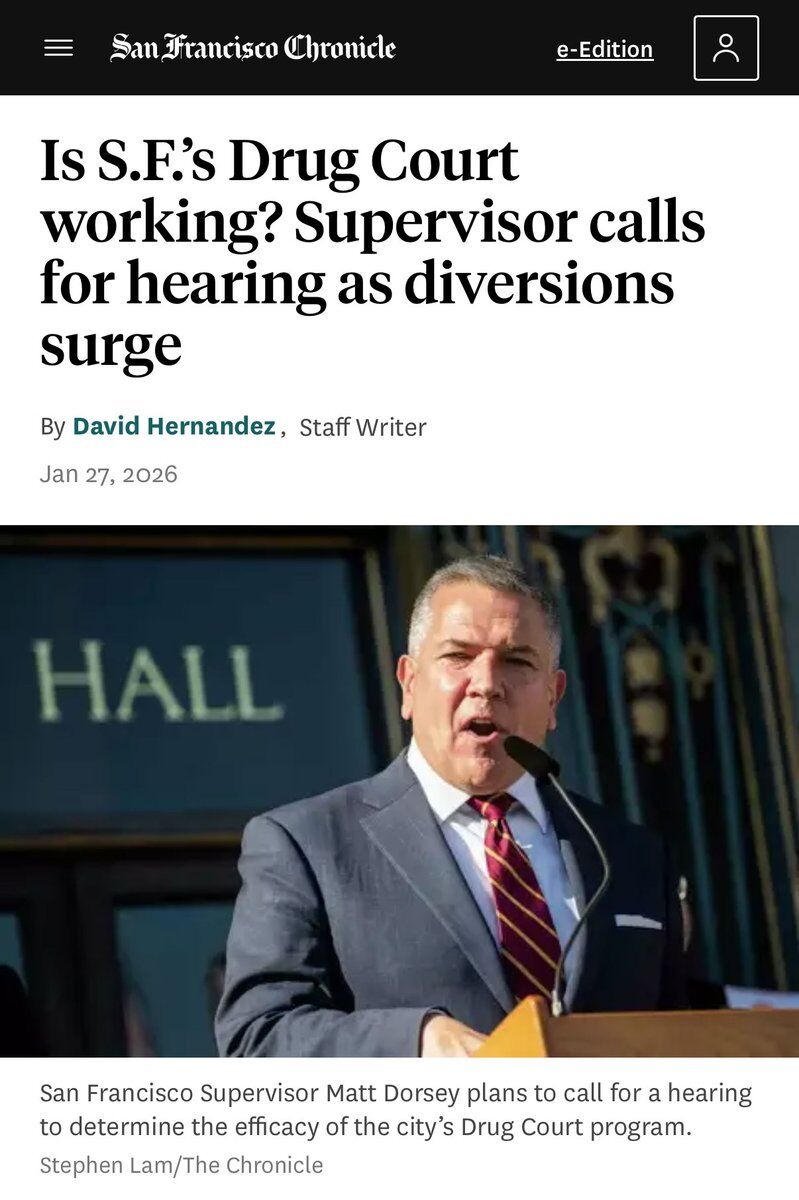
Drug courts can be highly effective to protect safety and help offenders recover from addictions that often lead them to commit crime. But San Francisco’s Drug Court is failing. A @SFChronicle investigation found many problems — and I’m calling for a hearing to fix them. (1/3)
This is what an ongoing, constant denial-of-service attack on justice looks like: working the system from the inside until violent criminals walk free under the guise of “treatment.”
The Numbers Don’t Lie: A System Being Gamed
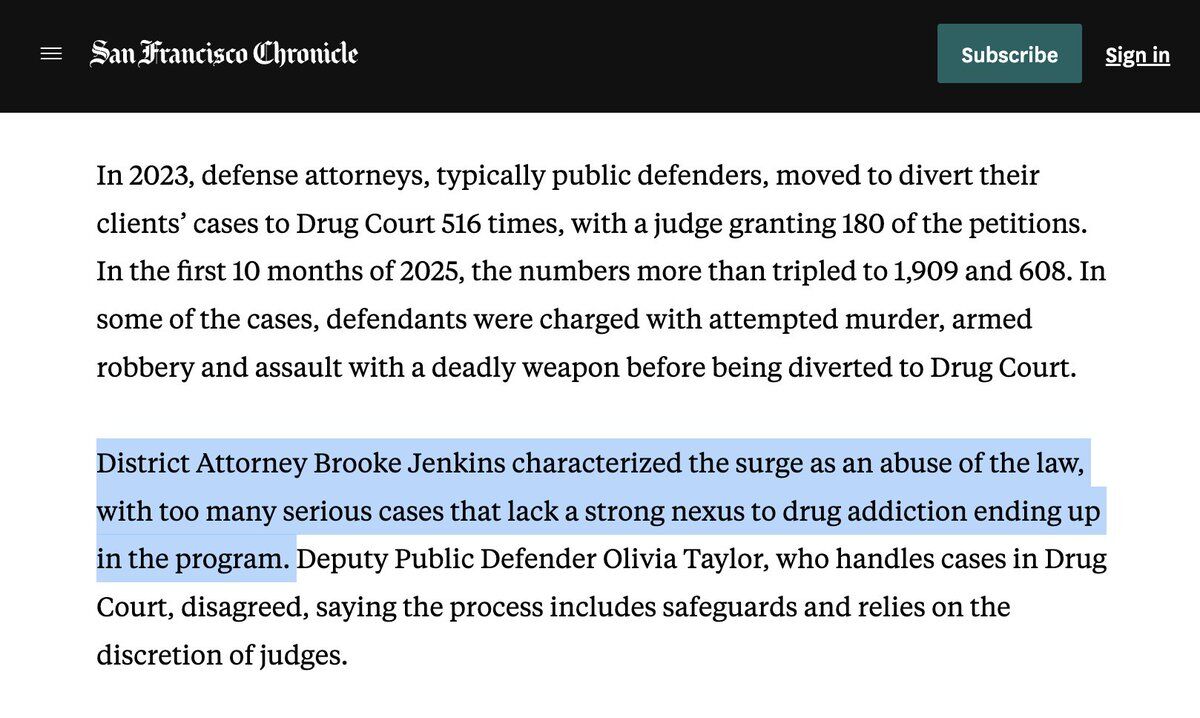
The statistics are staggering. According to the Chronicle, defense attorneys moved to divert cases to Drug Court 516 times in 2023, with judges granting 180 petitions. In the first 10 months of 2025? Those numbers nearly quadrupled to 1,909 petitions and 608 granted.
A 2018 California law opened the floodgates, allowing defendants in violent cases to qualify for diversion. Now defendants charged with attempted murder, armed robbery, and assault with a deadly weapon are getting sent to treatment programs instead of facing prosecution.
DA Jenkins is right. This isn’t about helping addicts recover—it’s about using addiction as a legal loophole to avoid accountability for violent crime.
A Program That Fails Even When It “Works”
Here’s the kicker: even the defendants who get into Drug Court mostly fail out. The Chronicle found that 259 participants were terminated from the program compared to just 134 who graduated—nearly a 2:1 failure rate.
And the system can’t even handle the flood of cases. Defendants accepted into Drug Court wait 1-4 months in jail just to get into treatment. That’s not rehabilitation—it’s just a delay in accountability that often leads nowhere.
The program was never built for violent offenders. Now it’s drowning in cases it was never designed to handle—and the public is paying the price.
Matt Dorsey Gets It: Accountability IS Recovery
Supervisor Matt Dorsey is calling for a hearing to fix this mess—and he speaks with credibility. As someone in recovery himself, Dorsey knows the value of treatment. But he also knows something the public defender’s office seems to have forgotten:
As someone in recovery myself, I strongly believe in the life-changing — and lifesaving — possibilities of drug treatment. But I’m unaware of any recovery tradition for which accountability isn’t a core principle. Bottom line: Drug Court diversion is NOT a “get-out-of-jail-free” card. (2/3) sfchronicle.com/sf/article/dorsey-drug-court-diversion-hearing-21318299.php?utm_source=marketing&utm…
There is no recovery tradition where accountability isn’t foundational. Drug Court was supposed to be an intervention, not a get-out-of-jail-free card. Dorsey’s hearing will bring DA Brooke Jenkins, the Department of Public Health, and Sheriff Paul Miyamoto to the table to figure out what’s broken.
The “Denial-of-Service Attack” on Justice
This isn’t about a few bad cases slipping through. It’s a pattern. Public defenders push for diversion on every case they can—even the most violent ones. Judges who used to be public defenders often grant those petitions. The whole system is working in coordination to stop justice from happening.
Remember Troy McAlister? 91 felonies. Killed two people. And the public defender’s office still argued diversion was “proper and reasonable.” Judge Begert ruled correctly and denied it—but the fact that it was even attempted tells you everything about how this system operates.
Supervisor Dorsey’s hearing is a necessary step toward accountability. San Franciscans deserve a Drug Court that actually helps people recover—not a revolving door that puts violent offenders back on the streets. Watch for the hearing date and keep the pressure on for real reform.
Follow @garrytan for more.
Related Links
-
Supervisor Dorsey's accountability message (@mattdorsey)
Comments (0)
Sign in to join the conversation.