San Francisco Is Overhauling How It Pays for Homelessness Services —But the Hard Part Is Still Ahead
Mayor Lurie is rewriting all $500 million of the city’s homelessness contracts around outcomes instead of expenses, following years of reporting on providers like HomeRise, which ran a complex where a resident lay dead for twelve days.
TL;DR
San Francisco announced it will re-award every homelessness contract in the city by 2029, tying payment to real results—a meaningful break from a system that has long funded providers with little check on whether they actually deliver, amid separate reporting on lapses at nonprofits like HomeRise. The plan is the right diagnosis, but the metrics, enforcement, and public accountability that would make it real still need to be defined.
Eric McCain was 54 years old, formerly homeless, and living in city-funded housing. His apartment at the Jazzie Collins complex was run by the nonprofit HomeRise, a provider city leaders had praised as a gold standard in supportive housing. When his sister could not reach him last fall, she called the front desk and staff told her they had not seen him. She drove across the Bay Bridge, called the police, and learned the truth: her brother had been dead so long that firefighters found his body decomposing, surrounded by insects. He had last been seen alive twelve days earlier, during a pest-control visit, when he turned staff away because he felt too sick to let them in.
Nobody came back, even though HomeRise’s own rules required staff to locate any resident not seen in 72 hours. An employee later claimed she had checked on him, but hallway surveillance footage showed she never knocked on the door.
This was not a one-off. Since the Jazzie Collins building opened in 2022, at least three other HomeRise residents were found decomposing in their rooms. HomeRise runs 18 such complexes, houses roughly 1,500 people and collects about $41 million a year in public money, close to a third of all city-funded supportive-housing units. And a 2024 city controller’s audit found the same nonprofit had misspent millions while handing out staff raises and bonuses. Rather than end the relationship, the city placed HomeRise on a corrective action plan.
For two years, through an audit, a corrective letter, and a city attorney investigation, the checks from City Hall kept clearing anyway. The only real consequence to date didn’t come until this July, eight months after McCain’s death, when the city finally declined to renew four HomeRise contracts worth $39 million, citing the Chronicle’s reporting directly. It took a body, a public campaign, and years of investigative journalism to produce that one decision. That is the system San Francisco is now trying to fix — and the test is whether it can produce that decision on its own, without needing another Eric McCain first.
The overhaul did not spring from City Hall’s conscience. It was pried loose. It is the product of residents who got fed up and refused to let the city look away, and of local journalists who spent years documenting a homeless-services system that spent more every year while the crisis stalled. Eric McCain’s sister turned her grief into a campaign, flooding the city with records requests and carrying her brother’s ashes to public meetings to force officials to reckon with how he died. Reporters like Susan Dyer Reynolds have been chronicling, for the better part of two decades, a city that funnels billions to homelessness nonprofits without requiring performance reviews, naming the conflicts of interest and the money that vanished without measurable results. Garry’s List has pressed the same case: that public spending has to be judged by outcomes, not intentions, and that the people footing the bill deserve to know whether it works. Accountability, when it finally arrives, tends to carry these fingerprints: fed-up residents and stubborn journalists, not politicians volunteering to be measured.
What the City Is Promising
At the end of August, the mayor’s office announced it will re-award every one of the city’s homelessness contracts through a competitive process running to 2029. Lurie laid out the pledge: every contract focused on client outcomes, payment linked to performance so the city pays for results rather than expenses, and sites held to being good neighbors. The city spends more than $500 million a year on these contracts alone, and the mayor’s framing, referring to the city’s broader taxpayer commitment to homelessness overall, was blunt: it will not keep pouring roughly a billion dollars of taxpayer money into a failing system. The restructuring could mean fewer contracts and a shift of funding toward higher-performing providers.
San Francisco’s homelessness budget nearly quadrupled between 2016 and 2024, from $224 million to $846 million, while the city’s own count of homeless residents rose 4% over that period, and chronic homelessness climbed 11% just between 2022 and 2024. That history is the backdrop for the skepticism the mayor’s new contract overhaul will have to overcome. The most recent count, released this past May shows unsheltered homelessness down 22% and overall homelessness at its lowest level since 2011. But even that comes with an asterisk — advocates and some city officials have questioned whether a change in counting methodology, rather than actual conditions, explains part of the drop.
Lurie’s plan is the right diagnosis, and it is more than his predecessors ever committed to. Today most contracts simply reimburse providers for what they spend, with no clear link between the dollars and how well clients are served, and the city tried its first real performance-based deal only this spring, at the RESET Center. Tying money to results reflects something San Franciscans have learned the hard way, in Eric McCain’s case fatally: compassion is not measured by how much you spend, it is measured by how many people you actually help.
Why We Must Remain Vigilant
Committing to outcomes" and “pay for performance” is the easy half, and the mayor has said all of it at the level of principle. What the city has not yet done is the part that actually bites, and that is what the next four years will be judged on:
- Metrics that exist. The pledge is real, but the actual performance measures have not been written, and officials expect “spirited debate” over what to even count. The city itself says the details will only be set after it collects feedback through a request for information and listening sessions, and independent observers note that what standards providers will be judged on remain unclear. An SF Chronicle investigation found the city has long measured activity, like how many people a program serves, rather than whether lives improved. “Linked to performance” means nothing until performance is defined.
- Consequences that bite — on a schedule, not a scandal. Paying for results only matters if failing to deliver them costs a provider the contract. The city already knew HomeRise was failing: it ran a 2024 audit, sent a corrective letter, and opened a city attorney investigation, and kept paying anyway for two more years. A June civil grand jury found the city’s oversight rarely produced meaningful consequences for providers that fell short. The city did eventually act — in July it declined to renew four HomeRise contracts worth $39 million — but only after a death, a grand jury report, and two years of Chronicle investigations forced its hand. Proof that the city can say no is not the same as a system built to say no automatically. Pay-for-performance without defunding written into the contract itself, rather than triggered by public pressure after the fact, is just a new invoice.
- Safety inside the building, not just outside it. The mayor’s pledge covers sites being good neighbors to the surrounding community. It says nothing about the safety of the residents within, which is also a matter of basic health: leaving vulnerable, often sick people unchecked for days on end is dangerous to the people the program exists to protect. In 2024, more than a quarter of the city’s accidental overdose deaths happened inside supportive housing. “Did the resident stay alive” is the most basic outcome there is. If wellness checks and staffing are not written in as enforceable outcomes, the reform skips the exact failure that left Eric McCain dead for twelve days.
- Scorecards the public can see. The rollout runs through May 2029. That is a long runway for good intentions to erode. Residents should see, every year, which providers hit their marks and which did not.
San Francisco Is Leading the Charge.
The failure here is not just a San Francisco failure. It is a California failure, and the evidence is everywhere.
Los Angeles. A court-ordered audit released in March 2025 found the city could not track exactly how much it spent or judge whether services worked, or were even provided. Reviewing $2.4 billion in city funding, auditors found a document trail so poor that tracking the spending was nearly impossible. Contracts written by the region’s lead agency, LAHSA, were so vague that auditors could not verify that roughly 2,300 housing sites even existed, and 70 percent of those contracts reported no expenses at all. A separate look found LAHSA mainly checked how much money went out and to whom, not whether providers delivered adequate services, while county auditors could not account for $5 million in cash advances. L.A. is now moving to sidestep LAHSA and contract with providers directly.
San Jose. A city audit last October found nonprofits missing their performance targets while the housing department declined to require a single corrective-action plan, even when it rated one provider’s work “inadequate”. Analysts never conducted site visits during the grant terms, and a 2024 state audit had already found the city could not identify all of its homelessness spending, more than $302 million over three years.
Sacramento. The city auditor’s June 2026 review of roughly $63 million in shelter spending found no clear link between the services provided and whether clients actually got better, and concluded the city had never consistently defined what program success even means. To its credit, the same review found some of the city’s shelters moved people into housing at rates above the statewide average — proof that the money is not being wasted across the board, only that the city still cannot say which parts of it are working.
San Diego. The same 2024 state audit that flagged San Jose found San Diego could not fully account for its homelessness spending either, though it had at least written clearer performance targets into many of its contracts. A partial model, not a finished one.
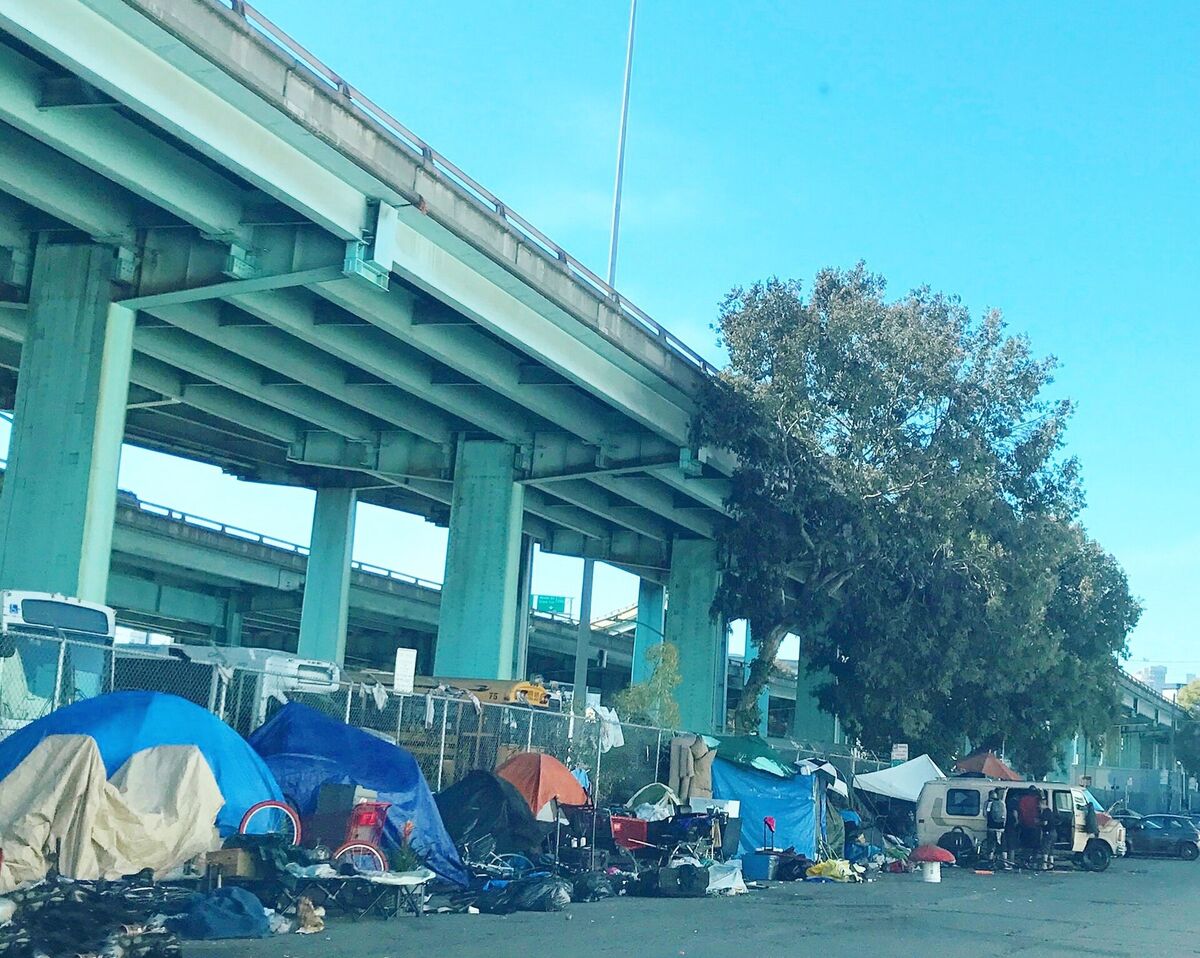
The pattern is unmistakable. Up and down the state, cities have confused budgets with progress, measured effort instead of results, and kept writing checks to providers no one was truly holding to account. Taxpayers paid for all of it, and too often got tents, overdoses, and, in the worst cases, a body no one noticed for twelve days.
The Standard
San Francisco has, at last, put the right question on the table: not “how much are we spending,” but “who are we actually helping, and can we prove it?” Every big-city mayor in California should be asking it, and Los Angeles, San Jose, and Sacramento should be racing to catch up rather than waiting for their own version of the McCain case to force their hand.
But asking the question is the easy part. It took fed-up residents and years of local reporting to get even this far — and it took a body before the city finally, in July, said no to HomeRise and meant it. That decision is proof the city is capable of the thing this reform requires. The only thing that will make the promises real is doing it again, and doing it before someone dies, not after: build the “no” into the contract, not into the aftermath. Spend with compassion. Demand results. And when a provider fails the people it is paid to protect, take the contract away. Anything less, and Eric McCain will not be the last.