Half a Billion in Lobbying, Zero Transparency
Two bipartisan bills would have shown you who’s lobbying your lawmakers. Sacramento killed them both.

TL;DR
California lawmakers killed two bipartisan bills requiring lobbyist position letters to be posted online, while $540M in lobbying flows through Sacramento in the dark.
A Republican from Bermuda Dunes and a Democrat from San Ramon wrote two bills with the same idea: post lobbyist position letters online so the public can see who’s trying to influence California law. At least ten other states, both Republican- and Democratic-controlled, already do this.
And yet lawmakers in California, which purports to be the most progressive state of all, killed both bills without a hearing.
Two Bills, One Gatekeeper
AB 2063, authored by Assemblymember Greg Wallis (R-Bermuda Dunes), and AB 2557, authored by Assemblymember Rebecca Bauer-Kahan (D-San Ramon), would have required the California Legislature to post lobbyist position letters online in real time. Bipartisan authorship backed by a common cause. A simple, obvious, and seemingly uncontroversial reform.
But Assembly Rules Committee Chair Blanca Pacheco blocked both. Her spokesperson said she “supports the goal” but is “interested in identifying practical ways to make that information more accessible without requiring legislation.” Pacheco cited “technical, privacy, accessibility and cost considerations.”
Wallis was blunt: “Candidly, I had no idea that the public didn’t have access to support and opposition letters. It sort of blew my mind when I found out that that wasn’t readily available.”
CalMatters spent over a year trying to get real-time access to these records. The Legislature denied portal access entirely. When they finally received letters in bulk, they arrived months late, after the relevant bills had already advanced or died.
Records that become available only after the decisions cannot reasonably be considered “transparent.” So what exactly is it that the Legislature is hiding?
Half a Billion Dollars in the Dark
$540 million was spent on lobbying in California in 2024, up 10% from the prior year. That’s roughly $14 for every person in the state, spent not on services but on influencing the people who decide where your tax dollars go.
Oil and gas interests spent $34 million on California lobbying in 2025. Chevron alone burned through $10.8 million in nine months. The sector hit a record $10.3 million in Q1 2026. Big Tech is running the same playbook: Meta spent $4.6 million and created a new $20 million PAC. Google surged to $1.7 million in a single quarter. $39 million across the tech industry in 2025 alone.
Nearly 120 organizations spent at least $1.2 million on sponsored travel for legislators in just the past year. The gift limit was raised to $630 per source for the current cycle.
And that’s just registered lobbying. It doesn’t include campaign contributions, independent expenditures, or dark money. The lobbyist position letters, the records showing exactly which companies support or oppose which bills, are the one thing the Legislature refuses to release.
The Closed Loop
But the biggest political spenders in Sacramento aren’t oil companies or tech giants. They’re public sector unions.
Reports indicate the California Teachers Association has spent over $200 million on ballot initiatives, candidates, and lobbying over the past decade, with $12 million in political contributions in the first ten months of 2024 alone. SEIU has spent nearly $82 million on lobbying since 2005.
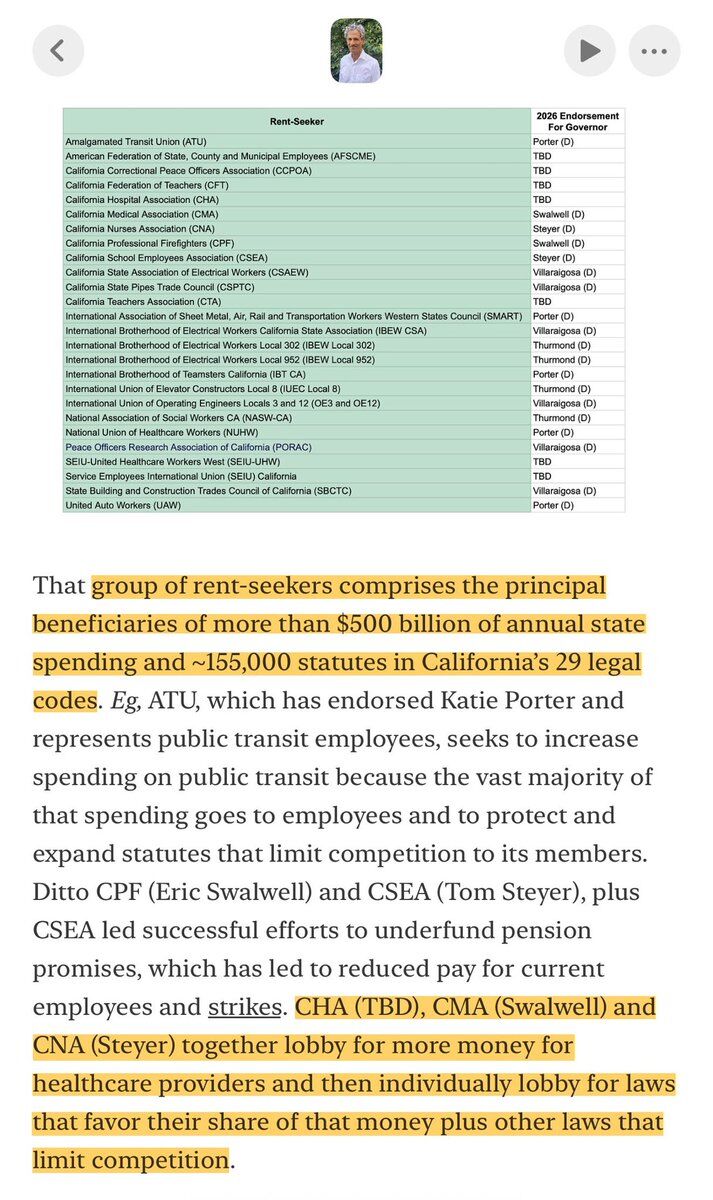
The structural conflict is simple. The public pays the salaries that fund the dues that fund the campaigns that elect the officials who negotiate the contracts. That’s not advocacy. It’s a closed loop. And the position letters that would make this influence network visible are exactly what the Legislature refuses to release.
The Broader Transparency Crisis
It’s not just the letters.
CalMatters ran a commentary last August headlined: “California was a model for transparency. Now the Capitol operates in the dark.” That line isn’t about one blocked bill. It’s a systemic indictment.
Decisions on which bills live or die are made in closed-door caucuses and Appropriations committees before the public ever gets a hearing. In March 2025, 119 “blank” budget bills were moved forward — placeholder legislation that allocates taxpayer money through backroom negotiation, with no public content to review.
As of that same month, legislative leaders refused to say whether federal agents are investigating lawmakers for corruption, or whether taxpayer money is funding their legal defense. AB 1392 would exempt home addresses of public officials from public disclosure; framed as a safety measure, First Amendment advocates and accountability journalists say it functionally shields officials from scrutiny.
The Capitol press corps has been shrinking for years — fewer watchdogs covering Sacramento even as lobbying spend hits record highs. The people who would report on these letters have been systematically defunded. And the opacity cascades down: non-profits not required to disclose their donors are funding attack ads and mailers across California local elections, with dark money now saturating races far from the Capitol.
The pattern has names and dollar amounts.
A Sacramento Bee investigation documented how legislators exploit campaign finance loopholes to fund personal luxury and distribute cash to allies with almost no accountability.
That’s former FPPC Chairman Dan Schnur describing the system he was supposed to police. And the receipts back him up. Assemblymember Blanca Rubio spent $63,000 from campaign funds on a three-day trip to New Orleans during Super Bowl weekend, expensing travel for herself and three family members as a “fundraiser.” She also dropped $6,000 at the Apple Store on the same account. Former Assembly Speaker Fabian Núñez has recycled old campaign funds for 17 years, distributing over $1.3 million to sitting legislators while working as a lobbyist.
California mandates corporate ESG disclosures, requires police body cameras, and lectures tech companies about algorithmic transparency. But when it comes to asking the legislature to post its own lobbying letters online, it cites “technical considerations.”
$540 million in lobbying pours through Sacramento every year, and they won’t even let you see the letters.West Virginia posts lobbyist letters online. California kills the bill that would do the same.
If lawmakers have nothing to hide, why are they hiding it?
Related Links
-
Secret Capitol Lobbying Letters Investigation (CalMatters)
-
California Lawmakers Use Campaign Cash to Trade Access, Perks (Sacramento Bee)
Discussion
Discussion is for vetted members. Apply to join or log in.