Finding Higher Ground
An analysis of the November 2026 Election
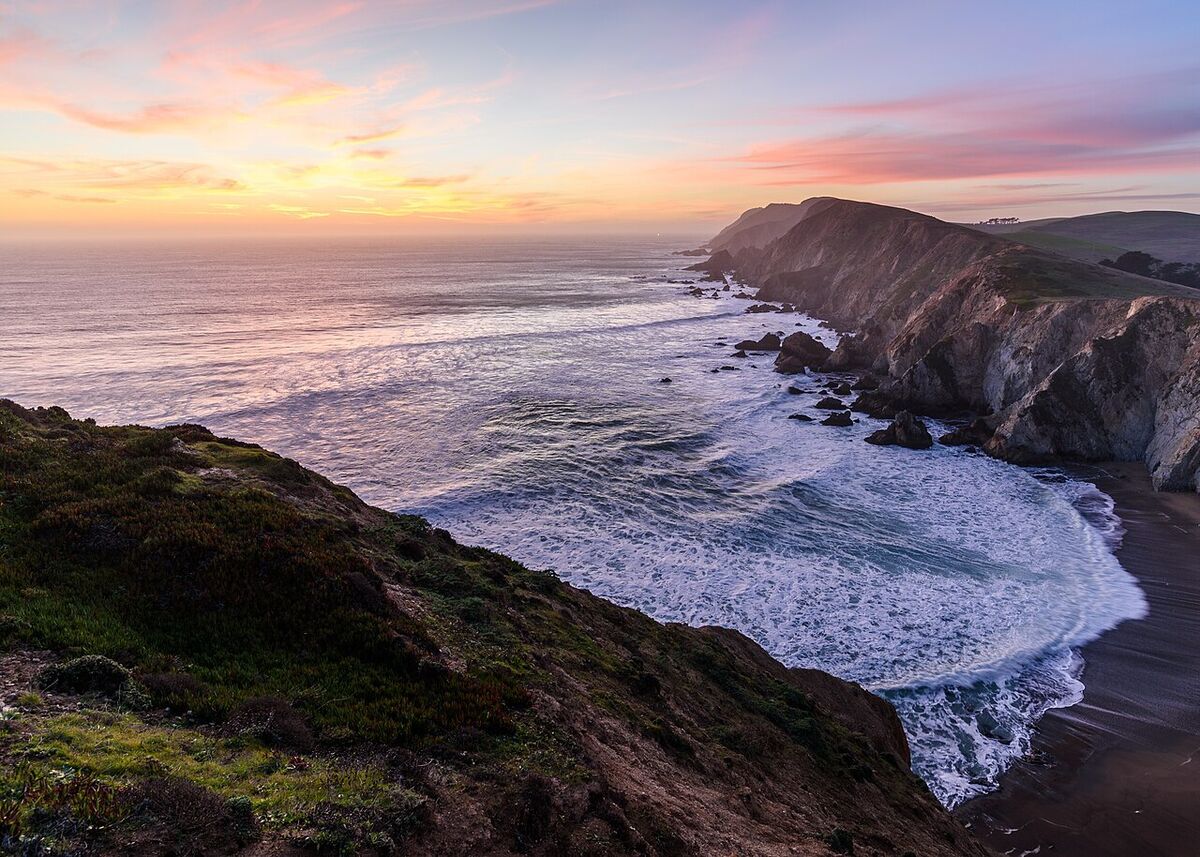
We Democrats spent years waiting for this election, and it delivered what they called a blue tsunami. Democrats reclaimed Congress, a majority of governorships, and local offices across the country. I watched it sweep the nation, and reached for the pride I expected to feel as a lifelong Democrat. It never came.
Not all the water in a wave runs the same. Some water runs clear and inviting; you can dive in and see straight to the bottom. Some runs murky and unfathomable. Some carries plastic, toxins, and debris. And some burns through the reef as it passes.
The party that emerged from this tsunami did not match the one that went in: it tacks leftward, younger, angrier, its energy concentrated in a movement that a decade ago lived on the fringes of its coalition. Democratic socialists now lead New York and Seattle, and this month they won Washington, D.C., and Los Angeles. In California, no one doubted that Democrats would win. The question ran deeper: which Democrats? And here, in San Francisco and Silicon Valley, the electorate returned a different answer than the nation did: a more moderate, commonsense one.
Clear Waters in San Francisco
Mayor Daniel Lurie anchors the moderate coalition in San Francisco, and in November he won every race in which he endorsed. After the June primary, I argued that the moderate lane, which for a decade dissipated its votes, its money, and its volunteers across rival camps, had at last consolidated into an organized, transferable force under Lurie’s leadership, while the progressive machine that once governed this city through ruthless electoral discipline had decayed into leaderless, self-cannibalizing factions. November tested that thesis under the least favorable conditions imaginable: a national wave swinging sharply and decisively to the left.
Skeptics reach for money as the explanation, but money explains only part of it. Politics runs on three currencies: money, votes, and people. Money starts and moves an operation. Votes impose a fixed arithmetic no candidate escapes. While people, the volunteers and validators, convert the first two into durable power. A coalition holding one of the three explains its defeats by pointing at the other side’s checkbook. Lurie has assembled all three at once, which makes the apparatus larger than the man. It no longer wins only in moments of crisis or backlash. It picks candidates, shapes measures, and delivers them. That separates a protest from a governing majority. Still don’t believe me? Look no further than his win record by endorsement, his win number by percentage, November and June alike with some of his candidates topping 70 percent of the vote.
Not everyone reads that as a success. Some on the city’s left already call it a failure of nerve: San Francisco, they say, played it safe while the rest of the country went bold. Expect to hear it more, because a governing moderate majority is the one result their national story can’t explain. But San Francisco’s voters didn’t miss the wave. They lived through the last one, and they remember what it cost. The question was never whether a wave was coming. It was what kind of shoreline it would meet.
Los Angeles Turns Acidic
Four hundred miles south, in the same state, the same wave met a different shoreline and did something else entirely.
Los Angeles handed its voters two failures and called it a choice. On one side stood Karen Bass, an embattled incumbent whose tenure the Palisades fire came to define while the city kept sliding. On the other stood Nithya Raman, a democratic socialist councilmember running against a status quo she had helped govern for six years. Raman won, 52 to 48, the first challenger to unseat a sitting Los Angeles mayor since 2005. But a starker fact sits underneath the result: a voter who wanted safe streets, working schools, and a government that delivers had no one to vote for. The center did not lose the Los Angeles mayor’s race. It never entered it. We stayed out, because no candidate had earned the right to a molecule of oxygen.
San Francisco’s center spent years building toward a candidate and a coalition, and when the moment came it had Daniel Lurie. Los Angeles’s center spent those same years fragmented, and when the moment came it had a choice between a failing incumbent and the movement waiting to replace her. An ocean absorbs whatever fills the air above it. Los Angeles had filled its air with anger and failed governance, and its voters absorbed it. When the center offered nothing to build with, the acid took its place.
And like acid in a real ocean, it spread to everything it touched. Marissa Roy, endorsed by the Los Angeles chapter of the Democratic Socialists of America, won the City Attorney’s office in a landslide. Councilmembers Eunisses Hernandez and Hugo Soto-Martínez won reelection outright in June. Jimmy Gomez lost his congressional seat to an insurgent challenger. Burbank is about to seat what the movement calls the first DSA-majority city council on the West Coast, and West Hollywood and Inglewood went the same direction. Of nine candidates the chapter endorsed in November, seven are winning. One political scientist summarized the new arithmetic: the homeowners and high-propensity voters who long decided the region’s elections are “no longer calling the shots.” That is the reef dissolving, not in one dramatic night but across a dozen races most voters never looked at.
So we went where the center could still hold. Rather than waste resources on a mayor’s race with no one worth backing, we fought in Santa Monica, a city that spent the last several years on its own version of the slide. We saw their slide, a hollowed-out downtown, disorder on the Promenade, a budget in the red, and then did the unglamorous work of recovery: a downtown revitalization plan built on public safety and economic development, and a budget restored to structural balance ahead of schedule. We backed Lana Negrete and Caroline Torosis, and voters returned them in first and second place out of twelve candidates, with turnout above 60 percent. A small victory no one applauded on a long coastline, and proof of the point. Where the center organized around results, it survived.
Los Angeles now adopts the playbook that nearly cost San Francisco everything: a far-left supermajority of local officials. We know how that story unfolds, because we lived it. Tens of thousands of residents left the city, drugstores shuttered across its neighborhoods, and six Asian Americans paid with their lives while the city ran its experiment in ideology first, delivery last. Undoing the damage took a reform movement, three recall elections, and years of unglamorous organizing.
Murky Water: No Clear Path Through the Affordability Crisis
San Francisco held the center in a year Los Angeles could not. But beneath both results lies the same murky water, the one issue no party has yet charted a clear way through: an affordability crisis that has Californians paying more for everything and trusting less in the people charged with fixing it.
Proposition B, the public bank, passed with roughly 52 percent. The measure amends the city charter to create a city-owned Municipal Finance Corporation, a lender that could become a full public bank after at least three years and state and federal approval, without providing a dollar to fund either. Voters did not weigh its capital structure, its governance, or who pays if it fails. They weighed their rent, their grocery bill, and the sense that the system works for someone other than them. In that mood, “a bank that serves the people instead of Wall Street” sounds like relief, and no one on our side offered a more convincing answer to the pinch they feel every month. The danger was never the idea of a public bank. It lies in who will run it. Prop B writes the bank’s mission straight into the charter, “equity, social justice, and environmental sustainability,” and hands its oversight seats to appointees from City Hall, including the Board of Supervisors. In a city whose Controller flagged nearly a third of its contracted nonprofits for failing basic fiscal standards, and whose former Human Rights Commission director now faces felony charges for steering funds to a nonprofit she led, that design should worry anyone. A lender run by the same political class, measured by the same vague mission, will not finance what the city needs most. It will finance whoever the machine needs most. Now that the bank has passed, our job turns to watching exactly that: who sits on its boards, whom it lends to, and whether anyone measures what that money builds.
The race for Insurance Commissioner turned on the same crisis in its most acute form. For millions of Californians, the home they spent a lifetime paying for now costs more to insure every year, if they can insure it at all. Premiums have climbed, policies have been canceled, and neighbors have been dropped after the fires, while the state’s response moved at the speed of a rate filing. Ben Allen held the better plan, but he ran as continuity, and peel back a single layer and he sounded uncomfortably close to the incumbent he hoped to succeed. Jane Kim offered three words: try something new. She won, roughly 53 to 47, because to a homeowner watching the most valuable thing they own become unaffordable to protect, the current system had already failed. I argued after the June primary that legibility is the ultimate political currency, when Kim’s punchy narrative outsold Patrick Wolff‘s more sophisticated command of the crisis. November confirmed it a second time, against a second opponent. Voters did not lack information. They lacked a sentence from our side they could hold onto. Expertise that cannot reach a frustrated homeowner in one line will lose to a promise that can, every time.
The Darkest Waters Ahead: Our Schools
If the affordability crisis clouds the water, our schools sit at the bottom of it, in the darkest stretch, and the next decade of California politics will be decided there.
There were bright spots. In San Francisco, where parents organized into a bloc after the recalls and never demobilized, the center swept all three school board seats. Down the coast, Peter Tokofsky unseated an incumbent on the Cabrillo Unified board by 16 points. Those wins share one trait: parents who organized and stayed organized.
Everywhere else, the water turned dark. The Sequoia Union High School District stripped honors classes from its freshman and sophomore classrooms, starting with ninth-grade honors biology at every campus, and this spring its board voted 3 to 2 against bringing them back. Alon Shiran ran on the simplest promise in education politics, bringing back honors, and lost to the incumbent who voted to keep them out, 64 to 36. In Palo Alto, Avery Wang won a seat running on academic rigor, especially in math, but his running mate finished third behind the candidate the teachers’ union endorsed. We came for two seats and left with one. And in Marin, the Tamalpais Union teachers’ union, which had stayed out of board races for as long as anyone could remember, endorsed a slate for the first time and won every seat on the ballot.
For most of the last century, education belonged to the Democratic Party. It was the party of the public school, the land-grant university, the child of immigrants who out-studied the disadvantage his family was handed. Somewhere along the way, the party stopped treating public education as a promise to keep and started treating it as an institution to protect. It defended the system while the system stopped teaching algebra in eighth grade, stopped offering honors to freshmen, and stopped measuring whether children learned at all. Parents who asked for rigor were told they were asking for privilege. Even reform-minded Democrats now concede the party has gotten little right on schools in a decade.
That surrender will not stay quiet. Every family that watched its child’s honors class disappear, every parent who paid for tutoring to replace the algebra the district cut, remembers who made those choices and who defended them. If Democrats do not decide what they stand for in the classroom, someone else will decide it for them, and the families this party once claimed as its own will not wait to find out who.
San Francisco has found its center, and November proved it under the hardest conditions a moderate coalition could face. But one clear bay does not clean an ocean. Los Angeles now looks the way San Francisco looked six years ago, and from Sequoia to Marin the same toxins seep into the school boards that will shape the next generation. The work ahead happens where most people never look: the board meetings where honors classes quietly disappear, the low-turnout races decided by a few thousand votes, and the search for parents, teachers, and neighbors with the competence to govern and the patience to sit through a three-hour school board meeting to do it. San Francisco did not find its center by accident. It recruited, organized, and showed up until the center had a bench. That is where I will look for the pride I could not find on election night. And that is how you find higher ground: not by waiting for the water to recede, but by building something solid enough to stand on before it rises again.