False Choice Narratives Are Anti-Asian
Three fictions San Francisco sold as justice, and the community that keeps paying for them.
TL;DR
San Francisco has repeatedly sold Asian Americans the same false choice: safety for justice, excellence for equity, and now prosperity for compassion. None of these trade-offs were ever necessary, yet Asian Americans, with the least inherited wealth and political power to absorb the cost, keep being asked to foot the bill.
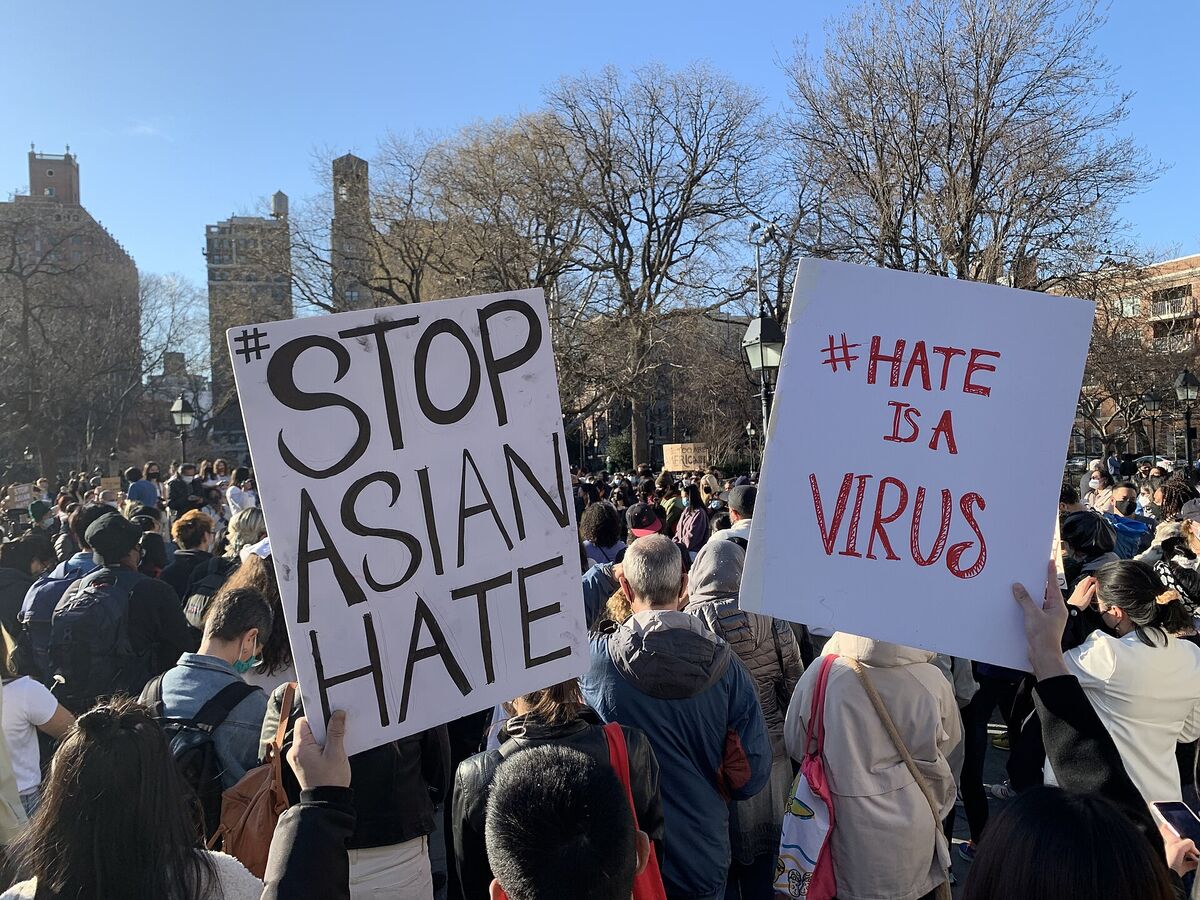
In the years San Francisco ran its great experiment in “justice,” six Asian Americans paid for it with their lives. Yik Oi Huang, 88, beaten and left for dead, her pants pulled down to her ankles, while doing her morning exercise in a Visitacion Valley playground. Kelvin Chew, 19, shot dead in a Portola robbery. Hanako Abe, 27, run down on New Year’s Eve by a parolee the District Attorney’s office had repeatedly declined to charge. Vicha Ratanapakdee, 84, driven into the pavement on his daily walk. Yanfang Wu, sixty-three, shoved to her death in the Bayview. Jasper Wu, caught on the freeway in the crossfire of a San Francisco gang war, killed before his second birthday.
None of these victims were killed by an idea. But an idea made the city comfortable with their deaths, and San Francisco has now run it three times, in three arenas, always in the same grammar and always at the same community’s expense. This is the false choice: the maneuver by which a governing class insists that one group can be helped only by harming another, then brands anyone who resists the harm as an enemy of the people they claim to help. Safety, we were told, must be traded for justice. Excellence must be traded for equity. And prosperity, on the ballot this November, must be traded for compassion. Each trade is a fiction. And each time the fiction is sold, the invoice arrives at the same address: the Asian American household, which holds the least inherited wealth to absorb the blow and the least entrenched power to refuse it.
The First Fiction: Safety Against Justice
The premise is seductive because of its symmetry, with safety and justice weighed on either side of a scale, as though one has to fall in order for the other to rise. To champion Black and brown communities, to dismantle mass incarceration and deliver restorative justice, we were told San Francisco had to reduce enforcement. Public safety was the coin; racial justice, the purchase; and the city could not, we were assured, hold both at once.
So the city ran the experiment in earnest. It defunded $120 million from SFPD and the Sheriff’s Department over two years. It elected a District Attorney who, in the name of racial equality, abolished cash bail, declined to prosecute repeat offenders, and, seven weeks into his tenure, formally directed his office to stop charging California’s gang enhancements altogether. The abstractions promptly acquired names and real consequences. A parolee whose fresh arrests and nearly 100 felonies the office had passed over was free, on New Year’s Eve, to kill a young woman, Hanako Abe, as she crossed the street. Gang members, operating in a city that had unilaterally retired the chief legal instrument for prosecuting gang violence, turned Interstate 880 into a shooting gallery and killed a toddler who had yet to reach his second birthday.
In June 2022 we recalled our District Attorney, and the verdict was larger than one man’s job: the voters rejected the false choice itself. A jurisdiction can prosecute a murderer and reform a broken system in the same breath; the two were never opposites. They were made to look like opposites because the appearance was politically useful, and Asian Americans were disproportionately the ones standing in the open while the theory was tested.
Boudin’s successor proved this. Brooke Jenkins, a Black and Latina murder prosecutor, took his office and refused the false choice outright: she files the hate crime charges her predecessor would not, and on the same day offers a first-time teenage offender the chance to course-correct rather than sit in a cell. Accountability and mercy, it turns out, fit inside a single office; they just can’t fit within a tidy ideology.
The Second Fiction: Excellence Against Equity
An identical premise governs the city’s schools. San Francisco has repeatedly insisted that to lift the students the system has failed, the students who are succeeding must be pulled back down. Excellence for some reframed as an injustice to others, and the reframing licenses an education system that fails to educate.
Under the consent decree that governed the district for a generation, no ethnic group could exceed a fixed share of any school, and the burden fell hardest on the city’s largest immigrant community: a child classified as “Chinese” was the one most likely to be capped out of a chosen school. At Lowell, the crown of the public system, the arithmetic turned explicit. One of the plaintiffs in a 1994 lawsuit was rejected on an index score that would have admitted him had he belonged to any other group. The city did not merely entertain the idea that its best school held too many Asian children; it codified the idea into a numerical penalty and defended it in federal court for five years.
The instinct never left; it institutionalized. In 2014 the district stripped Algebra I from the eighth grade and held every child to a single slower track, and the detracking did not stop at math. In the same reform wave, San Francisco eliminated honors courses in English and science before the eleventh grade and abolished its Gifted and Talented Education program outright. Every rung above the median was sawn off in sequence, each in equity’s name. Parents, especially those of the immigrant families whose children filled those classes, lined up at board meetings within a year to say the district was dumbing down instruction and holding back their kids; the district ran a public relations campaign instead of a correction. A decade of data later, the verdict arrived: achievement gaps widened, advanced placement fell, and the district began quietly unwinding the experiment it had once advertised as a model for the state.
Having removed the advanced tracks, the district’s next target was grading itself, the very instrument used to measure whether a gap exists. In May 2025 the district unveiled “Grading for Equity,” which based final grades solely on end-of-course exams, retakable without limit, with homework, attendance, and participation excluded from the calculation. An A was awarded for a score of 80, a passing D for a 21, and $172,000 was budgeted for the consultant to bring the good news to seventy teachers across fourteen high schools. The plan survived contact with the public for roughly seventy-two hours. The mayor came out against it. A sitting congressman, the son of immigrants, wrote that giving A’s for 80 percent and no homework “betrays the American Dream and every parent who wants more for their kids.” The district paused the initiative within the week. But the trajectory is the fiction’s logical terminus: having capped the school, canceled the class, and abolished the program, the doctrine had finally arrived at redefining achievement itself, so that excellence could no longer be measured at all. A gap you cannot see must be a gap you have solved.
But when a public system withdraws a ladder, the households that feel the fall are never the ones with capital. Wealthy families, disproportionately white and cushioned by intergenerational institutional wealth, held two exits from the reform, and both were painless: they could purchase private schooling outright, or absorb the cost of private tutoring as an unremarkable line item. Asian San Franciscans, disproportionately working-class and immigrant, possessed neither the inheritance nor the comfortable income band. They did not, however, withdraw from the contest; they overspent to remain in it. Enrollment at commercial tutoring franchises like Kumon exploded in exactly these years and these neighborhoods, not because these families could easily bear the expense, but because they could not afford to lose. For households to whom public education is not a positional good but the central instrument of a generation’s advancement, the tutoring bill came out of the thinnest margins, at genuine but willing sacrifice. The reform advertised as leveling the field thus operated as a regressive tax, payable in tuition, and heaviest on precisely the households least able to bear it.
The Third Fiction: Prosperity Against Compassion
The third fiction is not yet certain. It’s on November’s ballot, and it involves the same false choice. To care for the most vulnerable Californians, voters will be told, the state must punish its most successful ones: a one-time asset seizure on a portion of the net worth of roughly two hundred private citizens, pitched as the rescue of a health system gutted by federal cuts. In other words, the state may reach past income and seize accumulated assets, wealth already built and already taxed, whenever a budget demands it. Nothing like it has ever existed before in our state’s history, and the measure’s own mechanics reveal its character: it reaches backward as well as down, taxing anyone who resided here on the first of January, ten months before the vote, so that by the time a citizen learns the rule, it is already too late to obey it differently.
That principle will not stay trained on two hundred people, because a wealth tax is not a tax on the wealthy in the abstract. It is a tax on legible, immobile wealth, and legibility is precisely what separates new money from old. Dynastic fortunes live inside a mature architecture of avoidance, the trusts, the foundations, the family offices, engineered across generations to render wealth invisible. First-generation wealth has no such scaffolding. It sits in a house and a small business, fully visible and fully exposed, because the family that built it has not yet had the decades, or the lawyers, to hide it.
And this is the demographic fact the compassion framing conceals. Asian American households have, for the first time in American history, accumulated enough to be swept into an asset tax’s crosshairs: by 2021 the median Asian household’s net worth had edged past the white median. But that figure is a snapshot of labor, not an inheritance of stock. It was earned in a single generation, by a population far likelier to hold its entire net worth in one home and one enterprise than in a diversified, sheltered estate. And far less likely to receive the intergenerational transfers that build the dynastic infrastructure no wealth tax can penetrate. Within living family memory, the men of these households were confined to laundries, factories, and railroad camps, and the state had spent the preceding era doing worse: the Page Act of 1875 barred Chinese women from these shores by presuming every one of them a prostitute, while the few who arrived were too often trafficked into exactly the fate the law had accused them of, inside the very Chinatowns the government drew to contain us.
The result is a cruel asymmetry. The old fortune, which the tax claims to target, slips through the trusts. A levy sold as a reckoning with inherited privilege would fall hardest on the households that inherited nothing.
The premise, once more, is false. The most successful members of a society are the ones with the greatest capacity to sustain its vulnerable. Treating their success as the disease rather than the cure helps no one. It merely instructs the aspirant class, the strivers who arrived with nothing and built something visible enough to seize, that building here makes you a target.
The Invoice
Line the three fictions up and the con becomes difficult to unsee. Safety against justice. Excellence against equity. Prosperity against compassion. Each is a counterfeit trade, insisting that one group can be helped only by injuring another. And in each, when the bill comes due, it is presented to the same community, not by coincidence but by design: Asian Americans carry the least inherited wealth to absorb the loss and the least political power to block it. They possess no dynastic fortune that outlasts a wealth tax, no legacy connection that routes around a broken school, no private security that makes street crime someone else’s problem. When San Francisco runs an experiment, they are the ones standing in the open.
These fictions are marketed as the road to a fairer city. What they have delivered is a child who never reached two, a young woman killed on a holiday, elders afraid of their own sidewalks, students priced out of the schooling their parents crossed an ocean to secure, and now the punishment of hard-won success. The community that pays for these fictions is the one that believes most fiercely in the promise they betray. In survey after survey, no group in America is more likely than Asian Americans to say it is living the American Dream or on its way to it, and no group is more likely to define that Dream as opportunity itself rather than mere stability. The city’s great experiments keep drawing their funding, in blood and tuition and seized savings, from the last people in America who still take Her promise at its word.
A city can be safe and just. It can lift the struggling without kneecapping the thriving. It can care for the vulnerable without punishing those who build. The officials who tell you otherwise are not delivering a hard truth. They are promoting politically convenient falsehoods, and they have already decided, three times running, who will pay for them.