Drug Court’s Violent Crime Loophole Finally Gets a Sheriff
Judge Begert diverted armed robbers and attempted murderers into “treatment.” Now a homicide prosecutor is taking over.
Source: x.com
Source: x.com
TL;DR
SF Drug Court has been diverting violent criminals at triple the rate of two years ago—with more participants failing than graduating. Judge Begert is out, and a prosecutor with 22 years of homicide experience is taking over.
San Francisco’s Drug Court has become a revolving door for violent criminals. Petitions tripled. Armed robbers walked free. A defendant with a prior murder solicitation conviction got diverted—then promptly failed to show up for court. Now Judge Michael Begert, who built the program, is being replaced by a prosecutor who spent two decades putting murderers behind bars.
Drug Court Gone Wild: The Numbers Tell the Story
The explosion in Drug Court diversions isn’t just remarkable—it’s alarming. According to the SF Chronicle, defense attorneys filed 516 petitions for Drug Court diversion in 2023. In just the first ten months of 2025? That number exploded to 1,909. Successful diversions tripled from 180 to 608.
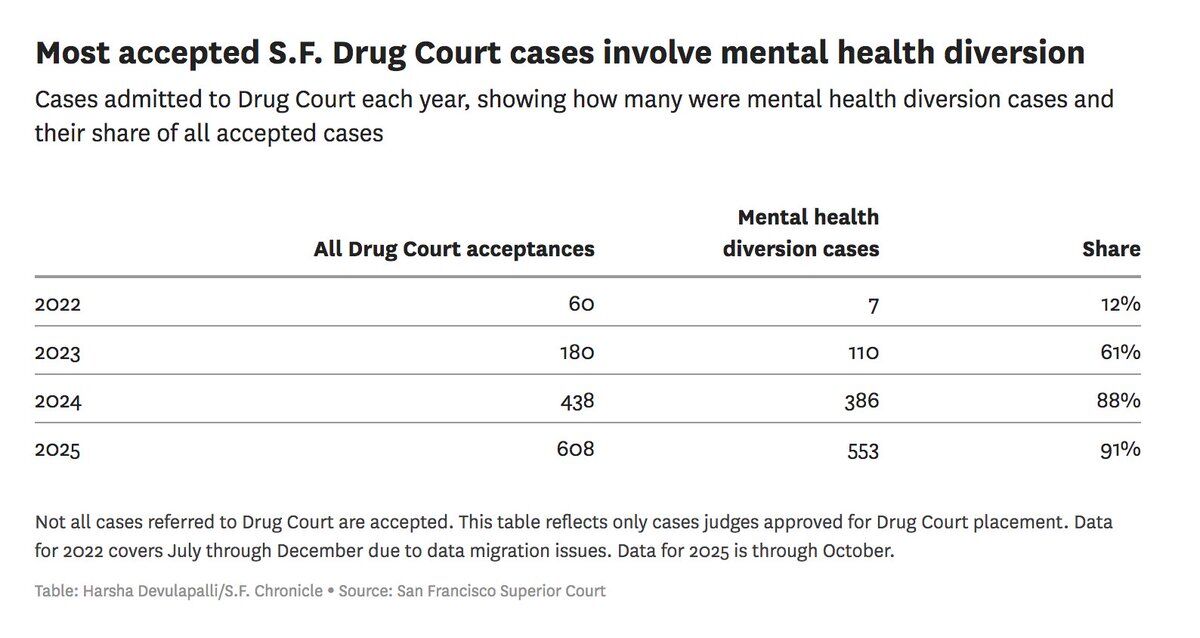
What changed? A 2018 state law created a new pathway allowing defense attorneys to petition for diversion even when prosecutors object—and made violent crime defendants eligible if diagnosed with a mental disorder, including substance abuse. Now 91% of all Drug Court cases use this expanded statute.
The Chronicle found that defendants charged with attempted murder, armed robbery, and assault with a deadly weapon were getting diverted into treatment instead of facing trial. District Attorney Brooke Jenkins didn’t mince words: “This is an abuse of this statute. It’s worse than I even knew.”
The McDowell Case: Armed Robbery, Prior Murder Solicitation, Released
Want to understand how broken this system became? Look at Gregory McDowell.
McDowell was charged with armed robbery targeting an Asian food supplier, robbing a hair salon at gunpoint, and carjacking someone outside. His criminal history includes convictions for robbery in 2001 and 2008, solicitation for murder in 2008, possession of a deadly weapon in prison in 2012, and drug possession in prison in 2017.
Prosecutors argued McDowell posed “a significant risk to public safety.” Victims testified they feared for their lives. But Judge Begert granted diversion anyway, saying “I don’t think additional time in a cage is going to improve your ability to function in society.”
What happened next? McDowell failed to show up to court. A warrant was issued for his arrest.
More Failures Than Graduates
The Drug Court program isn’t just diverting dangerous people—it’s failing to actually help them. In 2025, 134 Drug Court cases were completed while 259 were terminated for missteps like positive drug tests and failures to appear.
That’s nearly twice as many failures as successes. And here’s the kicker: court officials have no recidivism data. They said they would “begin measuring” how often graduates succeed or reoffend.
Some defendants wait one to four months in jail just to be placed into treatment. The Department of Public Health claims they’re monitoring “capacity to ensure participants receive timely, appropriate services"—but the numbers tell a different story.
Enter Judge Randle: A Prosecutor’s Prosecutor
Starting January 20, Judge Murlene Randle takes over Drug Court. Her background couldn’t be more different from Begert’s approach.
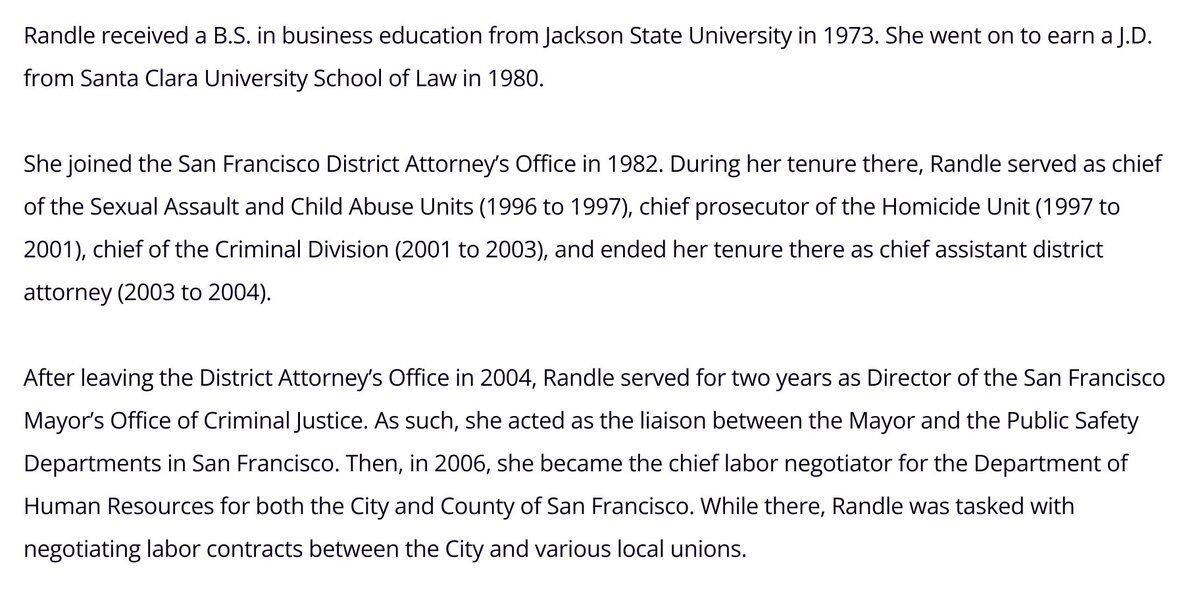
According to Trellis.Law, Randle spent 22 years in the San Francisco District Attorney’s Office. She served as chief of the Sexual Assault and Child Abuse Units (1996-1997), chief prosecutor of the Homicide Unit (1997-2001), chief of the Criminal Division (2001-2003), and finished as chief assistant district attorney. She later served as Director of the Mayor’s Office of Criminal Justice.
Archived tweet🚨 Judge Begert is being replaced by Judge Murlene Randle in Drug Court; she has a strong prosecutorial career in homicide, child abuse & s*x assault. Thanks to our public outcry and amplifications exposing Begert's shenanigans in delaying cases & granting hundreds of egregious cases for diversion instead of trials. Begert built and led Drug Court - so he's being demoted imho. 🎉Let's hope they inundate him with misdemeanor cases, so criminal justice can be revitalized in SF w/ Judge Randle https://t.co/o54MG8ocbY https://t.co/DNmoLgyJm5
Liz4SF @incitafusio January 09, 2026
Begert, who built Drug Court and presided over it since 2019, is being reassigned to handle felony and misdemeanor trials. That’s a demotion from a program he built to processing everyday cases.
Public outcry over Drug Court’s drift toward leniency for violent offenders appears to have prompted action. Whether Judge Randle brings the prosecutorial rigor the program needs remains to be seen—but her background couldn’t be more different from the status quo. Watch for changes in diversion rates and graduation outcomes under her leadership.
Follow @garrytan for more.
Related Links
-
Judge Murlene J. Randle - Professional Background (Trellis.Law)
-
Liz4SF announcement on Drug Court leadership change (@incitafusio)
Comments (0)
Sign in to join the conversation.