California Just Lost 10,000 Jobs to Texas—Again
A $3.2 billion shipyard just picked Texas over Solano County. It’s the latest builder to walk away from California’s red tape rather than fight through it.
TL;DR
A shipyard that could have anchored tens of thousands of good jobs in Solano County is going to Brownsville instead. It is the latest entry in a pattern California refuses to break: we make it too hard to build here, so the builders go somewhere else, and working families pay the bill.
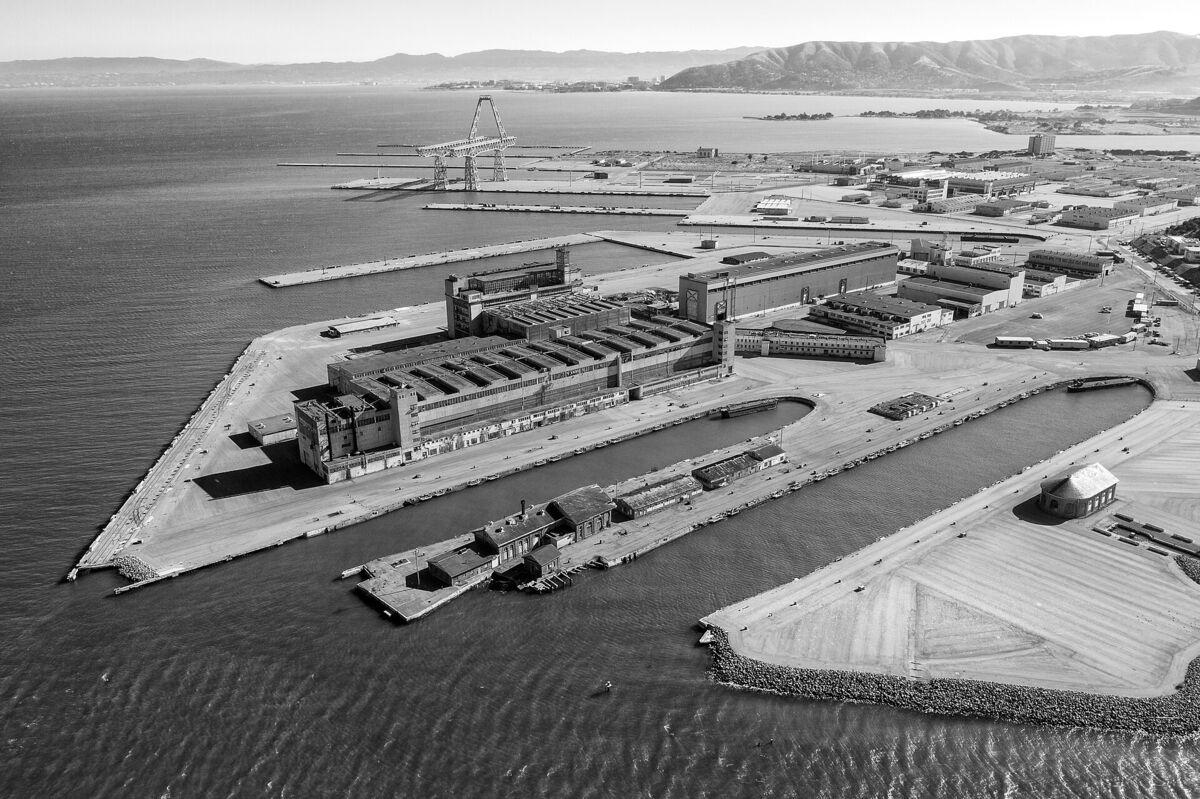
On July 16, defense-technology company Saronic announced it will build Port Alpha, a next-generation shipyard, in Brownsville, Texas, rather than at the proposed Solano County site it had been eyeing. The project is a $3.2 billion investment expected to create up to 10,000 jobs: welders, engineers, advanced-manufacturing technicians. The kind of work that supports a family and a mortgage.
The people who fought hardest to keep it here were not executives. They were the building trades. Joshua Arce of the California Alliance for Jobs, a coalition representing more than 70,000 union workers, called the decision “a real gut punch” and warned that Saronic pointed to Texas as a state “able to cut through red tape.” John Kowalski, a member of Pipefitters Local 343, put it plainly: “This was a missed opportunity. I don’t want to sit here and talk about me and missed opportunities for me and my family. It’s more than that. It’s generations.”
Saronic said it picked Brownsville after a year-long nationwide search, citing workforce, infrastructure, logistics, land availability, and room to expand. Texas, for its part, closed the deal with an $80 million Texas Enterprise Fund grant and Cameron County threw in a 95 percent, 19-year tax abatement — a package the San Francisco Chronicle valued at roughly $211 million in total. California offered process.
Saronic itself never publicly named permitting as the reason it passed on California. State Sen. Christopher Cabaldon argues the deal collapsed because California Forever, the developer behind the proposed Solano County megacity, tied the shipyard to its own unpopular housing project. Reporting also indicates the Solano County Board of Supervisors declined to meet with Saronic executives during two separate site visits, which the local economic development corporation’s own CEO called “a profound dereliction of duty.” But these issues merely exacerbated the larger problem: California’s permitting process.
Bigger Than One Shipyard
The shipyard is just the latest casualty. Valero is closing its Benicia refinery, a decision the company tied directly to California’s “tough regulatory environment” and high costs, laying off 237 of the plant’s 348 workers starting this spring. Down the road, Anheuser-Busch shut its Fairfield brewery. Statewide, Phillips 66 is winding down its Los Angeles-area refinery, taking roughly 600 employees and 300 contractors with it.
The headquarters have been leaving too, and they’re taking the tax base with them. Chevron, born in California, moved its headquarters to Houston in 2024, the first time the company has been based outside the state in more than a century. Tesla relocated its headquarters to Austin in 2021, joining Oracle, Hewlett Packard Enterprise, and Toyota, which Reuters noted had all left for a state with “less stringent regulation."And SpaceX moved its headquarters to Texas in 2024, with Elon Musk citing frustration with California laws.
These are not anecdotes. A Hoover Institution study found 352 companies moved their headquarters out of California between 2018 and 2021, with the pace more than doubling in 2021 alone and eleven Fortune 1000 companies gone in three years. The authors named the drivers directly: tax policy, regulatory policy, litigation costs, and energy costs. The researchers believe the real count is far higher, because most relocations never get reported.
The Common Thread
California does not lose these fights on weather, talent, or ambition. It loses them on cost and on time: on how long it takes to get a permit, how many lawsuits a project has to survive, and how expensive the state makes it to operate before a single job is created.
Sacramento knows this. In June 2025, the Legislature passed and Governor Newsom signed AB 130 and SB 131, the most significant reforms to the California Environmental Quality Act in the law’s history. The reforms were motivated, in the state’s own words, by concern that CEQA was being misused to "delay a project for reasons unrelated to environmental protection.” The package even created a new CEQA exemption for advanced manufacturing facilities on industrial-zoned land: exactly the kind of project a shipyard is.
That is real progress, and the pro-build coalition that won it deserves credit. But even after that reform, a company building the future of American shipbuilding still looked at California and chose Texas. And the reform itself isn’t secure: a bill introduced this year, AB 1083, would roll back the advanced-manufacturing exemption SB 131 just created.
Who Pays
This is not a story about billionaires. Chevron’s executives will be fine in Houston. Saronic’s founders will do just fine in Brownsville. The people who do not get to leave are the pipefitters, welders, and electricians who wanted that work close to home, and the Solano County families who watch refinery after plant after shipyard choose another state.
When California makes it this hard to build, it is not protecting working families. It is exporting their opportunity. Streamlining a permit is not a giveaway to industry; it is the difference between a Local 343 member building ships in Solano County and reading about someone else building them in Texas.
The building trades are asking Sacramento to finish the job: pass the legislation that makes California as competitive as any state in the country for major manufacturing. They are right. The next 10,000 jobs are watching.