Billions of Dollars in, Homelessness in LA Continues to Rise
Los Angeles’ own audits show a system that can’t track what it spends, can’t say what works, and never makes anyone answer for either.
TL;DR
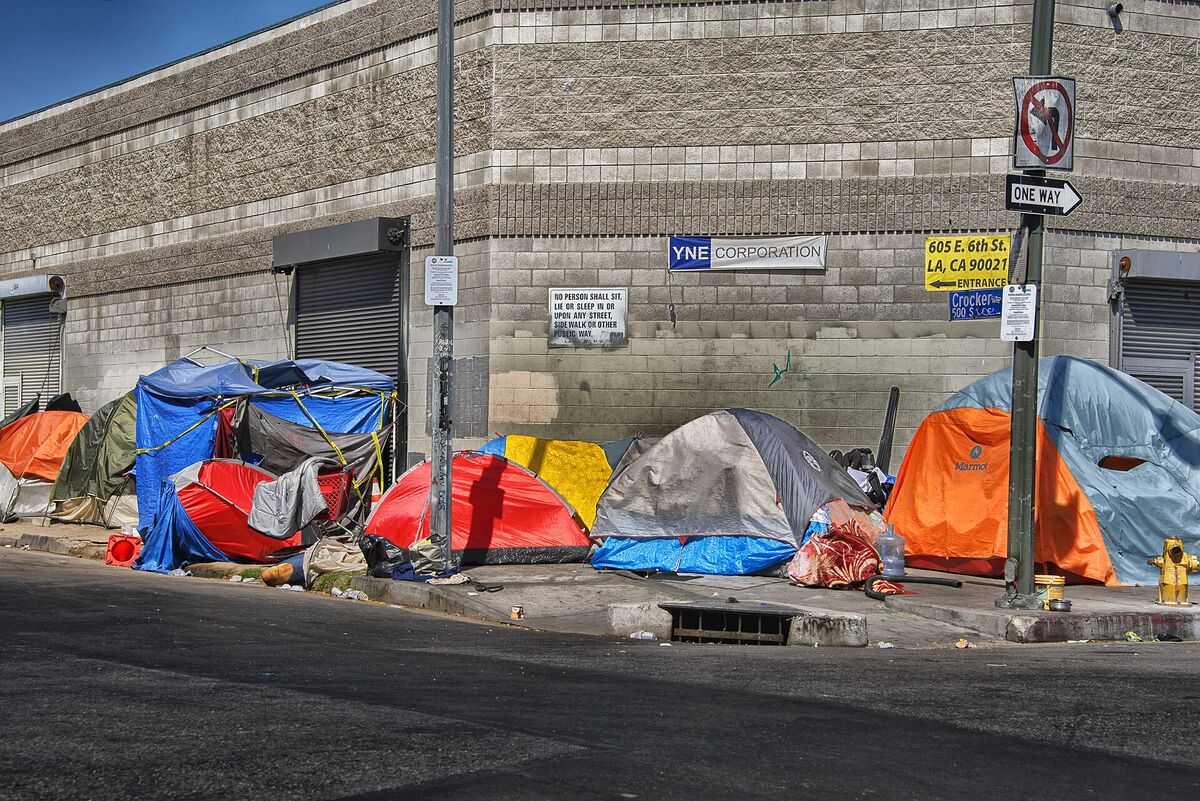
Los Angeles has poured billions into homelessness programs —Prop HHH, Measure ULA, Inside Safe, LAHSA—and a federal audit found the city “doesn’t know how much it is paying, and for what,” with nearly zero financial oversight anywhere in the chain. Now homelessness in the city is rising again, and the pattern underneath every failure is the same: money moves, programs run, and no one’s job ever depends on whether people actually get off the street.
For two years, Mayor Karen Bass had a story to tell: homelessness in Los Angeles was finally falling. This week that story collapsed. The city’s unsheltered population, the people living in tents, doorways, and vehicles, rose 7.9% . Overall homelessness climbed 3.4%. There are now 45,194 homeless people in the city of Los Angeles, and the number is moving the wrong way in the one policy area the mayor made the center of her agenda.
Bass attributed the increases to state and federal funding cuts. But Los Angeles has spent extraordinary sums on this crisis, and the trend line just reversed. At some point the question stops being “how much are we spending” and becomes “what are we buying.” In Los Angeles, no one can answer that, because no one is held to the result.
Zero Accountability
This is the thread connecting every failing piece of the city’s homelessness response. We count appropriations, ribbon-cuttings, and beds funded. We almost never count whether people actually got housed, got well, and stayed that way, and no official’s job depends on that answer.
The receipts are not ambiguous. In December 2024, City Controller Kenneth Mejia’s performance audit found that one in four city-funded shelter beds went unused, costing an estimated $218 million from FY19 to FY23, and that only one in five interim shelter residents obtained permanent housing, while more than half returned to homelessness. A month earlier, a Los Angeles County auditor-controller review found lax accounting at the Los Angeles Homeless Services Authority that led to the failure to reclaim millions of dollars. The findings were scathing enough that a county supervisor moved to pull homeless services out of LAHSA and under direct county control.
It got to the point that a federal judge stopped waiting for the city to audit itself. In March 2024, U.S. District Judge David O. Carter ordered a comprehensive independent audit of “each and every” city-funded homelessness program, in the long-running LA Alliance for Human Rights v. City of Los Angeles case. “Which provider is producing results out there?” Carter asked from the bench. “We have no benchmark, and we have no accountability at this point. It’s just as simple as that.”
A year later, the audit confirmed it. Released in March 2025, the outside review by Alvarez & Marsal examined roughly $2.3 billion in spending across three major city programs, including Inside Safe, and found that Los Angeles “doesn’t know how much it is paying, and for what,” and that there was “nearly zero financial oversight or accountability” anywhere in the chain, from the city and county down to LAHSA and the outside providers it contracts with. Of $50.8 million the city had advanced to those providers, auditors found only $220,000 had ever been recovered. Carter’s reaction, from the bench: “No accountability. This is old news.” When a court has to order the accounting, and the accounting comes back with no accounting in it, the accountability was never there to begin with.
The finding did produce one real consequence. Weeks later, the county Board of Supervisors voted to strip LAHSA of its homeless-services role and stand up a new county department to take it over. It is the closest thing this story has to someone actually losing something over the results. But homelessness in the city still rose the following year, which suggests that reorganizing the org chart, on its own, is not the same thing as attaching consequences to outcomes.
Failure One: A Housing Shortage the City Won’t Remedy
The largest study of homeless Californians in a generation, out of UCSF, found people falling out of housing while earning a median of $960 a month in a state where a two-bedroom rents for nearly three times that, and many said a subsidy as small as $300 a month would have kept them housed. The lesson is not complicated: when there are not enough homes people can afford, people fall onto the street faster than any program can catch them.
Los Angeles knows this, put real money behind it, and still cannot build. Proposition HHH, the $1.2-billion housing bond voters approved in 2016, was sold as the answer to exactly this shortage. Years later the controller found it falling far short of its promise, with per-unit costs on the priciest project ballooning to as much as $837,000. That’s an outlier, not the norm; the city’s average total development cost per unit runs closer to $557,000, and the average HHH subsidy per unit is about $134,000. But even the typical case means a billion dollars buys a fraction of what voters were promised, at a price at which the bond stops being transformational and starts being a rounding error against a crisis this size. The city even keeps a public HHH progress dashboard, which is transparency about the pace of building but not accountability for the slowness of it. No official’s standing rises or falls on how many units actually open.
The pattern repeated with the next big pot of money. Measure ULA, the “mansion tax” pitched to voters as a homelessness and housing fix, has now crossed $1 billion in revenue. Yet as of mid-2025, most of the roughly $700 million collected was still sitting untouched in city accounts, and reporting found the city had spent just $912,699, roughly 1.3%, on new multifamily affordable housing, snarled in legal challenges and administrative limbo that no one was ever penalized for failing to resolve. So the money is arriving and the homes are not. Voters approved two separate revenue streams to close the shortage, and the shortage is still open because the accountability for turning dollars into doorways simply does not exist.
Failure Two: Housing First, Unaudited
Housing First, the state’s governing homelessness doctrine, puts people into housing without preconditions on the promise that services, including treatment, will follow. The premise is defensible, and in controlled studies it holds up. The problem in Los Angeles is not the theory. It is that the city adopted the slogan and skipped the second half of the sentence: the housing is scarce, the wraparound services are inconsistent, and no one audits whether “services will follow” ever actually happens.
The city’s own numbers expose the gap. The controller found that only one in five interim shelter residents moved on to permanent housing, and more than half returned to homelessness. A Housing First system is supposed to move people from the street, to interim shelter, to a permanent home with support. In Los Angeles the middle step has become a dead end for four out of five people who enter it. That is not Housing First working, it is Housing First invoked as a brand while the pipeline it describes leaks at every joint.
And because the doctrine is treated as an article of faith rather than a program with metrics, the failures never trigger consequences. When $218 million buys shelter beds that sit empty, that is a Housing First implementation failure, but no one owns it. When LAHSA’s accounting is so lax it cannot reclaim money it is owed, that is the operational backbone of Housing First rotting, but the doctrine absorbs no blame because we debate it as an ideology instead of measuring it as a system. A doctrine is only as good as the outcomes it produces. Los Angeles just posted the outcomes, and it still has not asked whether the model, as actually run here, is delivering what it promised.
Failure point three: harm reduction without a pathway
Harm reduction is the theory that “still using, but still alive” counts as success, and Los Angeles has built an increasing share of its homelessness response around it. The “Know Overdose” campaign that circulated during COVID-19, telling drug users to “do it with friends” and take turns getting high, is the philosophy in its purest form: not “get people off drugs,” but “make using marginally less lethal.” The county leans on a reported dip in overdose deaths to defend that approach, but drug and alcohol use remains the single leading cause of death among homeless Angelenos, and the picture on the street looks less like recovery than like drug use with a taxpayer-funded safety net under it. Even in San Francisco, where that campaign originated, the approach set off a backlash that put the policy in the crosshairs of the city’s own leaders as fentanyl deaths mounted and public drug scenes spread through downtown. Former state Sen. Melissa Melendez’s response to the campaign was blunt: “This is not harm reduction. This is not the answer.”
Los Angeles is now running its own version of the same experiment, and it looks much the same. The county’s $26-million-a-year Skid Row Care Campus hands out syringes, pipes, and foil under the harm-reduction banner, with no requirement that anyone accept treatment in return. Neighbors and business owners have nicknamed it the “Meth Mansion” after a surge in open-air dealing, drug use, and violence around the site, with roughly 693 police calls in about five months. County records show the campus was designed to limit law enforcement monitoring, and community proposals to impose the same permitting standards on it that apply to bars and nightclubs have gone nowhere. Meanwhile, the nonprofits operating the site have done well by it: one of the campus’s providers has seen its revenue more than double since 2020, to $27 million, and another’s has grown to $200 million over five years. That is the accountability failure in miniature. The contracts don’t require anyone to get better, so nobody’s funding depends on whether they do, and the dollars flow whether the block outside gets safer or more chaotic.
The signature program shows what happens when you keep people in the system but never move them out of it. Under Bass’s $300-million Inside Safe initiative, about 40% of participants have returned to unsheltered homelessness, and the longer the program runs, the larger that share grows. It started as one in six leaving early on and has widened from there. Since its December 2022 launch the program has moved roughly 5,800 people into interim housing, mostly hotels and motels, at costs the controller’s audit clocked at $281 per bed per day at one location, far above the budgeted rates for other city shelter subprograms. The controller launched a formal audit of Inside Safe, and separately a fraud investigation was opened into one of its service providers. That is the harm-reduction trap at program scale: real money and real effort spent keeping people momentarily safer, with no one accountable for whether they ever actually get well or get housed.
What Accountability Would Actually Look Like
The fix is not more compassion or less. It is accountability:
- Measure the system by outcomes, not appropriations. The metric that matters is whether people get and stay housed and well, not how many dollars were spent or beds were funded. The controller already showed four in five interim shelter residents never reach permanent housing. Fix that, or stop funding it.
- Build enough housing that a $300 gap doesn’t end on a sidewalk, and stop tolerating $837,000-per-unit construction and $1 billion sitting idle as the cost of doing business.
- Attach a pathway to every dollar. Reducing harm and reducing the count are not the same goal, and a program that does the first while ignoring the second, like Inside Safe’s 40% return rate, is not finished work.
- Make reorganization the start, not the end. The county has already moved to strip LAHSA of its homeless-services role after its own findings and the $2.3-billion federal audit. That’s a start. But lax accounting that loses millions and $218 million in unused beds should end careers and change how money moves, not just move the org chart around.
Los Angeles didn’t fail because it cared too little. It spent big, built small, kept people alive without moving them forward, and audited nothing until a judge forced it — and even then, the audit came back saying the city couldn’t say what it had bought. Then it told voters the spending was the achievement. The rising count is the truth the spending was supposed to hide.
Discussion
Discussion is for vetted members. Apply to join or log in.