America’s Schools Are Lying About Failure
Film students can’t finish movies. Professors curve the grades anyway. And states that ‘lowered standards to be kind’ betrayed their most vulnerable students.
Source: x.com
Source: x.com
TL;DR
Mississippi proved that holding real standards with real support transforms outcomes for struggling students—while California’s grade inflation leaves 72% of Black 4th graders unable to read at basic level.
Film students can’t finish movies. College kids can’t answer what happened at the end of a 2-hour film. And professors just… curve the grades anyway. The American education system isn’t failing—it’s actively lying about failure.
Film Students Who Can’t Watch Films
Derek Thompson’s observation went viral for a reason: film professors at top universities can no longer get their students—film students—to sit through movies.
The attention crisis is so dire at schools right now that film professors can't even get their students to finish movies, and the kids don't even look up the plots of the movies they skip, so students fail basic in-class quizzes like "what happened at the end of the movie?"
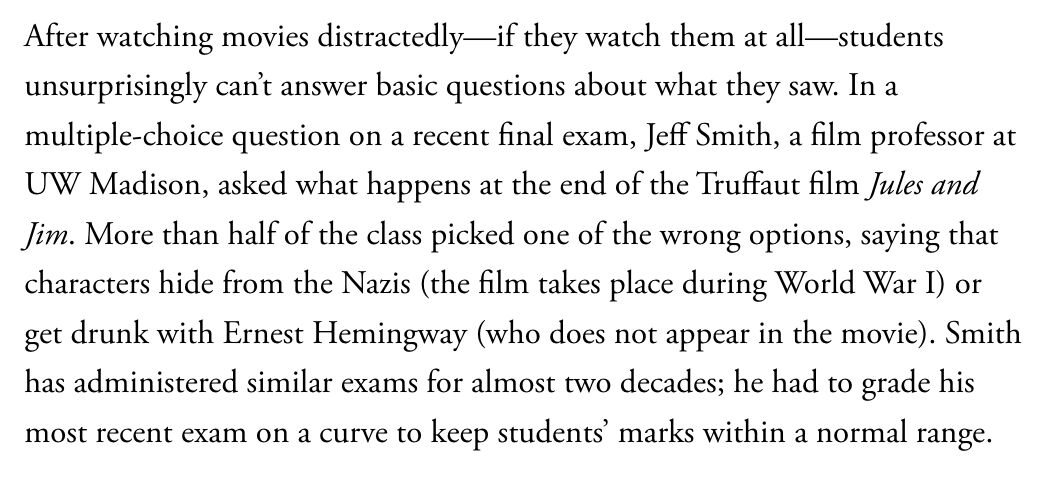
At Indiana University, professors tracked whether students even started assigned films on the campus streaming platform. Fewer than 50 percent would even start the movies, and only about 20 percent made it to the end. At USC—home to perhaps the top film program in the country—a professor said his students remind him of nicotine addicts going through withdrawal during screenings: the longer they go without checking their phone, the more they fidget. Eventually, they give in.
Smith has administered similar exams for almost two decades. He had to grade his most recent exam on a curve to keep students’ marks within a normal range.
The Real Problem: We’re Curving the Failure
This is where it gets infuriating. The attention crisis is real—but it’s not the core problem. The core problem is what we’re doing about it.
Students respond to incentives. The real issue is that despite the huge drop in performance, the professor is curving the grades so that this crop of students gets the same grades as previous years. This is equivalent to grade school classes letting students use calculators on all the school work and teachers being surprised that they tank on no-calculator exams. And then still giving everyone As and Bs. This doesn't happen because teachers created incentives to avoid this scenario. We can do it again.
Alex Imas nails it: “Students respond to incentives. The real issue is that despite the huge drop in performance, the professor is curving the grades so that this crop of students gets the same grades as previous years.” This is equivalent to letting kids use calculators on all their schoolwork, being shocked they tank no-calculator exams—and then still giving everyone A’s and B’s.
The proof that incentive structures CAN work? Imas points out that Booth School of Business forces grade caps across all classes. You can create systems where standards actually mean something. We used to have these incentives everywhere. We removed them. And now we’re paying the price.
The Mississippi Miracle: Proof That Standards Work
One state decided to do the opposite—and the results should shame every “progressive” education bureaucrat in the country.
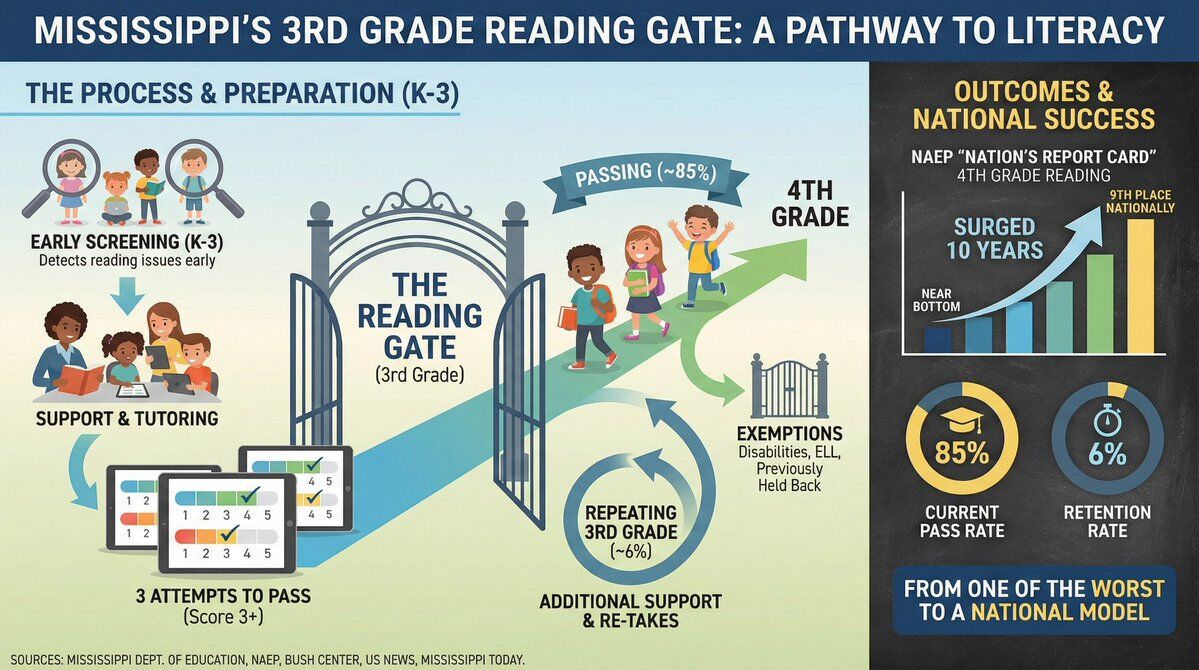
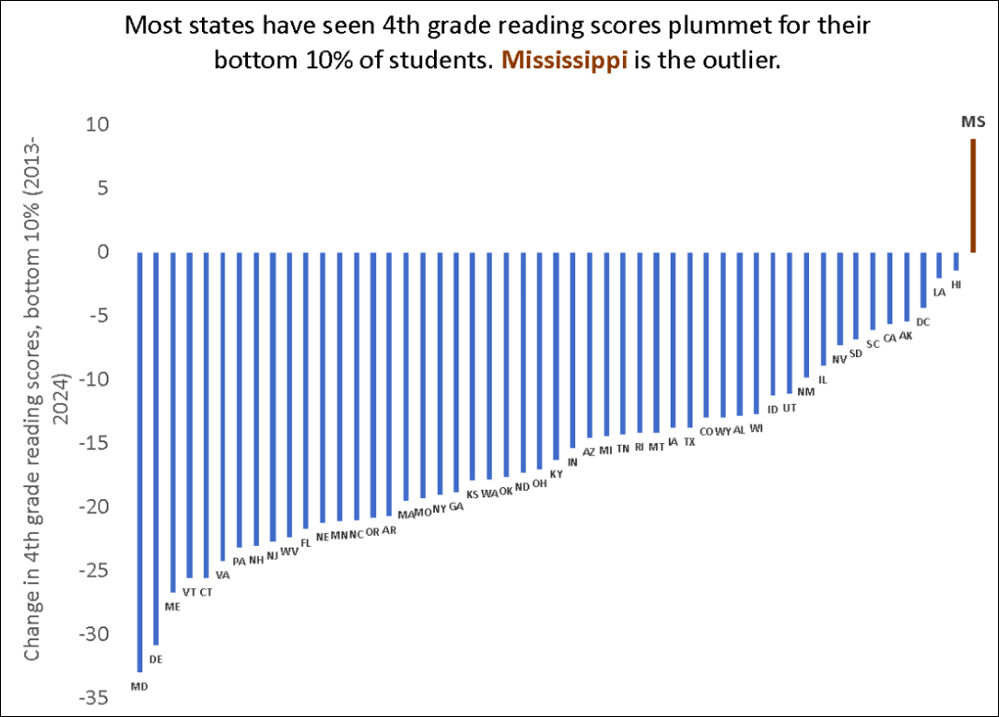
Mississippi went from 49th in the nation to 6th place nationally in 4th grade reading. They did it spending only $15 million per year. When the Urban Institute adjusted scores for demographics, Mississippi’s fourth-grade reading scores came out on top.
How? Three simple reforms: require phonics instruction, train teachers in phonics, and—here’s the controversial part—hold back 3rd graders who can’t read at grade level. That’s the “reading gate.”
Mississippi’s Black students now rank 3rd nationally. Its low-income kids outperform those in every other state. The poorest state in America is now the model for educational outcomes—because they refused to lie about failure.

We need to do the Mississippi reading gate for all the things. There is a breakdown in education and Mississippi learned there are real benefits to holding real standards instead of rubber stamping F’s into C’s, C’s into B’s and B’s into A’s
California’s Shame: Policy Choice, Not Fate
Now look at California. In California, only 28% of Black students can read at “basic” level on 4th-grade NAEP. In Mississippi, it’s 52%. That’s not poverty or demographics—California is richer. It’s policy.
California chose to lower standards “to be kind.” 12% of UCSD freshmen need remedial math because high schools inflated grades. The California State University system is now preparing to auto-admit students with a 2.5 GPA who didn’t even apply.
Every state that lowered standards “to be kind” actually betrayed their most vulnerable students. High expectations plus real support equals real results. California needs to change before another generation of kids graduates unable to read—or watch a movie.
Incentives Rule Everything
Incentives rule everything. This isn’t just about attention spans or phones—it’s about what behavior we reward. A Harvard study found that students almost universally believe effort alone deserves an A, regardless of actual mastery. We taught them that. When we curve failures into passing grades, we teach students that actual learning doesn’t matter.
I first heard about the Mississippi model from Matt Mahan, and it’s one of the best things I’d heard about in a long time. This is becoming part of the California reform conversation. It needs to happen faster.
We created the incentives that broke education. We can create ones that fix it.
The attention crisis is real. Phones and TikTok have rewired young brains. But that’s not an excuse—it’s a reason to hold even HIGHER standards with even MORE support. Mississippi proved it works. California can do the same, but only if we stop pretending F’s are C’s. The kindest thing we can do for struggling students is tell them the truth and give them the support to meet real standards. Anything less is a betrayal dressed up as compassion.
Follow @garrytan for more.
Related Links
-
The Film Students Who Can No Longer Sit Through Films (The Atlantic)
-
Derek Thompson on the attention crisis (@DKThomp)
-
Alex Imas on incentives and grade curving (@alexolegimas)
-
California vs Mississippi literacy gap (@KelseyTuoc)