AI Just Ported SimCity in 4 Days Without Reading the Code
A developer pointed an AI at 37-year-old C code. Today it’s running in your browser. The old rules are dead.
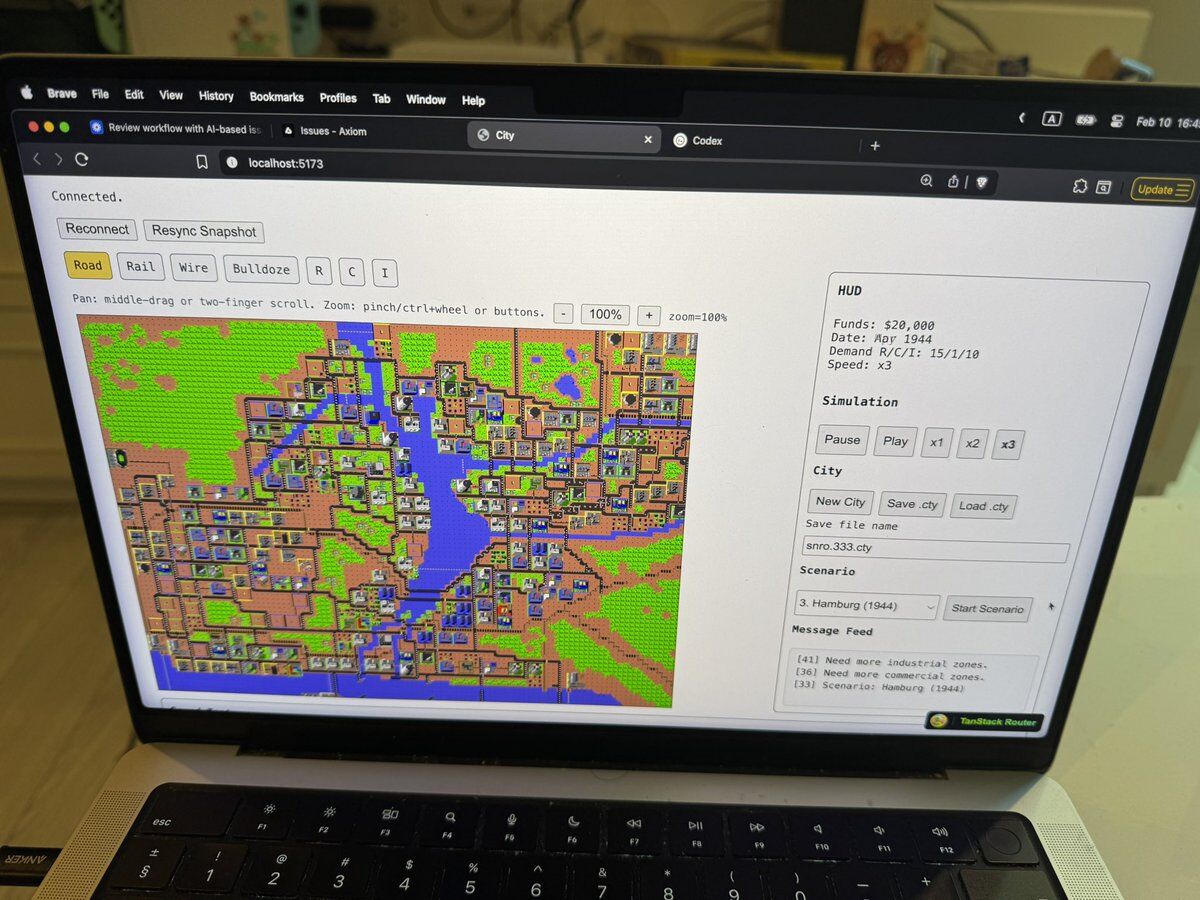
Source: x.com
Source: x.com
TL;DR
A developer used OpenAI’s codex to port the entire SimCity (1989) C codebase to TypeScript in 4 days—without reading a single line of code. This is vibe coding at scale.
Christopher Ehrlich just did something that would have taken a team of engineers months. He pointed OpenAI’s 5.3-codex at the entire SimCity (1989) C codebase and let it run. Four days later: the game works in the browser. No code reading. Minimal steering. Just a spec and an AI that wouldn’t quit.
37-Year-Old Code, 4 Days, Zero Human Reading
The original SimCity codebase is brutal. It’s assembly ported to C—Will Wright’s original Commodore 64 code translated for the OLPC project. Ehrlich described it as “halfway between a C codebase and a decompile”—most of the math is bitshifts, nothing is readable, the kind of thing that makes experienced engineers weep.
He ran the agent for four days on a $200/month ChatGPT subscription. Never hit rate limits.
The key technique wasn’t hoping the AI got things right. Ehrlich wrote a bridge that could call the original C code, then ran property-based tests asserting his TypeScript port performed identically. The AI generated code, the tests verified it, the agent kept iterating. This isn’t blind faith in AI—it’s engineering with AI as the engine and verification as the steering wheel.
This Is What Vibe Coding Actually Looks Like
Andrej Karpathy coined the term “vibe coding” to describe what happens when you let models take the wheel and generate software. According to CNBC’s reporting, 25% of current YC startups now have 95% of their code written by AI. They’re reaching $10 million in revenue with teams of less than 10 people.
The SimCity port is a perfect demonstration. Ehrlich didn’t need to understand how Will Wright’s 1989 genius worked. He needed to specify what the output should be and let the agent execute. As @johnloeber pointed out, the bottleneck isn’t AI’s coding ability—it’s the human’s ability to correctly specify what they want.
That’s the new skill. Not line-by-line coding. Specification and verification.
The Implications Are Staggering
Think about what this means. Every legacy codebase in existence is now potentially portable—given a clear spec. COBOL banking systems. Ancient government software. Classic games trapped on dead platforms.
The original SimCity ran on a Commodore 64. An empty Chrome tab takes more memory than that entire machine had. We’re not constrained by hardware anymore. We’re not even constrained by understanding what the code does. We just need to know what it should do.
Ehrlich’s goal isn’t just nostalgia. He wants to build coop SimCity, have agents play SimCity—creative projects that become possible when you can port a complex game in a weekend instead of a year.
Codebases will 10-100x in size because AI can tackle the endless bugs and feature backlogs humans never got to. The question isn’t whether this changes everything. The question is whether you’re building with it or explaining why you’re not.
The brave new world awaits your prompt
I can’t believe this new world we live in. A guy with a $200/month subscription just automated away months of tedious porting work in a long weekend. Will Wright’s genius from 1989—37 years of gaming history—now runs in your browser because one developer specified the right tests and let an agent run.
If you’re still skeptical about AI coding, you’re not paying attention. The question isn’t whether AI will transform how we build software. It’s whether you’ll be building with it or watching from the sidelines.
Related Links
-
Original tweet from Christopher Ehrlich (@ccccjjjjeeee)
-
Micropolis open source repository (GitHub)
Comments (0)
Sign in to join the conversation.