California’s Wealth Tax “Safeguards” Are a Trap
The bill’s architects say founders can fight the state for their money back. With interest. On hard mode.
Source: x.com
Source: x.com
TL;DR
California’s proposed wealth tax shifts the burden onto founders: the state takes your money first, then you fight to get it back through bureaucratic nightmares with interest piling up.
The Atlantic just published a deep dive on California’s proposed wealth tax, framing it as a “risky bet.” That’s an understatement. The real story is how the bill’s architects designed “safeguards” that aren’t safeguards at all—they’re bureaucratic nightmares that take your money first and force you to fight the DMV equivalent to get it back.
The “Safeguards” Are a Trap

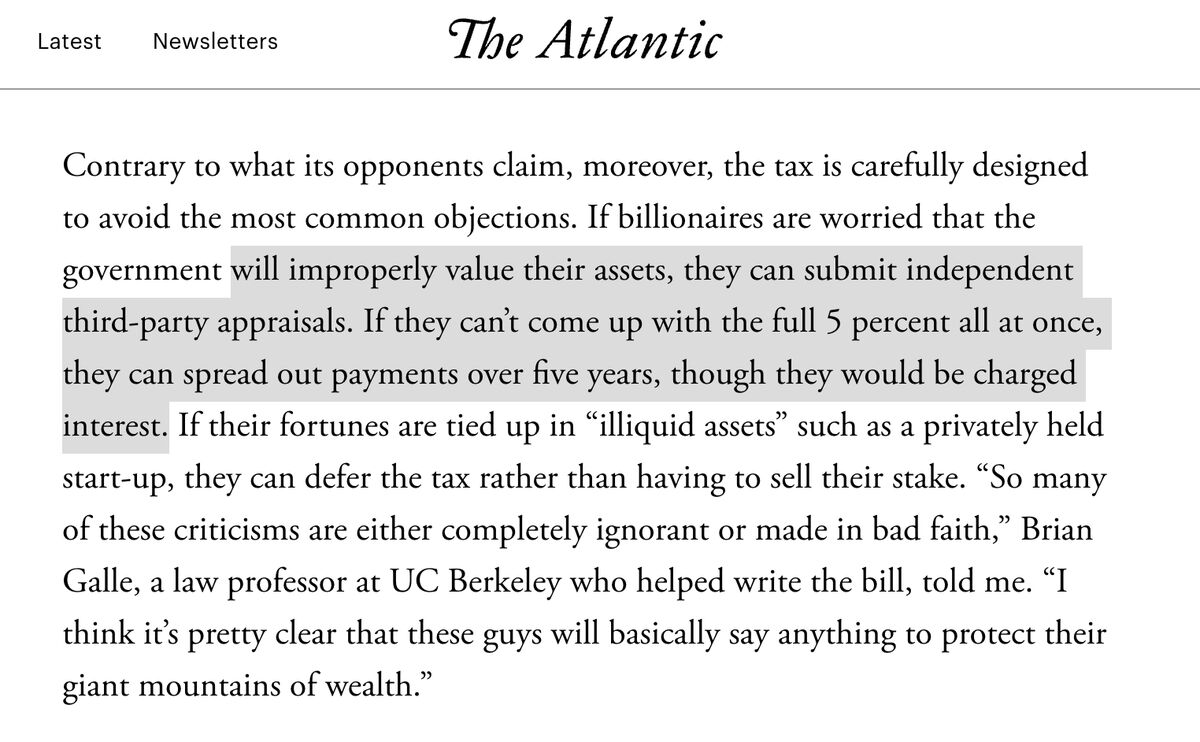
The people who wrote the California Asset Seizure Tax say: “Don’t worry, if the state mis-prices your startup, you can bring in ‘independent appraisers’ to argue with them. And if you can’t pay 5% right now, they’ll put you on a five‑year payment plan. With interest.” That’s not a safeguard. That’s: we take the money, you fight the DMV on hard mode to get it back.
The bill’s defenders love to tout its protections. Don’t like how the state valued your startup? Bring in “independent appraisers” to argue with them. Can’t pay 5% of your paper wealth right now? They’ll put you on a five-year payment plan. With interest.
This isn’t protection—it’s a shakedown. The state takes the money, and you get to spend years and hundreds of thousands in legal fees trying to prove they got it wrong. And if your fortune is tied up in illiquid startup equity? You can “defer” the tax—meaning you still owe it, it’s still hanging over your head, and you’re still trapped.
That’s Brian Galle, a UC Berkeley law professor who helped write the bill. Classic zero-sum thinking: founders explaining real liquidity constraints are just greedy liars. Never mind that a unicorn founder at $5B valuation owes $100M while having zero ability to sell shares.
The Real Exodus Has Already Begun
The billionaire flight isn’t hypothetical—it’s happening right now. Google co-founder Larry Page and PayPal co-founder Peter Thiel made moves to leave California before the end of 2025. Teddy Schleifer reported that Sergey Brin terminated or moved 15 California LLCs in the 10 days before Christmas 2025.
Why the rush? The tax is retroactive to January 1, 2026. If you were a California resident on that date, you owe it—no matter where you move afterward. The bill’s designers thought this was clever: a trap that prevents flight. Instead, it just accelerated the exodus.
The Atlantic notes that Andy Fang, DoorDash co-founder, said the tax “could wipe me out” and that it would be “irresponsible for me not to plan leaving the state.” Jensen Huang and Brian Chesky say they’ll stay—but when Google’s co-founders are already out the door, that’s cold comfort.
22-Year-Olds Get the Message
Startups don’t just “flow” to other states; they stop getting created here in the first place. If the message is “California is a dangerous place to be rich,” then every ambitious 22‑year‑old just hears: don’t build the next great company in California at all.
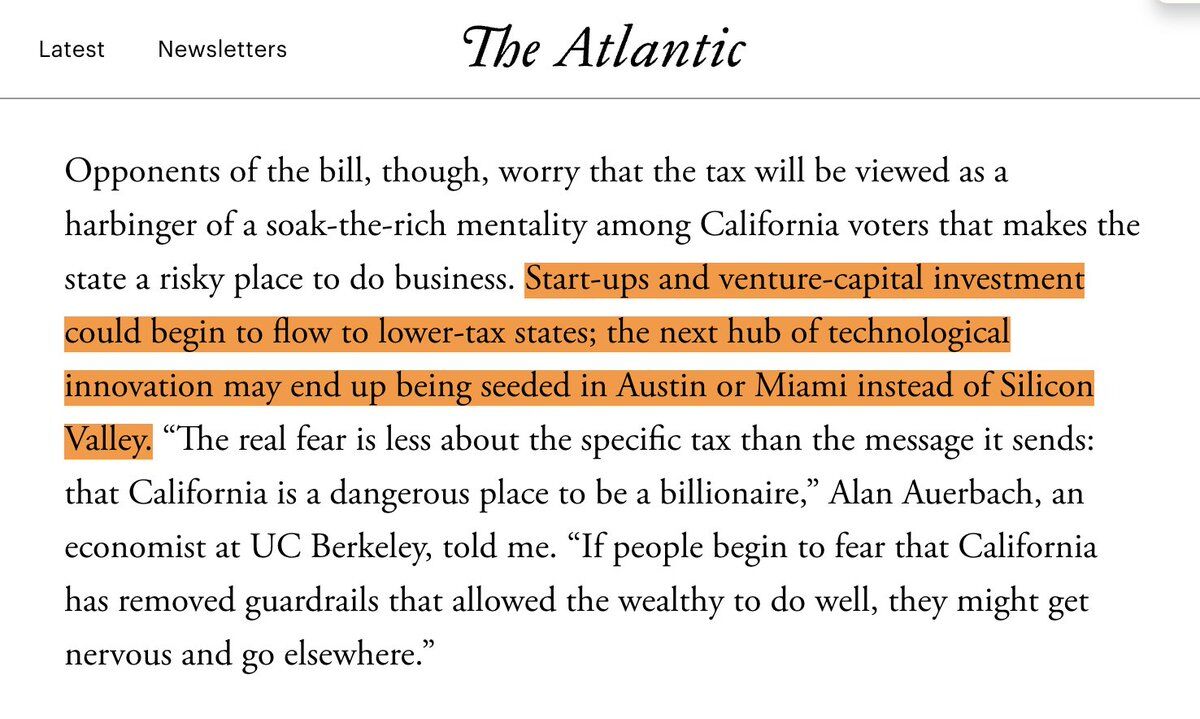
Startups don’t just “flow” to other states. They stop getting created here in the first place. If the message is “California is a dangerous place to be rich,” every ambitious 22-year-old hears: don’t build the next great company in California at all.
YC averages 2-4 unicorn founders per year who would hit this tax threshold. That’s 2-4 future paper billionaires who, if they build in California, will instantly owe the state $100M+ while being completely illiquid. The math is brutal and the message is clear.
Austin is the only major hub increasing its share of VC funding—up 63% in 2025 versus 2024. The next wave of great companies doesn’t have to start in California. And increasingly, they won’t.
Zero-Sum Thinking vs Abundance
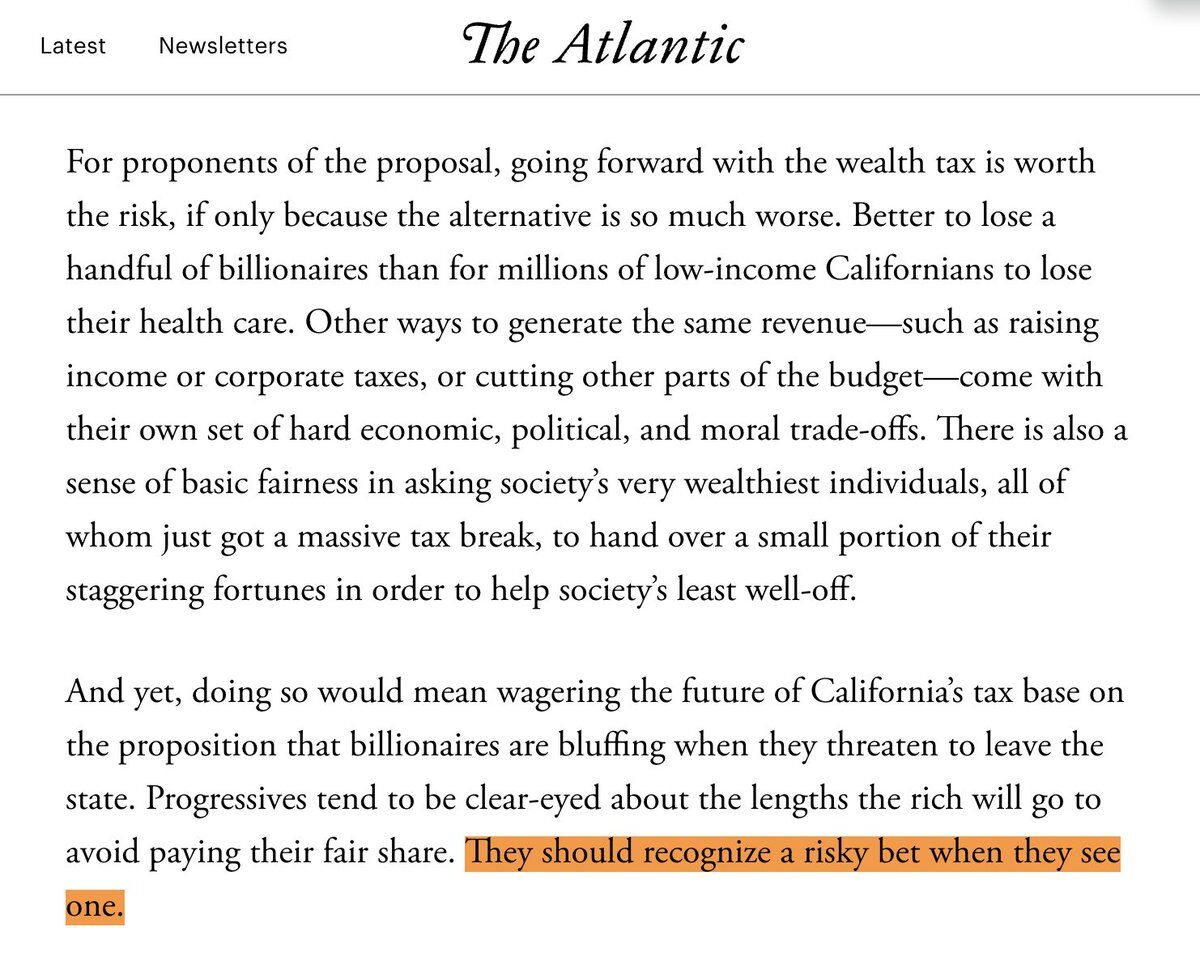
The Atlantic ends saying The Asset Seizure Tax is a risky bet. The writers of the bill designed for a zero-sum world where two people in a garage CAN'T possibly create a thing. But California startups are not zero sum. They are abundance-generating But it will move if pushed
The tax’s designers operate in a zero-sum world where wealth is finite and must be redistributed. Two people in a garage can’t possibly create something from nothing. But California startups have always been abundance-generating—they create value that didn’t exist before.
David Sacks nailed the fear: “It’s not a one time; it’s a first time. And if they get away with it, there’ll be a second time and a third time.” He’s not wrong. In 2012, California voters approved a “temporary” income tax hike that’s been extended twice and will likely never go away.
Polymarket gives the wealth tax a 31% chance of passing. That’s not nothing. If you care about California’s future as an innovation hub, this fight matters. The architects of this bill view founders as adversaries to be squeezed, not partners in building abundance. That worldview—if enshrined in law—will send a clear message to the next generation of builders: go somewhere else.
Follow @garrytan for more.
Related Links
-
If You Tax Them, Will They Leave? (The Atlantic)
-
Sergey Brin moves California LLCs before tax deadline (@teddyschleifer)
-
Austin VC funding growth in 2025 (@Jason_A_Scharf)
-
Polymarket odds on California wealth tax (@PolymarketMoney)
Comments (0)
Sign in to join the conversation.